
Ground Cover for Shade That Keeps Summer Spaces Cool
Moss brings soft texture, deep green color, and low upkeep to shady paths, tree bases, and quiet corners. Here is how the common types differ and where each one fits.
Which mosses work best as ground cover for shade?
Moss earns its place in a shade garden for three reasons. The texture is hard to match, from Cushion Moss mounds to the tiny upright forms of tree moss. These plants hold moisture close to the soil, which helps shaded spots stay cooler in summer. And upkeep stays light — most need little more than reliable moisture and the right light.
Moss is not the answer for dry, sunny ground. It performs best where humidity and shade already exist. Start with the surface and the moisture level. On soil or around stones, mat-forming types like Carpet Moss, Sheet Moss, and Lawn Moss make the cleanest fill. For a more sculpted or woodland look, Cushion Moss, Tree Moss, and Haircap Moss bring more form and height than a flat mat. In deep shade where mowing is impractical, moss is often the simpler answer altogether.
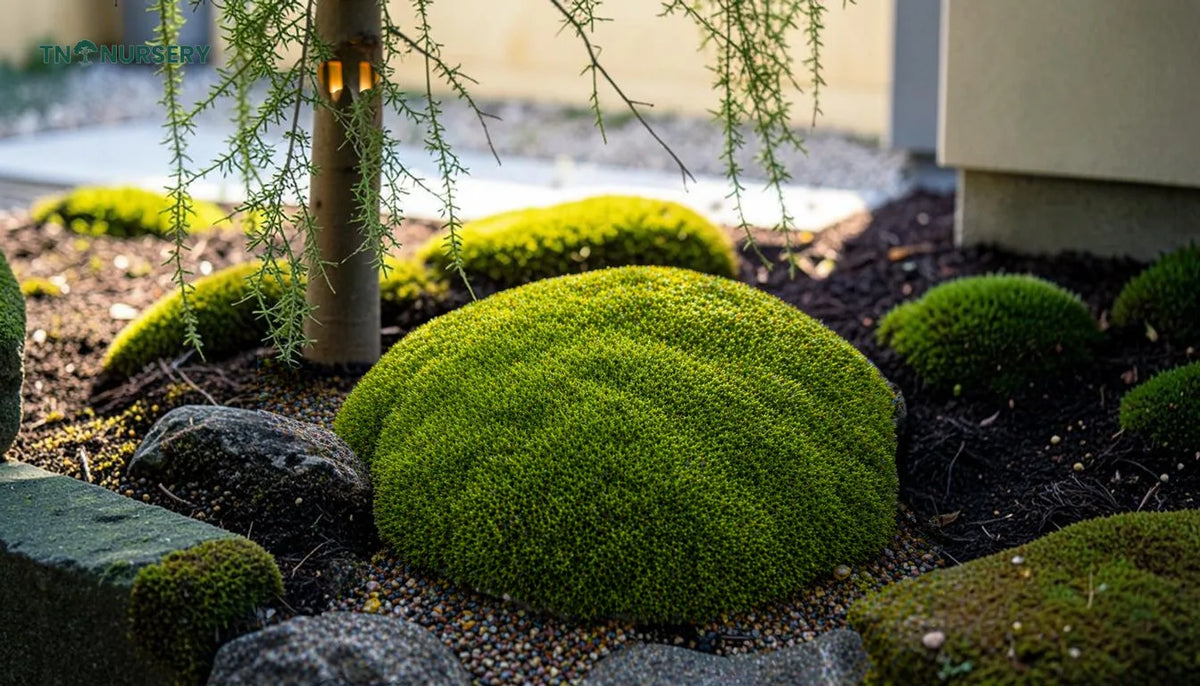
- Cushion Moss forms dense, pillowy clumps 2 to 4 inches tall for soft summer texture.
- Mat-forming mosses like Carpet Moss, Sheet Moss, and Lawn Moss help hold moisture near the soil.
- Most of these mosses grow best in partial to full shade and need little upkeep once established.
- Tree Moss and Haircap Moss add upright structure when you want more than a flat green carpet.
How to Pick Moss for Shade, Moisture, and Style
Matching ground cover for shade to the spot matters more than matching it to a photo. The biggest differences come from moisture level, surface type, and how the area should look once it fills in.
Some mosses stay flat and tidy. Others form soft mounds or tiny upright stems. Before planting, it helps to settle one question: do you want a smooth green carpet, a moss lawn effect, or a more sculpted look?
Choosing by light, moisture, and traffic
In the deepest shade with steady moisture, flat growers establish the cleanest cover, while tufted types add shape in pockets and along edges.
For broad coverage in a shade garden, Carpet Moss, Sheet Moss, and Lawn Moss are the reliable choices. Carpet Moss forms dense mats and handles light foot traffic. Sheet Moss gives a blanket effect over soil or stone. Lawn Moss suits areas where a grass-like look is wanted in low light.
For more texture, Cushion Moss creates rounded clumps 2 to 4 inches tall. Tree Moss produces tiny upright stems that read almost like miniature trees. Fern Moss and Thuidium Moss, with their fern-like fronds, add a lighter, lacy finish.
Matching moss to the surface
The right choice depends on what the moss will grow on. For walkways with light stepping, Lawn Moss or Carpet Moss makes the most sense. For rocks or slightly drier spots, Hedwigia Ciliate Moss is useful because it tolerates lower moisture than most mosses.
Match the moss to the site first. The look comes second, and it lasts longer that way.
Common ways moss is used around patios and paths
- Patio pots: Tree Moss or Cushion Moss in shallow planters, where visible height and shape are wanted.
- Stone walkways: Sheet Moss or Carpet Moss tucked between stones for a cooler, greener edge.
- Under trees: Fern Moss, Thuidium Moss, and Broom Forkmoss fill a woodland-style moss garden.
- Drier rock accents: Hedwigia Ciliate Moss handles these spots better than moisture-hungry types.
One tradeoff is worth knowing. Haircap Moss and Broom Forkmoss add vertical interest, but they do not give the same smooth, finished sheet as Carpet Moss. Where a flatter surface matters, the mat-forming types are the better fit.
Frequently Asked Questions
Which mosses work best as ground cover for shade?
For a cool, damp spot, Cushion Moss, Carpet Moss, Sheet Moss, and Lawn Moss are the usual choices. Cushion Moss forms rounded clumps 2 to 4 inches tall, while Carpet Moss and Sheet Moss spread into flatter mats. For a moss lawn look, Lawn Moss is the clearest fit because it handles light foot traffic and spreads across soil, stone, or wood.
How much summer sun can these mosses handle?
Most mosses do best in partial to full shade. Cushion Moss, Carpet Moss, Sheet Moss, Fern Moss, Broom Forkmoss, and Tree Moss all prefer low to moderate light, and summer afternoon sun can dry them too quickly. Haircap Moss has more flexibility and tolerates partial sun, and Hedwigia Ciliate Moss can handle sunnier, drier, rockier spots. More sun always means watching moisture more closely.
Which moss is best for a moss lawn feel?
Lawn Moss is the closest match. It stays low at about 1 to 3 cm, spreads indefinitely, and has curved leaves that give a soft, grass-like effect in shady areas. Carpet Moss is another good option for a tidy mat near walkways, since it tolerates light foot traffic. Under heavy use, though, moss will not behave like turf.
Can moss be used around trees, rocks, or alongside hostas and grasses?
Yes, and that is one of its best uses. Tree Moss, Fern Moss, and Thuidium Moss look especially natural under trees, around stones, and along damp edges where hosta shade plants or grasses for shade leave open pockets. Sheet Moss works well as a smoother green layer between larger plants. Dry, root-heavy spots are worth avoiding unless the area can be kept evenly moist.
Which moss works best indoors for terrariums?
Tree Moss is the most striking indoor choice because its upright stems resemble tiny trees in a terrarium. Cushion Moss suits rounded, pillowy mounds, and Broom Forkmoss is a strong option for enclosed displays. Indoors, bright indirect light and steady humidity matter more than deep watering. Moss wants moisture, not soggy conditions.
What care should you expect after planting?
Moss is low maintenance, but it is not a no-water plant. Most types want moderate to high moisture, especially in summer, and stay happiest in shaded, humid places with good air flow. Matching the moss to the site beats forcing it. Hedwigia Ciliate Moss handles drier conditions better, while Cushion Moss and Tree Moss need more reliable moisture.
Where These Mosses Grow Best
Every moss covered here belongs in the same conditions: shade, steady moisture, and good air flow. Once those are right, the choice comes down to the look you want — a flat carpet, a soft mound, or upright woodland texture. You can see the full range of varieties, along with size and light details for each, in our moss collection.
