
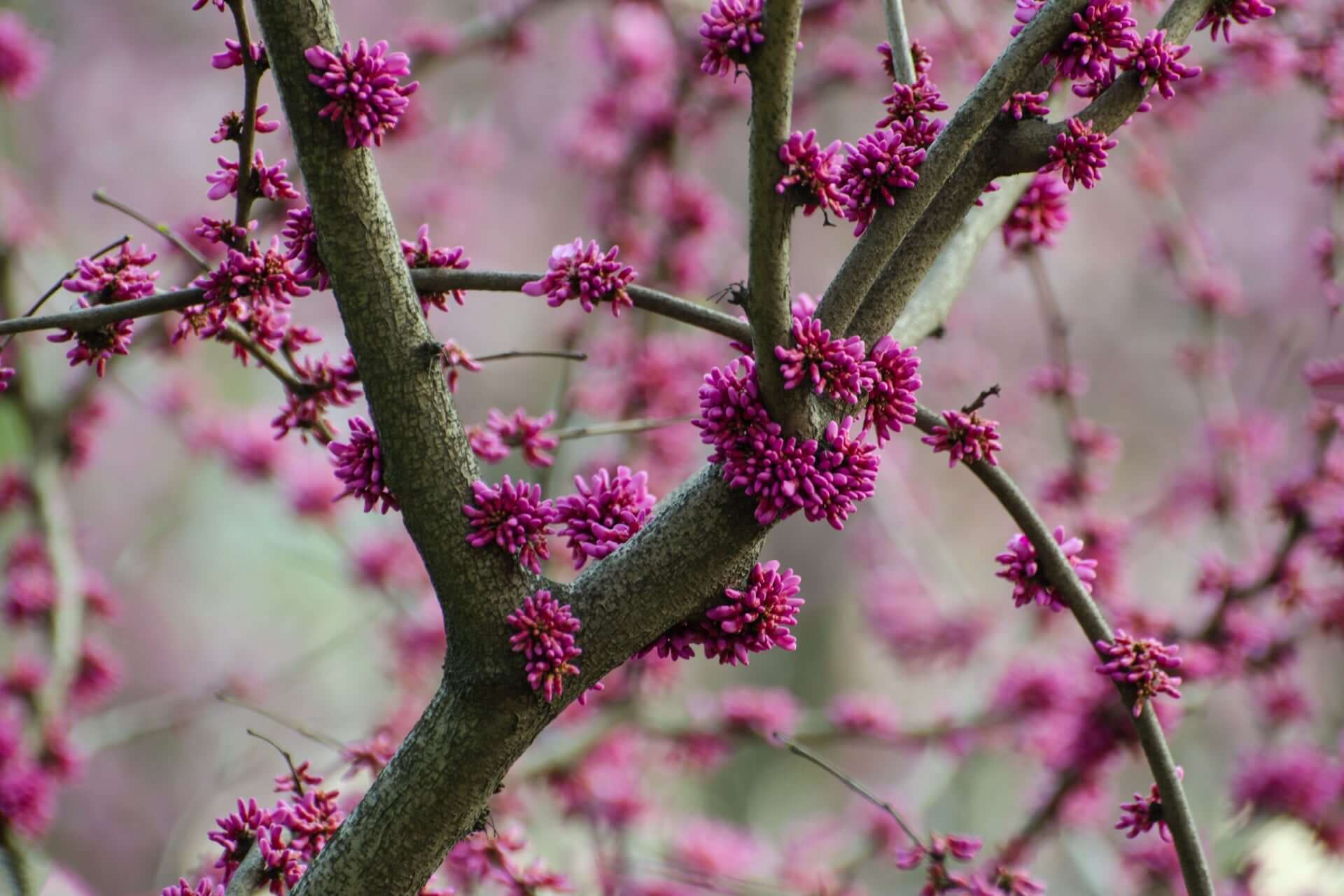
Redbud trees are beloved for their stunning early spring blooms and heart-shaped leaves, making them a delightful addition to many landscapes. With their natural elegance and ability to thrive in various environments, these trees have gained popularity among gardeners and landscapers. The sight of a redbud in full bloom, with its branches adorned with clusters of pinkish-purple flowers, heralds the arrival of spring. Their appeal extends beyond just their visual beauty, as they benefit local ecosystems by attracting pollinators like bees and butterflies. Let's dive into some common questions about redbud trees and discover why they are sought-after.
How quickly do redbud trees grow?
Redbud trees typically grow moderately, averaging between 12 to 24 inches annually, depending on the environmental conditions and care they receive. This growth rate places them in a unique category considered fast and slow-growing. Several factors influence how quickly they can reach their mature size, including soil quality, water availability, and sunlight exposure. Redbuds flourish in well-drained, fertile soils and benefit from consistent watering, especially during their first few years when their root systems are still established. Mulching around the tree's base helps retain moisture, making a noticeable difference in their growth rate.
Although redbuds can tolerate partial shade, they grow more robustly in full sunlight, receiving at least six hours of direct sun daily. More light encourages vigorous growth and enhances the density of their flower clusters during the blooming season. Even so, young redbuds may struggle in harsh conditions such as poor, compacted soils or overly windy areas, stunting their growth. When placed in optimal conditions and provided with appropriate care, redbud trees will often surpass the average growth expectations, reaching a respectable height and canopy size over time.
Redbud Care and Watering
A 2-3 inch (5.1-7.6 cm) thick mulch layer several inches away from the trunk can conserve moisture in the soil and help protect the thin bark from lawnmower and line trimmer wounds that can allow canker diseases with which the tree has no resistance to infect the tree.
Mulching: put mulch around the tree's base to keep it damp, suppress weeds, and regulate soil temperature. Keep the mulch at least 2-3 inches from the trunk to prevent moisture-related diseases.
The redbud tree grows best in well-drained soil and full sunlight that is similar to its native habitat in forested areas and open fields. The tree is able to grow in most soils but prefers loamy soil with an even supply of nutrients and moisture. The redbud grows to a height of about 20 to 30 feet with a rounded crown. The shrub's natural shape is very similar to an inverted umbrella when viewed against the backdrop of fall color or winter's snow, but redbuds are easy to grow and require less effort to maintain once established, making their beauty easier to enjoy.
What is the best redbud tree to buy?
The best redbud tree to buy depends on the desired landscape effect and specific regional conditions. Several cultivars offer unique features while retaining the signature attributes that make redbud trees so enchanting. The Eastern Redbud (Cercis canadensis) is the most common choice in North America, known for its classic rosy-pink blooms and adaptability to various climates. It is especially suitable for native planting projects or anyone looking to maintain an eco-friendly garden with minimal intervention. It can get up to 30 feet tall and spread to about 25 feet, making it suitable for small yards or as a decorative understory in more significant landscapes.
Other redbud varieties are equally charming, with certain features that cater to specific aesthetic or practical needs. The 'Forest Pansy' redbud is renowned for its deep purple foliage, which adds an extra layer of visual interest throughout the growing season. Its leaves shift to vibrant red, yellow, or orange hues in autumn, providing year-round appeal. Those living in scorching and dry climates may opt for the Texas Redbud (Cercis canadensis var. texensis), which boasts thicker leaves that can withstand drought better than other varieties.
For a unique twist, the 'Lavender Twist' redbud presents a weeping form that adds character to any garden. Its gracefully arching branches drape towards the ground, offering a silhouette different from the upright form of standard redbuds. This cultivar's cascading blooms create a striking focal point, especially when planted near patios, pathways, or garden ponds. Regardless of the choice, redbud trees can be grown successfully across most of the U.S., making them versatile for various landscape designs.
Soil and Sunlight for Redbud
The eastern redbud C. canadensis is a Tennessee native. It can take our clay soil, humidity and uncertain spring frosts. This small tree, growing from 15 to 30 ft. tall, has rosy lavender flowers in clusters in the axil of the leaves, on the branches, on the trunk and on the ends of the branches. It is one of the most interesting and beautiful.
The redbud tree is a nectar source, and thus an important habitat to many species of birds and pollinators, including bees, butterflies, and hummingbirds. They find an abundance of food among the flowers in springtime, and throughout the year, the tree may also become a home and nesting ground for songbirds. Furthermore, the tree offers them both protection from the sun and a place in which these animals flourish. The small creatures feed off of the redbud's foliage, and even use the grooves in the tree's bark as their nests. The metaphor of the redbud tree as a nurturing force in the ecosystem of the forest speaks to the interconnectedness of existence and the fragility of life.
About Redbud
- May-June: Coneflower , salvia, catmint - July-August: Black-eyed Susan, daylily, coreopsis - September-October: Sedum, aster, goldenrod
But the flowers are the main attraction. While most other trees have barely begun to leaf out, redbuds are covering their bare, crooked branches with clusters of small, pea-like flowers, ranging in color from pale pink to deep magenta-purple. This happens from late March to early April in Middle Tennessee (earlier still in West Tennessee, still later in the mountains), and the flowers also emerge from the trunk and on older branch wood and not just the new wood. The phenomenon is known as cauliflory, and results in a somewhat sculptural appearance to the tree.
The Real Secret to Long-Term Blooms: How to Sequence Redbuds, Forsythia, Dogwoods, and Perennials for Color From March Through Fall
Is a redbud tree a fast-growing tree?
While redbuds are not considered fast-growing in the same vein as species like willow or poplar, they grow reasonably for flowering trees. Their ability to add 12 to 24 inches of new growth annually puts them in the category of moderate growers. This rate balances rapid establishment and a robust and sturdy structure that develops over time. As a result, redbuds provide relatively quick gratification without compromising the long-term health or stability of the tree.

Young redbud trees may appear to grow more quickly during their first three to five years as they focus on developing their roots and trunk. Growth slows somewhat after reaching 10 to 15 feet tall, with the tree's energy being redirected towards branching and flower production rather than vertical height. Redbuds also respond well to pruning, which can encourage denser foliage and more prolific flowering. For those looking to hasten growth, planting in rich, well-drained soil can help boost their development.
Pruning Redbud
Little pruning is needed. Dead, crossing, or broken branches can be pruned off in late winter when the tree is dormant. Pruning heavily will delay flowering, as flower buds for the following year are formed on this year's growth almost as soon as flowering finishes.
Redbud Size and Growth Rate
Cornus florida (flowering dogwood) may be the primary representative of spring flowering trees in the Southeast. In natural settings, it may grow 20 to 30 ft (6.1 to 9.1 m) tall (there are several descriptions of it at 40 ft) and almost as wide. It has white or rarely pink bracts that open in April after the redbuds.
Red Bud trees are moderate to fast growers, typically reaching a height of 20-30 feet with a spread of 25-35 feet in 10-15 years.
Give redbud plenty of space. As small as this tree is, its 20-30 foot canopy needs to be spaced from your home's foundations, power lines, and other trees. As a rule of thumb, clear 15 to 20 ft around mature structures in all directions.
Forsythia is often the first shrub to bloom in Middle Tennessee and East Tennessee, sometimes even while frost is still on the ground. Forsythia is a bush 3 to 6 ft (0.91 to 1.83 m) high and wide with bright yellow flowers on bare stems before the leaves appear. The end result is a jarring burst of color after a bleak winter.
Most Redbud trees, when fully grown, reach a height of about 20 to 30 feet. Width wise, they measure up to 25 feet. As such, they are great for small yards and can also be used as accent trees in bigger yards.
They're a good, medium-sized tree and can work well in all kinds of landscapes. They stand at about 20 to 30 feet high, equally spaced. But they can be pruned and shaped, so you can design their size to your yard's size and style.
Space: These trees can grow up to 20-30 feet tall and have a similar spread, so it is crucial to provide ample space for your redbud tree to develop without overcrowding other plants or structures. This space will allow the tree to spread its canopy and grow its roots, necessary for its overall health and well-being.
A Redbud Tree grows to heights of anywhere between twenty to thirty feet tall while also flowering and ascending wingspans of twenty five feet. Despite these bold flourishes and irrespective of frost or foliage, its leaves will invariably fall during winter and spring months. Its leaves will not grow until the blossoms do, and this occurs in the early spring.
How tall is a 5-gallon redbud tree?
When purchasing a redbud in a 5-gallon container, the tree will typically be between 3 to 5 feet tall. This size is ideal for transplanting into the landscape as it is large enough to have a well-established root system yet still small enough to handle easily. It allows the tree to acclimate more quickly to its new environment, leading to a healthier growth trajectory. After planting, it may take a year or two for the tree to acclimate fully, but once it does, it will continue to grow steadily at the expected 12 to 24 inches per year.
The height of the redbud at this stage gives gardeners a head start in the growing process while still offering the chance to shape the tree's growth direction. If planted in the right location and maintained well, it can begin to display its trademark blossoms in the first few springs after being planted. Upon purchase, the tree size does not guarantee an immediate display of flowers, as younger trees often prioritize establishing their roots before flowering. Nevertheless, redbuds are rewarding investments, quickly proving their worth as they mature into stunning, flowering specimens in the garden.
In summary, redbud trees are a garden gem, offering beauty, versatility, and ecological benefits. Their manageable growth rate, diverse cultivars, and resilience to different climates make them accessible to novice and seasoned gardeners. Redbuds always succeed in leaving a lasting impression. Their delicate blossoms, heart-shaped leaves, and compact size ensure they are not just trees but true works of natural art in the landscape.
Redbud TreesTulipWillowPlanting Redbud
Growth is moderate, at an average of 1-2 feet (30-61 cm) per year once established. Most redbuds will reach flowering age in the second or third year after planting, but seed-grown trees can take up to 10 years to flower. If you can, purchase a nursery-grown sapling, as opposed to starting from seed, to reach that first spring show quickly.
Eastern Redbud or Cercis canadensis is a small to medium-sized native flowering tree that produces a spectacular and stunning display of magenta-pink flowers very early in the spring before the new leaves fully expand. It is one of the easiest and most satisfying ornamental trees you can plant if you live in Tennessee or anywhere that gets USDA plant hardiness zone 4 through 9. Generally, a redbud reaches 20 to 30 feet high and wide in 10 to 15 years.
Redbuds do best in full to partial sun, meaning 4-6 hours of sunlight per day. In the hotter regions of the Southeast, some afternoon shade is helpful to prevent leaf scorch during the hottest months of July and August. This is the plant's natural habitat if planted at the edge of woodlands, or under taller trees in their shade.
The most common repeated error is to plant too much of a color so that the rest of the garden is that color for a whole season. Perennials bloom for 3 to 6 weeks, and the rest of the season is foliage, so plant early, mid and late bloomers together in beds to create a display from May until the first hard frost.
Although hardy from USDA zone 5 to 8, Forsythia is cultivated in pretty much the whole state of Tennessee. It does well in poor soil, it doesn't need a lot of water once it is established, and deer don't normally seem to want to eat it. The one thing people get wrong with forsythia is when to prune. If you prune the plant in fall or winter, you will be pruning off the flower buds as well. Try to prune just as it finishes blooming in the spring.
Creating a slightly acidic to neutral pH range of 6.0 to 7.0 is essential to prepare the soil for planting. This will help to avoid soggy roots susceptible to root rot.
During these transitions, the full beauty of the redbud tree is appreciated by observers, because the redbud tree grows flowers early in the spring before the leaves bloom fully, thus creating a flowering, purple-pink appearance of the tree at the beginning of spring. This glorious display lasts only a few weeks, but redbud's lightly fuzzy, heart-shaped leaves come in like a big, hearty welcome back from winter. Glossy and bright green, they follow the plant through the summer months to provide cooling shade as the seasons shift once again. Autumn comes, and the leaves display the greatest majesty, a whole spectrum of yellows and golds, a last encore of the redbud's splendid tints, before falling into winter's hibernation. With each growth, the redbud counts the seasons, and sends out the pulse of its own being, and you cannot help but respond.
Fall planting (from October to early December) is probably the best way in Tennessee, mainly because it gives the roots time to settle in before the summer heat. Spring planting can be done before the last frost, but you'll probably have to pay extra attention to your watering that first summer.


