
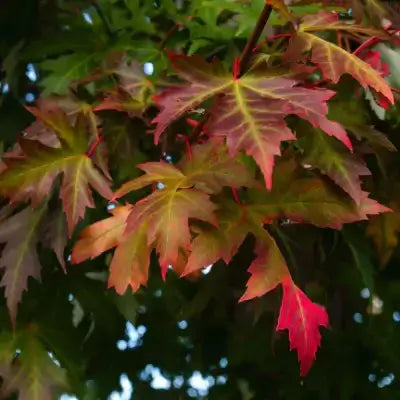
The silver maple tree is deciduous in the Aceraceae family, native to Europe, Asia, and North America.
They are also known as maples or sycamores because of their distinctive leaves, which have four lobes or points on each side. The trunks of the silver maple trees are often twisted and gnarled, with a rough bark with deep crevices where small branches grow. These trees grow well in moist soil with less than a pH of 6. The leaves of the silver maple change color with the seasons, giving them vibrant hues in autumn and winter, when they turn brown and drop off. In addition to turning colors, the leaves drop in huge quantities during autumn, providing lots of natural mulch for your garden beds. The flowers can be white, pink, red, purple-red-purple, yellow-orange-red-orange, and yellow-orange-green-red, with numerous petals around a central disc flower blooming at the top.
Silver Maple Care and Watering
Mulch with 2 to 3 inches around the base, but keep mulch off the trunk.
Acer saccharinum became widely utilized in urban planning during the 18th and 19th centuries to line streets and parks with its unique form. Acer saccharinum's representation in historical documents alongside artistic depictions and literary works reveals its crucial role in forming North America's botanical heritage. Through different landscape trends across the years this species has maintained its status as one of North America's most recognized and valued native plants due to its deep connection to the continent's natural history.
This species thrives in moist well-drained soils but shows resilience against sporadic droughts as well as urban stress factors like pollution and compacted ground conditions. The species thrives in riparian zones due to its flood resistance capabilities which allow it to stabilize shorelines and enhance water quality. The tree stands up effortlessly to severe winters in cold regions and serves as an essential source of shade and cooling relief in warmer territories.
Soil and Sunlight for Silver Maple
Acer saccharinum achieves a tall elegant stature and usually grows between 50 to 80 feet in height. The tree's deep lobed and serrated leaves showcase a brilliant green color throughout warm seasons before they change to golden and yellow shades when autumn arrives. The tree presents a dynamic appearance as sunlight reflects off the silvery undersides of the leaves which shimmer when the wind blows.
The indigenous people recognized the Silver Maple Tree beyond its shade and aesthetic appeal. Indigenous tribes utilized Acer saccharinum's bark and sap to create medicinal remedies that they believed could relieve pain while reducing swelling and supporting wound repair. People brewed the inner bark into teas to help treat digestive problems along with colds and fevers. Traditional healers used bark-derived poultices for sores and cuts as well as insect bites because they understood their gentle antiseptic properties.
The best site has full sun for most of the day and moderately wet, well-drained soil . Stream edges, low spots that do not stay flooded, and open lawn edges all work well. Look, if your soil is compacted, this seedling can still adapt. Growth is simply faster when the ground holds moisture evenly.
Only a limited number of species display the resilience shown by Acer saccharinum. This species successfully grows across diverse environments including moist lowlands and urban streets because it can adjust to different soil types and weather conditions. The tree grows quickly which allows for fast establishment and makes it an excellent option for quick shade provision.
"If you have a big sunny yard and want shade sooner rather than later, silver maple is hard to beat. Just give it room."
Silver Maple in the Landscape
Sweeping branches that arch gracefully give the species a powerful silhouette which adds visual depth and dynamic movement to any landscape. Due to its air pollution resistance city planners often select this species to create vibrant green urban spaces. The species' aesthetic appeal extends to ecological restoration work where it aids in the recovery of disrupted areas while generating vital wildlife habitats.
The bark starts as smooth gray on younger trees but eventually develops into a complex, furrowed texture with striking ridges. Before the leaves appear small clusters of red-tinged flowers bloom in spring creating subtle yet beautiful additions to the landscape. This species produces winged seeds called samaras which appear in pairs and are carried away by wind currents resembling helicopter flight.
The unmatched adaptability and aesthetic appeal of the Silver Maple Tree ensures its status as a popular and prominent feature throughout North American landscapes and ecosystems. This species demonstrates nature's lasting strength and beauty through its roles as a historical symbol, a medicinal resource, and a wildlife sanctuary.
Silver Maple and Wildlife
The Silver Maple Tree stands out not only for its beauty but also because it creates a vital habitat for various wildlife species that are seldom seen in urban areas. Woodpeckers and warblers build nests within its branches while small mammals find shelter inside its hollow trunks and fallen branches. Squirrels and chipmunks rely heavily on these seeds to sustain themselves throughout the seasonal transitions.
The luna moth stands out among the species the tree draws because its larvae use its foliage for sustenance. This beautiful moth with pale green wings and long tails is rarely seen throughout North America but thrives in groves of Acer saccharinum. The tree produces early spring flowers that provide nectar for pollinators like bees which helps sustain local biodiversity.
Silver Maple Varieties
For hundreds of years Acer saccharinum (Silver Maple Tree) has been an integral part of North America's natural scenery as it adapts to diverse climates and ecosystems. European explorers documented this species in the 17th century although Indigenous peoples had long been aware of its importance. Indigenous peoples employed various parts of the species for both practical needs and medicinal purposes.
The expansion of American settlers westward led to this durable species emerging frequently along riverbanks and floodplains, and before that, it prospered due to its preference for fertile, damp soils. The species expanded rapidly and adapted well to various conditions which allowed it to become a fundamental element in early colonial environments.
Benefits Of Planting A Silver Maple Tree
Planting a silver maple tree can provide many benefits to your yard. The trees are quick-growing and will provide shade during the summer months. They also have a high potential for fruit production, often seen in late autumn through early spring. However, planting a silver maple tree can also have drawbacks: it is not drought-resistant and doesn't make a good windbreak. It's important to note that any tree you plant should withstand the climate conditions in your area because different types of trees will respond differently to the environment.
About Silver Maple
We ship all items by 3-4 day ground shipping. Our Silver Maple Seedling is listed as Ships Now, so we send it out under that shipping method. If you need to reach us about an order, you can contact TN Nursery at customerservice@tennesseewholesalenursery.com or write to Tennessee Wholesale Nursery, 12847 State Route 108, Altamont TN 37301, United States.
Although modern medical practice has moved away from herbal remedies today some herbalists still study its characteristics. While other genus members dominate syrup production, this sap remains less utilized, yet it has natural sugars and minerals that provide an energy boost. Holistic skincare treatments sometimes include bark extracts due to their subtle astringent properties. Limited scientific studies have not prevented historical documentation from revealing Acer saccharinum's critical function in early herbal medicine.
We want to be direct here. We do not accept returns, and we do not offer refunds. We also do not offer a warranty on any product unless an extended warranty is purchased at the time of order. If you need help with an order, contact us at customerservice@tennesseewholesalenursery.com.
How To Grow A Silver Maple Tree At Home
Sugar Maple Tree
The first step is to find a healthy seedling. They should be at least 24 inches tall and have well-developed roots. You'll need to plant your tree in well-drained soil rich in organic material to get these benefits. To give your tree enough space to grow to its full potential, it's recommended that you plant your silver maple up to three feet from other plants and trees. The best place for this tree is either on the north side of your house or the east side of your yard because these areas get significantly more sunlight during the day. Once you've chosen a spot for your silver maple tree and planted it correctly, you must take care of it regularly for optimal results. Like most trees, this means watering periodically and occasionally fertilizing to produce new growth.
Planting Silver Maple
Plant our Silver Maple Seedling for quick canopy growth in open yards. It grows in Zones 3-9, handles sun to partial shade, and can add up to 7 feet a year.
Give them plenty of room. A mature Silver Maple can spread 35 to 70 feet wide, so spacing should reflect the size you want long term, not the small seedling size you start with. If you are planting tree seedlings for summer shade, wider spacing usually works better than crowding. You will get a fuller canopy over time and fewer pruning headaches later.
Best planting sites are open areas with full sun and room for a 35-70 foot spread
We list our Silver Maple Seedling for planting zones 3 through 9. That gives you a wide range, which is one reason people choose it over slower-growing shade trees. If you are comparing types of maple trees, this one handles more climates than many gardeners expect. And if your summers are hot, its heat tolerance helps once it gets established.
Explorers and naturalists identified its fast growth ability and soil tolerance as distinct attributes. Horticulturists transported the plant to new areas over time to study its capabilities in cultivated environments. The initial cultivation endeavors established its current extensive application across both city and natural landscapes.
The initial formal botanical description of Acer saccharinum appeared in early 18th-century documents as European scientists started to accurately document North American plant species. The initial documentation shows that this species prospered across the eastern and central lowland areas and floodplains throughout North America from Canada down to the southern United States. The species gained recognition and extensive study during its time because it could adapt successfully to diverse environmental conditions.
Landscapers highly value Acer saccharinum as an ornamental plant because of its quick growth rate. People often select it for parks and large yards and urban areas because of its superior shading capabilities. The tree's resilience to different soil types enables it to thrive in challenging environments where others face difficulty especially along streambanks or wetlands where its roots help maintain soil stability and reduce erosion.
Water deeply after planting. Then water regularly through the first summer, especially during hot, dry stretches.
Keep in mind: fast roots mean you should plant away from structures and utility lines
But be honest about your site. If your planting area is tight, this is not the tree to squeeze in beside hard surfaces. For open ground, though, it is one of the quickest ways we know to build real summer cover.
If you're planning around a silver maple tree but need stronger slope control, wetter-site options, or shade-friendly planting support, these five picks cover the practical side of the job. You'll find useful alternatives for different site needs.
Plant in a wide, open area. Give it space away from patios, foundations, and plumbing, because both the canopy and roots move quickly.
In The Fall You'll Have A Very Colorful Silver Maple Tree
Pruning Silver Maple
Choose it for speed and space. If you are comparing types of maple trees , this one grows faster than a sugar maple tree , but it also needs more room and regular pruning as it matures.


