Christine Rodgers
I received a bag full of many bare roots, more than I ordered of the Wild Geranium. I planted them all yesterday as directed and am looking forward to seeing them come up in the spring.

Wild Geranium Plant
Ships Now
3-8
Over 12"
Moderate
Partial shade and Shade
Spring
Wild Geranium grows best in rich, well-drained soil kept evenly moist the first season. A layer of shredded leaves holds moisture and feeds the soil. Trim spent flower stems for a tidy look, or leave them so the seeds feed birds.
Wild Geranium (Geranium maculatum) thrives in partial shade and dappled woodland light, and grows well in full sun where the soil stays evenly moist. In the warm South, afternoon shade keeps it at its best.
Long blooming season , Beautiful pink & purple blooms, Thrives in shade or sun
Christine Rodgers
I received a bag full of many bare roots, more than I ordered of the Wild Geranium. I planted them all yesterday as directed and am looking forward to seeing them come up in the spring.
Rhonda Hale
I received the wild geranium rhizomes quickly. They are planted in pots at this point & I will transplant them to a forever home this fall. I can’t wait to see how they progress.
Roger W Monthey
They looked good. You just have to be patient to see if them come up. I've had pretty good luck except for the Trillium bulbs you sent.
About this plant
Wild geranium (Geranium maculatum) is a native perennial wildflower that grows 1 to 2 feet tall and blooms pink to lavender from April to June. Wild geranium is hardy in USDA zones 3–8 and thrives in partial shade to full sun. TN Nursery ships dormant bare-root wild geranium plants, Buy 1 Get 1 Free.
Wild geranium grows naturally in eastern North American woodlands, from Quebec and Manitoba south to Georgia and west to Kansas and Oklahoma, including the wooded hillsides of Tennessee. The plant belongs to the geranium family, Geraniaceae. Gardeners also call wild geranium spotted geranium, wood geranium, spotted cranesbill, wild cranesbill and alumroot. The name cranesbill comes from the long, beak-shaped seed capsule that forms after bloom and flicks its seeds several feet from the plant.
No. Wild geranium is a true hardy geranium (genus Geranium) that returns every year, while the bedding "geranium" sold for pots is Pelargonium, a tender plant grown as an annual. Wild geranium is one of the cranesbill geraniums, and Geranium maculatum is the cranesbill native to eastern North America.
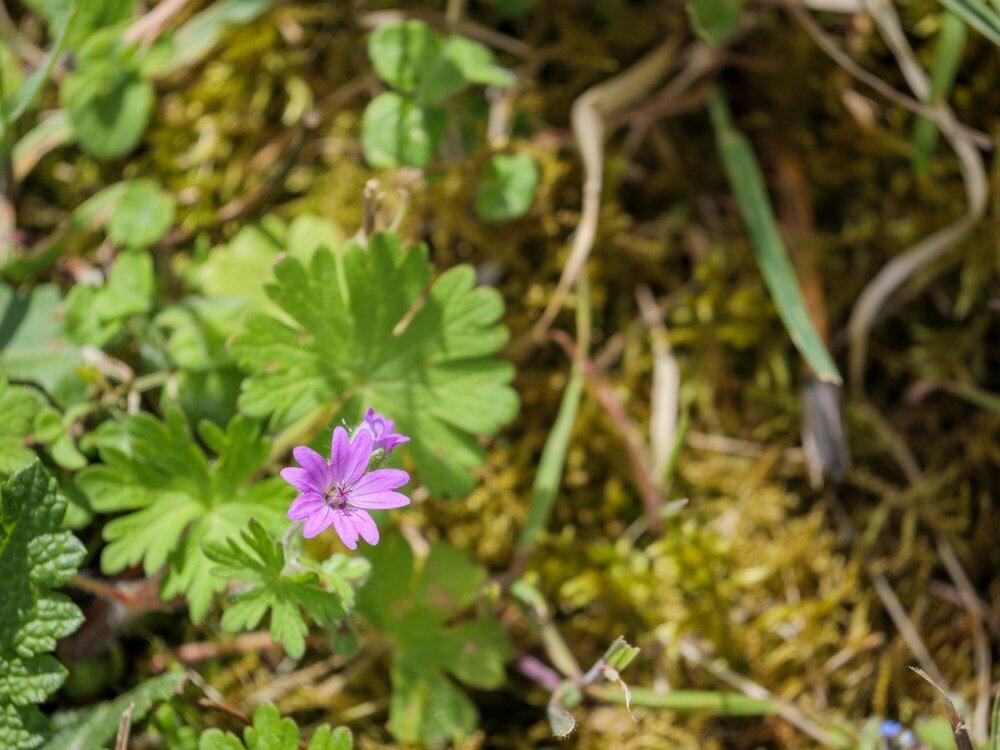
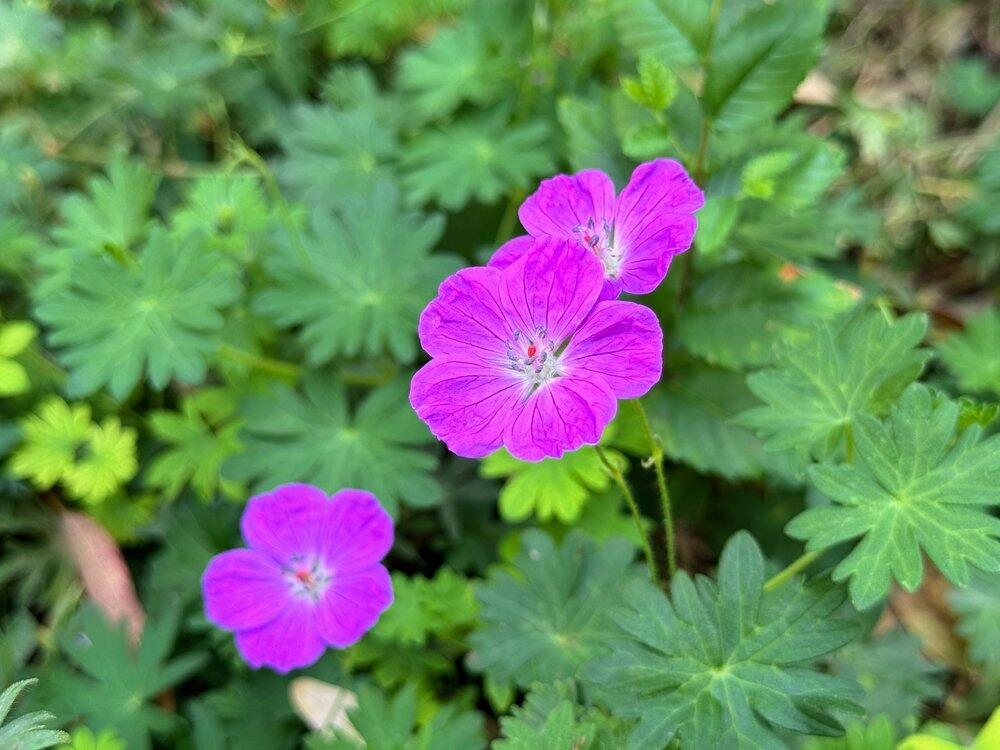
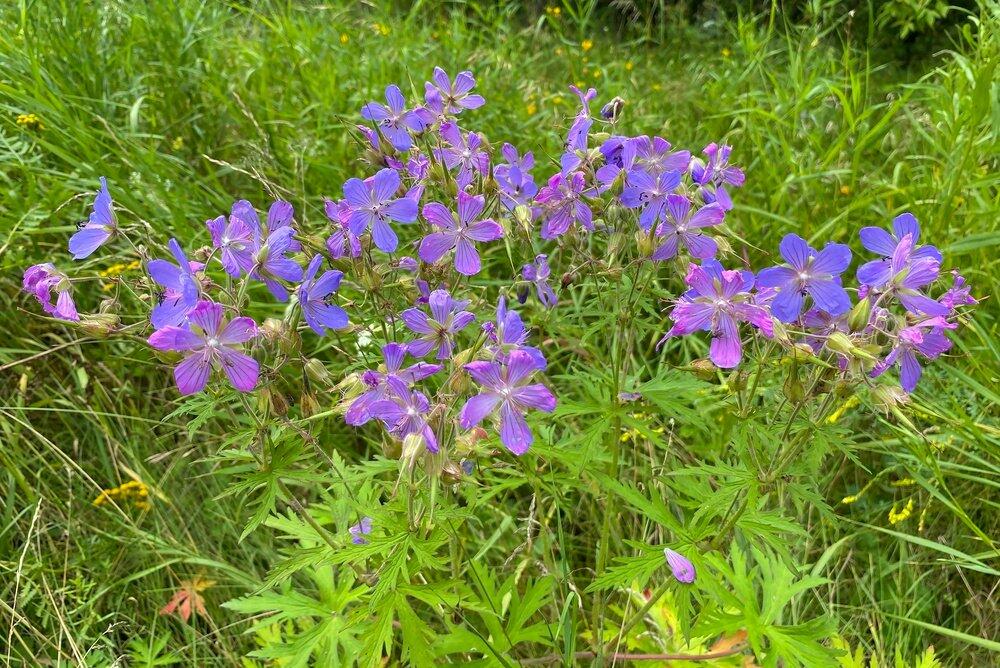
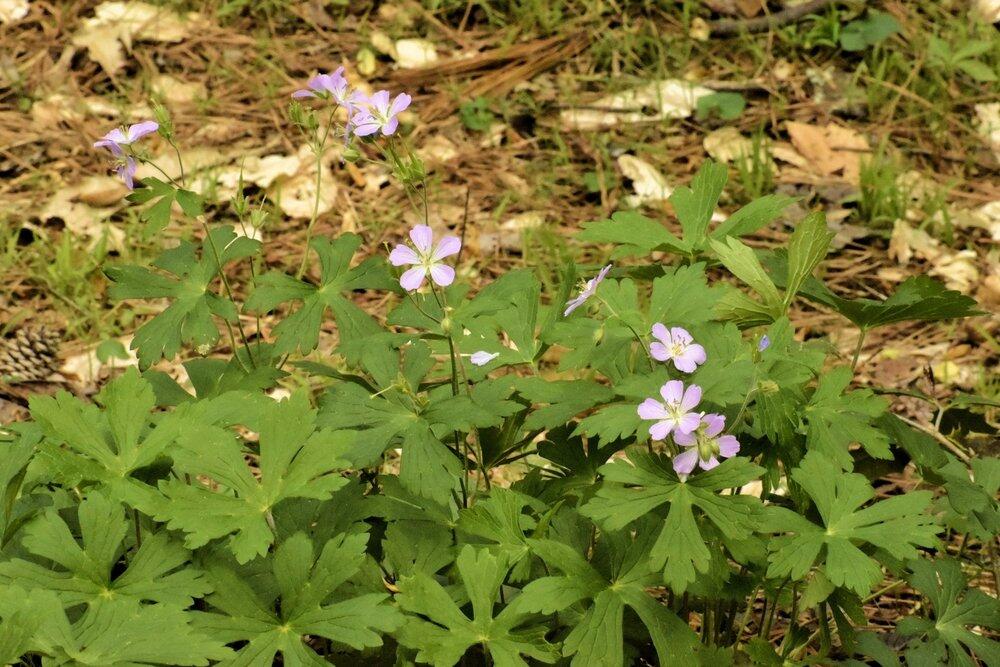
Wild geranium leaves are divided into five to seven lobes, like a hand with spread fingers, and form a neat, rounded clump. Each flower has five rounded petals with fine darker veins that guide bees to the nectar. A planting of several wild geraniums shows a soft mix of rosy pink and pale purple shades.
Wild geranium grows in both sun and shade: partial shade and dappled woodland light suit it best, and full sun works when the soil stays evenly moist. In the warm South, wild geranium does best with afternoon shade.
Wild geranium prefers rich, humus-rich, well-drained soil with plenty of leaf mold or compost, and it also settles into average loam and clay. Slightly acidic to neutral soil is ideal. Water regularly during the first growing season, then let natural rainfall carry established clumps. A 1-inch layer of shredded leaves over the bed holds moisture and feeds the soil, just like a forest floor.
Wild geranium blooms in spring, from April into June, for about six to seven weeks. The long bloom bridges the gap between early spring ephemerals and summer perennials.
| Season | What wild geranium does |
|---|---|
| March–April | New lobed leaves unfurl from the rhizome |
| April–June | Pink to lavender flowers open for 6–7 weeks |
| June–July | Beak-shaped seed capsules ripen and launch seeds |
| September–October | Leaves turn red to burgundy |
| November–February | Plant rests as a dormant rhizome |
Yes. Wild geranium is an important early-spring food source for bumblebees, mason bees, sweat bees and other native bees, and butterflies, skippers and hover flies visit the flowers too. One native mining bee, the geranium bee (Andrena distans), gathers its pollen almost only from Geranium flowers.
After bloom, wild geranium seeds feed mourning doves, bobwhite quail and other ground-feeding birds. A drift of wild geraniums gives bees forage in April and May, when few other flowers are open. For design ideas, see our guide to creating a pollinator garden.
Spring woodland natives that like rich, moist soil grow well with wild geranium. Virginia bluebells add sky-blue flowers at the same time, and celandine poppy brings bright yellow blooms. White trillium and Solomon's seal add height and form. Low wild ginger covers the ground between clumps, Christmas fern keeps the bed green all winter, and foamflower adds lacy white spikes along the front edge. Browse more partners in our shade perennials collection.
Plant bare-root wild geranium 1 to 2 inches deep, lying horizontally with the buds facing up, and space plants 12 to 18 inches apart. Plant in fall or early spring while the rhizomes are dormant.
TN Nursery digs wild geranium while dormant and ships the plants bare root, with no soil around the roots. Each plant arrives as a firm, knobby rhizome with fibrous roots and growing buds, often with no leaves, which is normal for a dormant plant.
Botanical Name: Geranium maculatum
Plant Family: Geraniaceae
Ships: Bare root, dormant
Planting Zone: 3–8
Height at Maturity: 1–2 feet
Spread: 12–18 inches
Sun or Shade: Partial shade to full sun (afternoon shade in the South)
Water Needs: Moderate; keep evenly moist the first season
Soil: Rich, humus-rich, well-drained soil; adapts to loam and clay
Bloom Season: April–June
Flower Color: Pink to lavender
Native Range: Eastern North America, Quebec and Manitoba south to Georgia and west to Kansas and Oklahoma
Care: Leave fallen leaves over the bed as a natural mulch. Trim spent flower stems after bloom for a tidy look, or leave them so the seeds feed birds. Divide large clumps in early spring or fall to make more plants.
Plant Attributes: Native perennial, long spring bloom, pollinator plant, colorful fall foliage, deer resistant
Yes. Wild geranium is a long-lived native perennial that dies back to its rhizome in winter and returns each spring with a larger clump.
Wild geranium spreads gently. The rhizomes slowly widen each clump and some seeds sprout nearby, so a planting fills in as a soft ground cover over a few seasons.
Wild geranium grows 1 to 2 feet tall and 12 to 18 inches wide, with flowers held just above the leaves.
Yes. Deer and rabbits rarely browse wild geranium, so wild geranium is a good choice for woodland gardens near forest edges.
Wild geranium grows in USDA hardiness zones 3 through 8, from cold northern gardens to the humid Mid-South.
The best time to plant wild geranium is fall or early spring, while the bare-root rhizomes are dormant. Many plants flower their first spring.
TN Nursery has grown hardy native plants since 1959, more than 65 years of experience, and has supplied plants to major U.S. landmarks like the Washington Monument and Arlington National Cemetery. At our Altamont, Tennessee nursery, we grow and ship native woodland wildflowers like wild geranium to gardens across the country. Each order is dug while dormant and packed bare root so the plants settle quickly into your garden. Want to learn more first? Read Wild Geranium: A Delicate Beauty for the Garden and Shade-loving Perennials: Best Plants for Your Garden on our garden blog, or browse all our perennial plants.

Since 1959, TN Nursery has grown and shipped quality bare root plants nationwide. Shipped during dormancy, bare-root plants develop strong root systems and establish quickly. Our experienced team carefully harvests and packages every order, providing growers with trusted plants backed by over 65 years of nursery experience.
Learn More About
Bare root trees
Charming Blooms:
Wild Geranium produces delicate pink to purple flowers that add a touch of elegance to any garden.
Pollinator Attraction:
Its vibrant flowers attract bees and butterflies, supporting a healthy garden ecosystem.
Seasonal Appeal:
Enjoy its beautiful blooms in spring and attractive foliage throughout the growing season for year-round interest.
Versatile Ground Cover:
Its spreading habit makes it an excellent choice for covering ground in shaded or woodland gardens.
Fall Digging
Spring Digging
Packing Orders
Customer Unboxing Video
Product Highlight
I’m very happy with my Wild Geranium from TN Nursery! It arrived healthy, well packaged, and ready to plant.
My Wild Geranium has been absolutely beautiful! It filled out nicely and was covered in the prettiest little blooms—I love how natural it looks in my garden
I’m very pleased with my Wild Geranium Plant from TN Nursery! It arrived healthy, well-packaged, and ready to plant. The plant looks strong and vibrant, and I’m excited to see its beautiful blooms add a natural touch to my garden. Great quality and service from TN Nursery!
Love them mine bloomed the first spring
The roots are now inground and I’m waiting patiently for growth which will no downy come soon. Shipping, customer care and communication on shipping times was great. The price for the quality is also a major factor when choosing to by from TN nursery. Thank you!
A good price for the roots. Received in spring. Turned hot outside. Dont forget to water your new plantings every 2 to 3 days. After a month signs of life. I am patiently waiting to see how far they get this summer as this plant is not available in my area.
The roots arrived in good shape. Small, but healthy looking. Arrived yesterday, planted today, so no idea how they will do
Looking forward to greeting these in the spring
These plants handled transplanting without any issues. Strong stems, vibrant leaves, and flowers that draw lots of compliments.
These plants handled transplanting without any issues. Strong stems, vibrant leaves, and flowers that draw lots of compliments.
I planted my Wild Geranium two weeks ago, and it’s already blooming. The soft pink flowers brighten up my whole yard.
I like the way the Wild Geranium stands out among my other perennials. Shipment was quick and the plant was in good shape.
This Wild Geranium has added a fresh, natural feel to my garden. The plant looks good, though it’s growing a little slowly.
The Wild Geranium has really nice leaves that add texture to my flower bed. I can’t wait to see the blooms come in.
I love how my Wild Geraniums from TN Nursery attract bees and butterflies. The plants arrived in excellent condition, and their blooms create a beautiful natural look. TN Nursery always delivers high-quality plants at fair prices.
TN Nursery delivered Wild Geranium plants that impressed me with their strong roots and healthy foliage. They settled quickly and started producing soft blooms that light up my shaded garden space. Highly recommend TN Nursery’s plants.
The Wild Geraniums I received from TN Nursery were healthy and well-rooted. They’ve added a woodland charm to my shaded yard, blooming gracefully and blending well with my other perennials. Great experience buying from TN Nursery!
I’m thrilled with my Wild Geranium purchase from TN Nursery. These plants fit perfectly into my native garden design, and their soft pink flowers bring a natural woodland look. Excellent quality every time I order from TN Nursery.
The Wild Geranium plants I bought from TN Nursery arrived strong and vibrant. I planted them immediately, and within weeks, I could see new growth. Their customer service and plant quality are excellent.
My Wild Geraniums from TN Nursery are thriving beautifully. They add charm to my shade garden and attract pollinators. The quality was outstanding, and shipping was fast. I highly recommend TN Nursery for anyone looking for authentic native plants.
I ordered Wild Geranium plants from TN Nursery, and they arrived fresh, healthy, and well-packaged. They quickly adapted to my garden and started producing delicate pink blooms. TN Nursery provides top-quality native plants that are perfect for naturalized landscapes.
I received a bag full of many bare roots, more than I ordered of the Wild Geranium. I planted them all yesterday as directed and am looking forward to seeing them come up in the spring.
I received the wild geranium rhizomes quickly. They are planted in pots at this point & I will transplant them to a forever home this fall. I can’t wait to see how they progress.
They looked good. You just have to be patient to see if them come up. I've had pretty good luck except for the Trillium bulbs you sent.
Planted my 2 plants 1 week ago and already have a 2 inch plant growing. Of course the rain we had for 3 days helped, as well as warm weather. I am in zone 7. Have my trellis ready and looking forward to it getting big enough to start it going up!
Arrived as expected, now awaiting their sprouting.
Geranium roots came in nice shape. It was a deal: 2 for price of 1, bu actually I received 4.
It was a pleasant surprise!
Just received them but haven't had a chance to prepare any for the ground yet.
Came well-packaged, looked very healthy!! I’ll confirm in spring how these perform.
Fair priced and reliable.
I will certainly be happy to write a review when my plant is above ground. Right now, they are dormant in my garden.... and the proof is in the pudding, as they say. But so far, all my deliveries have been well timed, and I love the selections.