
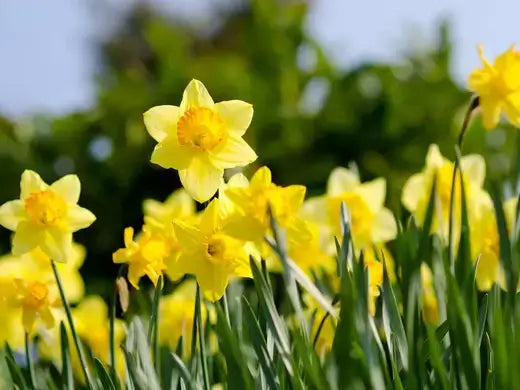
The Daffodil Bulb's Classy Ease: Planting and Growing Tips
It's no wonder so many people fall in love with spring daffodils and fall blooming daffodil bulbs. They are easy to plant and provide an instant classic beauty. A professional with multiple daffodil bulbs and other plants in their garden will look classy, and a beginner will be able to easily manage and grow their own daffodil bulbs.
This guide explains everything you need to know to grow and take care of daffodil bulbs. We will explain daffodil growing and care.
The Ease of Daffodil Bulbs
The daffodil, aka Narcissus by scientists, are easily recognized in a garden with their trumpet flowers and multiple colors. Every spring garden filled with daffodil bulbs blooming is a carnival of color with its white, yellow, and bright orange flowers. They are easy to grow and a favorite of new and experienced gardeners.
What Makes Daffodil Bulbs A Gardener's Favorite
With their beauty around the garden in spring flowers, daffodils are a favorite to plant with their bright white, yellow, and orange base colors. Numerous easy characteristics make daffodils a favorite with daffodil bulbs.
Little Care Expected
Daffodil bulbs are low maintenance. After being planted correctly, they are self-sufficient. This makes them perfect candidates for people who are busy all the time or who don't have much previous gardening experience. Daffodil bulbs are self-sufficient.
Invasive Nature
These are great at multiplying. This means they can be planted once, and will come back all by themselves for years, saving the gardener extra work.
Daffodil BulbsVersatile
Regardless of garden zone, the bulbs thrive in all kinds of soil and weather. In limited sun, and any degree of shade, daffodils are able to grow to full potential.
Pest Resistance
Daffodil bulbs are also great because they are resistant to pests. These bulbs won't be eaten and will keep their gardens safe from garden pests like waiting deer or rodents.
Varieties to Consider
While yellow trumpet daffodils can be considered a timeless classic, the daffodil varietal is just as immense. With over 13 distinctive daffodil divisions, the options range far and wide. These can help in making gardens unique and also in providing the option of changing the border color.
Trumpet Daffodils
The most common form of this flower type, they consist of one flower per stem, which has a trumpet flower that is equal to, or longer than, the flower petals. Examples of this type include the classic yellow 'Dutch Master' and 'King Alfred'.
Large-Cupped Daffodils
With a cup that is more than one-third, but less, or equal to, the length of the petals, they contain a variety of colors. A popular vote is the 'Ice Follies' featuring white petals and a yellow frill cup that fades to a cream color.
Small-Cupped Daffodils
A cup that is not more than one-third of the length of the petals makes these flowers more delicate. A perfect example is 'Barrett Browning' with white petals and a cup of a fiery orange-red color.
Double Daffodils
They have a fluffy effect due to the multi-layered appearance with more petals or a double trumpet. Other flowers such as roses or carnations have a fluffy appearance, a good example of this type is 'Tahiti'.
Jonquilla Daffodils
These have a fragrant, sweet fragrance and contain multiple small flowers per stem, but have one scent per stem. They remain heat tolerant and produce a great choice for warmer areas.
Daffodil Bulb Planting Instructions
In order for an attempt at daffodil bulb planting to be successful, these steps should be adhered to. The most important step is ensuring they are planted in the fall before the ground freezes, as this is when roots are able to settle in for the winter.
Choosing Bulbs
Finding a reputation selling daffodil bulbs should be your first step. These bulbs bulbs can be aesthetically as well, look for bulbs firm, a little plump, and heavier than what should be expected in a daffodil bulb. If the daffodil bulb is soft, moldy, or if there is some sort of damage making the bulb look less than its best, you should turn your attention to a different bulb.
Choosing a Location
Look for an area where the daffodils daffodils can receive at least six hours of sunlight. Be sure the area is well-draining and is the appropriate soil type - slightly acidic to neutral in pH. If the soil is not ideal, the bulbs could potentially rot.
Preparing The Soil
Use a garden fork or tiller to loosen soil about 12 inches deep inches. This will allow the roots to more easily grow deeper into the soil. Additional organic compost can also be incorporated into the soil.
Bulb Planting Depth
Professional and amateur alike, Plant about 3 times the height in a hole for the sprout. if not a hole, a pile of dirt, a sprout about 6 to 8 inches is needed. it matters not if they are smaller, a hole of about 6 inches is needed for a depth.
Spacing
In order to let the bulbs grow properly with enough airflow, make sure to place the bulbs approximately 4-6 inches apart. More clusters or drifts look natural than perfect rows.
Positioning
In order to ensure proper growing alignment for the shoots, be sure to always place the bulb in the soil with its pointed side facing upward, and its flat side, which contains the roots, facing downward.
Covering and Watering
Gently make sure to place the soil back into the holes and press down on the soil a little to get rid of big air pockets. Water bulbs really well right after planting so the soil stays in place, and the roots get encouraged.
Seasonal Daffodil Care
When it comes to taking care of the daffodils after the first planting, there really isn't a ton of maintenance to do!
-
Watering
After the planting watering, there really isn't a need to water again. The only time you'd water again is if it is a very dry winter or fall. In the spring, keep the moisture level the same as they grow and bloom, but make sure they don't get overwatered since daffodils really don't like it if the soil is soggy. -
Fertilization
They are not big feeders but in spring if you add a low-nitrose, balanced fertilizer, it can help their growth and the bloom. This is best done in early spring when the leaves are starting to grow.
Taking Care of Daffodils After They Bloom
After the flowers bloom is the most important time for care of the daffodils. After the flowers fade, take dead flowers (deadheading) to stop energy diversion from the bulb. However, removing leaves is NOT okay. To remove the leaves, they must die back naturally for six weeks. The leaves take in solar energy and they need to do that to power the bulb for next year's growth.
Bulb Division
Repeatedly, daffodil bulbs can get overcrowded resulting in the flowers becoming smaller or there being fewer. To refresh the planting, lift and divide the bulbs every 3 to 5 years. This is best to do in late summer when the leaves have died back completely.
Good Planting Partners for Daffodils
Other perennials and daffodils that bloom in the spring match very nicely. The planting partners can also support disguising the daffodil leaves that fade and they can continue to add colors to your garden.
You can plant daffodils with the following:
-
Hyacinths and Tulips
The bulbs bloom at the same time as daffodils and together they add a variety of colors. -
Muscari (Grape Hyacinths)
The dark blue Muscari flowers are a great compliment to the yellow or white daffodils. -
Daylilies and Hostas
The newly grown leaves of these plants will fill in space and camouflage the remaining daffodil leaves adding beauty to the spring and summer transition from the daffodils. -
Creeping Phlox
Covering the ground with colorful blooms in the early spring, this flowering ground cover creates a great background to the taller daffodil blooms.
TN Nursery: Your Spring Blooms are Here.
Daffodils are one of the few flowers that combines beauty with function. The flowers are a perfect fit for a very busy person, as they require very little maintenance after planting. If you follow the guidelines for planting daffodil flowers, you will be sure of daffodils year after year, and they will be sure to light up the landscape in the spring.
Are you ready to add bright and cheerful flowers to your garden for the warm spring weather? Check out TN Nursery's quality garden and top tier daffodil bulbs along with an assortment of spring flowers and greenery for a bright spring warm weather garden
FAQs
What's the best month to plant daffodil bulbs?
Planting daffodil bulbs should be done in the fall. September to November is best based on your climate. For good root development, plant bulbs 4-6 weeks before the ground starts to freeze.
How many daffodil bulbs should I plant together?
Planting daffodils in clusters will give a natural look. A group of 5, 7, or 9 bulbs makes a wonderful cluster. Planting them 4-6 inches apart gives good spacing for the daffodils to establish and grow.
How do I plant daffodil bulbs?
Plant the bulb by digging a hole 6-8 inches deep. When placing the bulb in the hole, the pointy side of the bulb should face up. Cover it with soil and then water to help establish the roots before the ground freezes.
Which daffodils come back every year?
The majority of daffodils readily return each year, so long as they are looked after. Certain varieties are extra good at coming back, such as “Dutch Master,” “Ice Follies,” and many of the Jonquilla types.
How many daffodil bulbs should I put in one hole?
One daffodil bulb per hole is the proper planting technique. If you plant in a single hole, a handful of bulbs will become too many and crowded. Ultimately, the plants will be starved of vital nutrients and will all individually result in many weak flowers.
Do daffodils grow back every year?
Of course, as a perennial flower, daffodils do return, and come back year after year. Just make sure you let the leaves die back after they bloom, because it will help energize the bulb for a bigger and better show next year.


