
Pollinator Perennials for Summer That Keep August Gardens Alive
Late-season color matters. We’ll help you match native and native-leaning bloomers to sun, shade, and moisture, so butterflies, hummingbirds, and bees keep visiting with less upkeep.
What are the best pollinator perennials for summer to buy?
- Look for an extended bloom window that carries strong color into August
- Check nectar value and host-plant function, not just flower count
- Match plants to sun, moisture, and zone before you buy
- Expect the strongest late-summer show from full sun flowers, with shade and wet-soil picks included too
- Use grouped plant lists for hummingbirds, rain gardens, and shade-friendly wildlife support
Shop Pollinator Perennials for Summer and Longest Blooming Perennials
If you want August color that still feeds wildlife, we pulled together seven native picks that cover sunny borders, partial shade, and moist low spots.


Build a Native Garden That Feeds Pollinators Longer
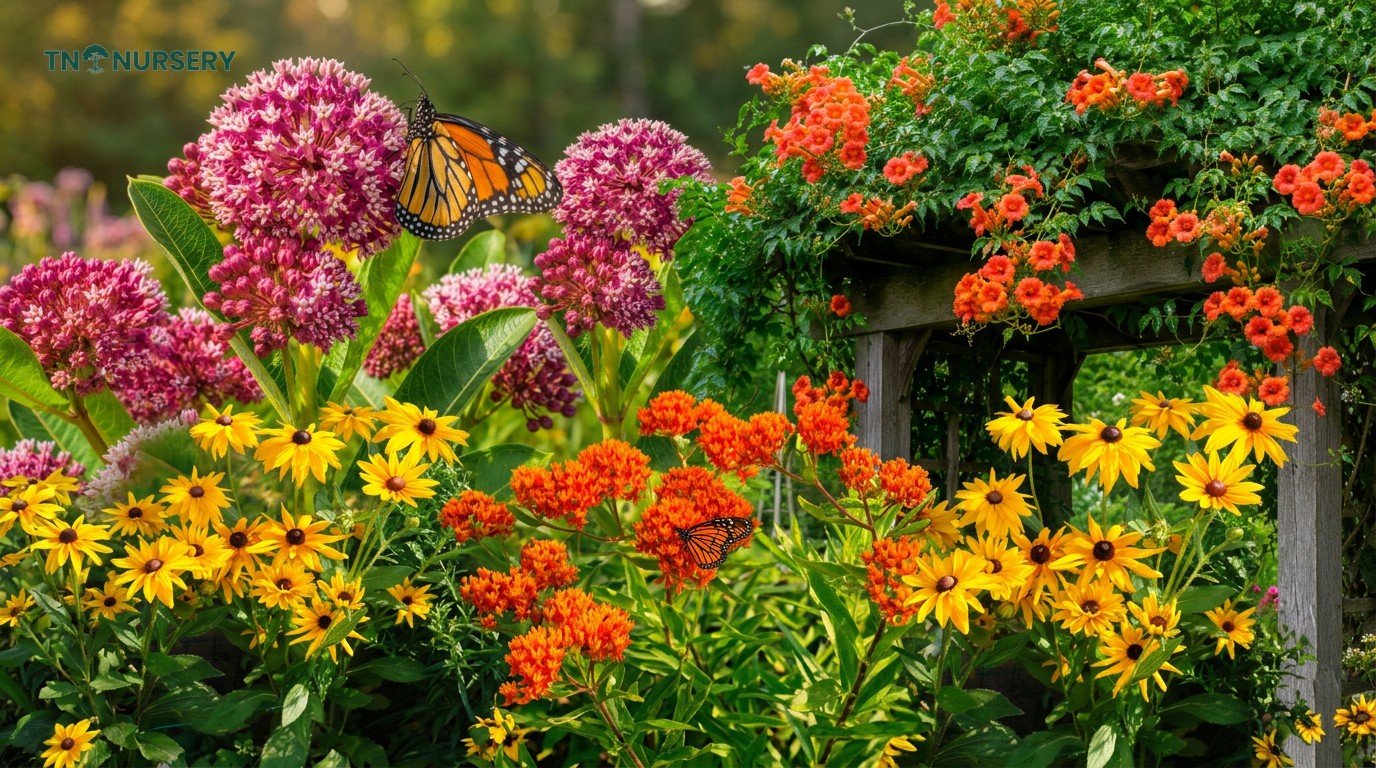
If you want pollinator perennials for summer that do more than bloom for a few weeks, plant in layers. We get the best results when we mix sunny backbone plants like coneflower, butterfly weed, and black-eyed Susan with moisture-loving cardinal flower and a few partial-shade companions near the edge.
What are the best pollinator perennials for summer to buy?
Start with prairie-style planting. Coneflower, butterfly weed, and black-eyed Susan give you steady color, easy visibility for bees and butterflies, and the upright form that keeps a bed from looking flat. Then tuck cardinal flower into wetter spots, where its red spikes help draw hummingbirds late in the season.
For wooded edges, add partial-shade support plants so insects have shelter when the afternoon sun gets harsh. That mix matters. Nectar alone is not enough if the whole bed dries out or finishes blooming at once.
How we layer for bloom and habitat
- Host layer: Use native foliage plants where caterpillars can feed and hide.
- Nectar layer: Combine coneflower, butterfly weed, black-eyed Susan, and cardinal flower for staggered bloom.
- Structure layer: Keep taller stems and mixed heights so birds, bees, and beneficial insects can use the space.
Prairie plants and full sun flowers that work harder
Group plants in drifts of three, five, or seven. You will get a stronger color block, and pollinators can find the flowers faster. This is one of the simplest ways to improve a planting of prairie plants and full sun flowers.
And keep pesticides out of the bed, even the quick spray kind. They can kill the insects you are trying to support. If survival matters most, shop by your hardiness zone and site conditions first, then browse our longest blooming perennials collection.
A good pollinator bed should still look alive in late August, not tired by July.
Are asters perennials?
Yes, asters are perennials in many gardens, and they are useful for late-season color. They also help bridge the gap after summer bloomers slow down. But here, we stay focused on the TN Nursery selections above for moisture, sun, and edge planting roles.
Our Top Pick for Pollinator Perennials for Summer

Milkweed: The Host Plant Monarchs Actually Need
If you want butterfly support that goes beyond flower color, start with Milkweed Plant. Nectar plants feed adult butterflies, but host plants give caterpillars a place to live and eat, and monarchs rely on milkweed for that job. We like it for summer pink blooms, fragrant flower clusters, and easy use in borders, meadow plantings, and naturalized beds. Keep in mind that it wants full sun, but once established, it handles dry spells with very little fuss.
- Summer-blooming pink flowers with a fragrant display that draws pollinators
- Full-sun grower for planting zones 3-10, with mature height over 12 inches
- Essential monarch host plant that also works well in landscaping and pollinator gardens
Longest Blooming Perennials for Sun, Moist Beds, and Pollinator Color
These pollinator perennials for summer cover the big jobs in August. We grouped them so you can match bright full sun flowers, rain-friendly natives, and long-season color to the exact spot you’re planting.
Watch Hummingbirds Up Close With Longest Blooming Perennials
These pollinator perennials for summer earn their spot by flower shape and placement. We use Trumpet Vine for plants that attract butterflies and hummingbirds on fences or porch posts, then tuck Indian Pink Plant into lightly shaded beds where you can catch every visit from a chair or patio table.
Frequently Asked Questions
Which pollinator perennials bloom longest in summer?
For pollinator perennials for summer, we focus on plants in our long blooming perennials collection. These are the picks we use when you want color through August instead of a quick two-week show. They work especially well in sunny borders, cottage-style beds, and naturalized plantings. Keep in mind that longer bloom usually means you should deadhead spent flowers and give plants enough sun, or the display shortens fast.
What are the best flowers for shade that still support pollinators?
If you need the best flowers for shade, look for native perennials that can bloom with morning sun or bright filtered light. In deeper shade, you will usually get more foliage than flowers, so pollinator activity drops too. That is the tradeoff. We tell customers to use shade-tolerant native perennials at woodland edges, not in dense, dark corners, if butterflies and bees are the goal.
Which plants attract butterflies and hummingbirds at the same time?
The strongest overlap usually comes from long-blooming native flowers with open clusters for butterflies and nectar-rich tubular blooms for hummingbirds. In mixed plantings, we suggest combining taller summer bloomers with mid-height natives so something stays in flower through late summer. And yes, placement matters. Put them in full sun, out of strong wind, and close enough to a patio or path that you'll actually see the visitors.
Are asters perennials?
Yes. Asters are perennials, and they are one of the most useful late-season native flowers for August into fall. We recommend them when you want color after many early summer plants slow down. They also fit well with prairie plants and other natural-style beds. But give them room. Some asters spread and can look crowded in a tight front-border planting.
Which natives work in wet spots or rain gardens?
For low areas that stay damp, we suggest native perennials suited to seasonal moisture rather than dry-border plants. That matters in a true rain garden, where roots may sit in wet soil after storms and then dry between rains. We always tell customers to match the plant to the site first. Wet clay, sandy low spots, and downspout runoff zones all behave differently, even when they look similar.
How does TN Nursery ship plants?
We ship all items with 3-4 day ground shipping. That applies across our plant categories, so you can expect the same shipping method whether you order perennials, seedlings, flowering trees, climber vines and groundcover, or shade ferns.
Does TN Nursery accept returns or offer refunds?
No. We do not offer refunds, and we do not accept returns. We also do not offer a warranty on any product unless an extended warranty is purchased at the time of order. If a product issue qualifies and the plant is available, we can offer a reshipment. If it is out of stock, we can offer in-store credit instead.
How can I contact TN Nursery?
You can reach us at customerservice@tennesseewholesalenursery.com. Our mailing address is Tennessee Wholesale Nursery, 12847 State Route 108, Altamont TN 37301, United States. If you have a growing question before you buy, ask us. We would rather help you match plants to your zone and light conditions than have you guess.
Conclusion
Key Takeaways
- Use host plants and nectar-rich blooms together for stronger late-summer pollinator activity.
- For sunny beds, combine milkweed, coneflower, and black-eyed Susan for overlapping bloom and habitat value.
- For moist edges and rain garden native plants, cardinal flower and Indian pink are strong picks for hummingbirds.
- Match plants to sun, shade, and moisture instead of forcing one plant into the wrong spot.
- Asters are perennial plants, and they help extend August and early fall color.
