
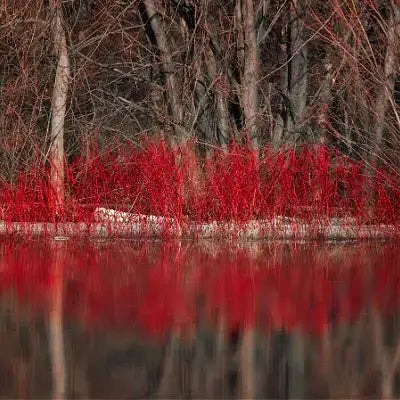
Red Osier Dogwood Shrub: A Captivating Enhancement For Your Landscape
The red osier dogwood shrub is one of the few shrubs that I know can effortlessly brighten up any garden. The red osier dogwood, red-twig dogwood, American dogwood, red willow, and red-stem dogwood are wonderfully eye-catching shrubs that are ideal for any garden. Their scientific classification is Cornus sericea. Like most plants, different dogwood shrubs are known for specific characteristics. Their most popular feature is the thick red stems that are able to shine against the white blanket of the winter snow.
As the red osier dogwood shrub red osier dogwood shrub is cold-hardy in zones 2 to 7, it can withstand diverse climates throughout North America, which makes it even more reliable. This shrub can be used if you are searching for something with a distinct texture to enrich your garden with, as well as a plant that is beautiful throughout the entire year.
Red Osier Dogwood Care and Watering
The Red Osier Dogwood (Cornus sericea) is a beautiful shrub throughout North America. It grows best in moist areas near rivers and lakes but can also be grown in other areas if given enough water. The Red Osier Dogwood is famous for landscaping because of its bright red stems and white flowers. This article will discuss the Red Osier Dogwood shrub 's history, care, and benefits!
There are many benefits to growing the Red Osier Dogwood. The shrub is known for its bright red stems, which add color and interest to the landscape year-round. The white flowers are also a delight to see in the spring. The Red Osier Dogwood is a hardy shrub that does not require much care, making it a perfect choice for busy gardeners. Additionally, the shrub can be used for medicinal purposes. The shrub's bark has been used to treat fevers, colds, and stomachaches.
Beauty Through The Year
quick facts Red Osier Dogwood is one of those plants that can give interest to a garden throughout the year. Spring and summer adorn the plant with blooms shaped like clusters of flat ivory-white lace that enhances the beauty of any yard. The garden is further enlivened in autumn when the intricate leaves perform their own magic, shimmering in variegated reddish-purple. The one that competes with the sun for attention is a vibrant explosion in the middle of a cold canvas when the earth is being obscured in dull hues.
They are also a great partner for evergreens and Japanese Maples with their uniquely textured flowers. Red Osier Dogwood works beautifully with popular garden perennials like daylilies, hydrangeas, and Rose of Sharon.
The New Osier Dogwood Shrubs
The Red Osier Dogwood Shrubs are applauded by gardeners because they are easy to grow. Red Osier dogwood prefers to grow in full sun and, when possible, in partial shade, in wetter soils, and they thrive in moist soils. These adaptable dogwoods do exceptionally well when planted in marshy and boggy soils. These shrubs are a great choice for your garden because they provide year-long food and shelter for marsh birds, butterflies, and even deer!
If regular pruning is not done, the Red Osier Dogwood tends to multiply and become out of control. The best way to control its growth is to prune or shear the dogwood shrubs back to ground level every spring. This not only reduces the spread of the dogwood, but it also stimulates the growth of bright new red stems. These stems will remain bright for as long as regular pruning is done. However, if no pruning is done, the stems will fade to a dull gray and the plant will no longer be visually appealing.
Propagation and Care
There's no denying the ease by which Red Osier Dogwoods can be propagated, either by seeds or cuttings. For seeds, you can throw the seeds on the ground and let them grow naturally. For cuttings, it would involve taking hardwood cuttings in the fall and potting the branches after dipping them into rooting hormone. They can take up to a year to root, but once established, they can be planted anywhere to thrive.
Uses of Red Osier Dogwood in Native American Culture
Apart from the Red Osier Dogwood's ornamental purposes, numerous Native American tribes consider the bush to be valuable culturally. The inner bark was especially useful in mixing with tobacco, while stems were woven into baskets and used to make dream catchers, along with dye. The red stems were also used to weave into baskets and other woven materials. The berries, while they can be quite tart, were used in multiple ways. The shrub was also used in medicine, but quite differently. It was used to treat a patient with a headache, sore throat, diarrhea, and even weak kidneys.
Would You Like to Add Red Osier Dogwood to Your Garden?
The Red Osier Dogwood is perfect for anyone who wants a shrub that provides interest for all four seasons, brings in local wildlife, and grows well in wet places. If your goal is a dense privacy ornamental screen, a shrub to beautify your garden, or a bold winter accent, there is no limit to what this easy-to-grow shrub can do.
Check out TN Nursery for Red Osier Dogwood shrubs and for everything else your garden needs to flourish no matter the season out of their extensive collection of online gardening products. If you want to learn more about these products, they are very helpful in teaching you
FAQs
Where is the best place to plant Red Osier Dogwood?
Red Osier Dogwood is best suited in full sun or in partial shade where the soil is moist and well-drained. It loves marshy or boggy territory and can thrive in soil that is very wet. Planting close to a water body or areas that stay damp will also help the plant thrive. Red Dogwood seeks moisture and dampness and will flourish fully if planted by water marshy areas. Then this plant will be very happy if neglected a bit. The plant can also be paired very well with evergreens and Japanese maples to help uplift the landscaping.
Planting Red Osier Dogwood
The Red Osier Dogwood is a hardy shrub that does not require much care. It can be planted in full sun or shade and not need to be fertilized. Once established, the shrub will tolerate a wide range of drought-tolerant soil conditions. The Red Osier Dogwood can be pruned to maintain its shape but does not require pruning to thrive.
How tall does Red Osier Dogwood get?
Like any other shrub, the average Red Osier Dogwood will grow anywhere between 5 to 8 feet, although a 12 ft shrub is not uncommon either. The growth form is deciduous, so stems will grow upright most of the time and a couple of the branches will arch to give this dogwood shrub a very graceful appearance. The shrub can also be hedged to a much smaller choice if necessary, but a gentle and loose approach is very much appreciated.
What is the hidden downside to planting a dogwood tree in your yard?
A Red Osier Dogwood makes a beautiful shrub, but it does come with a few care requirements. Over the years, Red Osier Dogwoods tend to spread so, with no shrub pruning, the ‘visual impact’ of the plant can diminish because the bright red stems will fade to gray. Likewise, twig blights, cankers, and leaf spots, that are harmful to the Red Osier Dogwood, will need to be treated. Scale, leaf miner, and bagworm are a few of the common pests that might need to be dealt with. However, most of the time, these pests can be handled with the proper pesticides.
Is Red Osier Dogwood a shrub?
It is a Red Osier Dogwood shrub. Like all dogwoods, it is a deciduous perennial that grows in a wide, upright posture with brilliant red stems. Red Osier Dogwood can be used for numerous landscape purposes including hedging, screening, and mixed borders. It reaches heights up to 12 feet given optimal conditions.
Will Red Osier Dogwood spread?
Yes, Red Osier Dogwood will spread given enough time. It multiplies naturally via the root system into dense thickets, which can be an asset when building wildlife habitats or privacy screens. However, such unrestricted growth means that the shrub needs to be pruned or sheared regularly. Shrub pruning during spring encourages the growth of new red stems and minimizes invasiveness of the other plants in the garden.
What are the disadvantages of the dogwood tree?
It comes to no surprise that Red Osier Dogwood has some disadvantages. It can spread aggressively if not pruned often. The shrub has also twig blights, cankers, and leaf spot disease which populates the dogwood’s ecosystem. Other pests that are commonly associated with dogwoods are leaf miners, scale, and bagworms. The red stems of the shrub also lose color and fade into unappealing gray if not pruned enough.


