
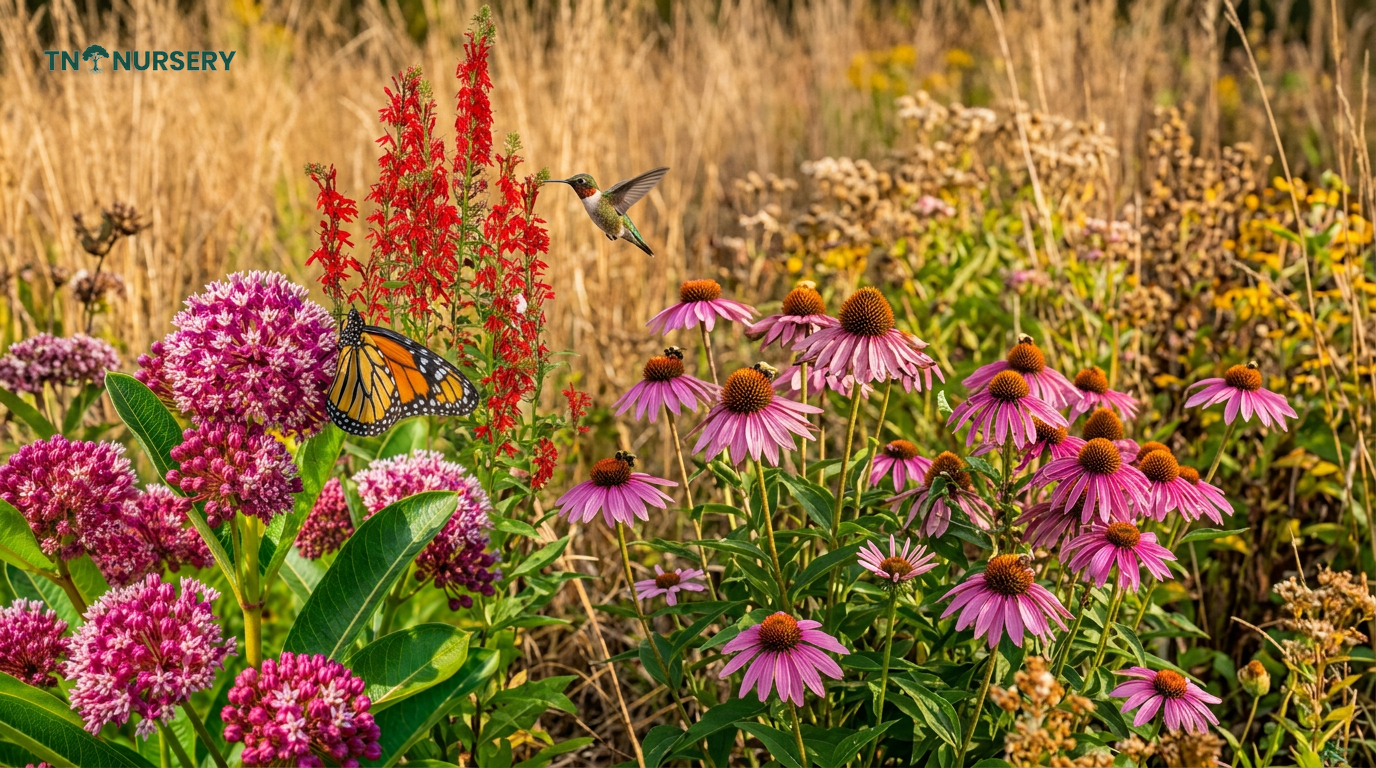
Build a Fall Garden With California Native Flowers
Late nectar matters. We help you match native california plants to sun, shade, and moisture, so bees, butterflies, and hummingbirds keep finding food as autumn sage and summer blooms fade.
Why Fall Pollinator Planting Matters
- Support migrating pollinators when nectar gets scarce in late summer and fall
- Extend seasonal color with staggered bloom times instead of a spring-only display
- Improve biodiversity with seed heads, shelter, and host-plant value
- Choose plants by USDA zone, sunlight, soil moisture, and site conditions
A Reliable Fall Anchor for California Native Flowers

Goldenrod for Busy Early-Fall Borders
If you want a border that still looks alive in early fall, we recommend Goldenrod. Its yellow fall bloom brings strong color right when many summer flowers slow down, and it feeds pollinators at the same time. We like it with coneflowers, sunflowers, and grasses for a loose, natural look. Keep in mind that it grows over 12 inches tall, so give it room where its late-season color can show.
- Bright yellow flowers that bloom in fall for late-season garden color
- Grows in planting zones 3 through 9, so many homeowners can use it with confidence
- Thrives in full sun to partial shade and supports pollinators and butterflies
Shop Native California Plants for Fall Pollinator Color
Build a longer-lasting fall garden with these pollinator picks. We grouped sunny staples, moisture lovers, and woodland-edge choices so you'll find california native flowers that keep beds active into late season, with Milkweed Plant for monarch support and durable color from coneflowers, lobelia…


Build a Native California Plants Bed That Feeds Pollinators All Season
We grouped these four reliable bloomers to show how one planting can do more than look good. You’ll get host-plant support from Milkweed Plant, durable summer color from Purple Coneflower and Echinacea Plant, plus a moist-pocket accent from Garden Phlox for a layered, meadow-like look with real…
How to Plan a Fall Pollinator Border That Lasts
When you shop for california native flowers, start with site conditions, not bloom color. We see better long-term results when you match sun, soil moisture, and winter lows first. That is how fall gardens keep feeding bees and butterflies instead of fading after one rough season.
How to choose the right california native flowers?
Choose plants by light, drainage, and your local hardiness range. If you are comparing native california plants from different regions, keep in mind that coastal and inland gardens can behave very differently in fall.
Full-sun dry sites
Dry, bright spots need plants that keep flowering without soft growth that flops in heat. This is where our Fall Blooming Perennials collection earns its place, especially for front yards with reflected heat from walks or driveways.
- Front: use lower mounding plants so pollinator blooms stay visible from the path.
- Middle: add longer-blooming selections for steady nectar through early and mid-fall.
- Back: place taller stems where they can sway a bit without blocking windows.
And do not choose only by flower color. A bed full of one bright shade can look flat by October. Mix bloomers with plants that hold seed heads, because birds use them after the flowers slow down.
Average border beds
These are the easiest spaces to layer. Put shorter plants at the edge, medium growers in drifts behind them, and taller forms at the rear fence or wall. We suggest repeating the same few plants in groups, not scattering singles everywhere. The border reads cleaner, and pollinators find larger patches faster.
Moist or low-lying areas
Low spots can be productive, but soggy winter soil changes the plant list fast. Look, if water stands for days after rain, treat that area as its own zone. Pick fall bloomers that can handle periodic moisture, then add seed-bearing structure behind them for late-season interest.
Part-shade woodland edges
At a tree line, flowering often slows, so placement matters more. Keep the tallest plants where they still catch half a day of light. Use lower growers near the front so blooms do not disappear under branches.
"The gardens that hold up best in fall are the ones planned by water pattern first, color second."
Many homeowners also ask about autumn sage for late pollinator color, and it can be a useful reference point when you want a long-blooming fall look. But whatever you plant, we always come back to zone compatibility and real site conditions. That is how we help you get stronger root systems, better return next season, and fewer losses after planting.
Frequently Asked Questions
What are the best california native flowers to buy for a fall pollinator garden?
For fall color, we point shoppers to our Fall Blooming Perennials collection at california native flowers for fall gardens. If you want late-season nectar, autumn sage is one of the strongest picks because it keeps the garden active when many summer blooms slow down. We focus on native california plants that fit home landscapes and support bees, butterflies, and hummingbirds.
How do I choose between sun and shade pollinator flowers?
Start with the light you actually have, not the light you wish you had. Most fall-blooming pollinator plants flower best in full sun, so a bright front bed usually gives you more blooms and more insect activity. But keep this in mind. If your yard gets broken light under trees, bloom count can drop, even when the plant stays healthy.
Which plants help monarch butterflies in fall?
In fall, monarchs need dependable nectar as they move through the season. Autumn sage helps by offering late flowers that pollinators can visit when many beds look tired. We suggest planting in clusters instead of one plant at a time, because butterflies find grouped color faster than scattered single blooms.
When should I plant for fall garden success?
Late summer into early fall is a practical planting window for many homeowners. The soil is still warm, which helps roots settle in before winter. So if you are planning now in August 2026, this is a solid time to add fall-blooming perennials. Just water new plants regularly while they establish.
How does TN Nursery ship live plants?
We ship all items by 3-4 day ground shipping. That shorter ground window helps live plants spend less time boxed up in transit. If you are ordering for a weekend planting project, give yourself a little cushion so you can unpack and plant promptly.
Does TN Nursery accept returns or offer refunds?
We do not offer refunds, and we do not accept returns. But we may offer a reshipment, in-store credit, or help with an extended warranty claim if that warranty was purchased at the time of order. Availability matters here, so we handle those cases based on what we have in stock.
How can I contact TN Nursery?
You can reach us at customerservice@tennesseewholesalenursery.com. If you need our mailing address, we are Tennessee Wholesale Nursery, 12847 State Route 108, Altamont TN 37301, United States. Ask us about plant selection, shipping, or order issues, and we will point you in the right direction.
Conclusion
Key Takeaways
- Start with Goldenrod as a dependable fall anchor plant.
- Layer in Milkweed Plant, Purple Coneflower, Cardinal Flower, or Maximilian Sunflower based on sun and moisture.
- Use host plants and long-blooming flowers together to support more pollinators.
- Mix plant heights to create better structure and feeding access.
- Zone-aware, site-matched planting usually means better survival and lower upkeep.
