Mayapple Details
May Apple Plants For Sale
May Apple (Podophyllum peltatum) perennial are a true woodland treasure, offering charming umbrella-like foliage that brings a touch of the wild to any shaded garden. Each spring, they surprise you with delicate hidden blooms and later produce unique, golden fruits loved by wildlife. Easy to grow and highly ornamental, these plants create a lush, naturalized look that instantly elevates your landscape.
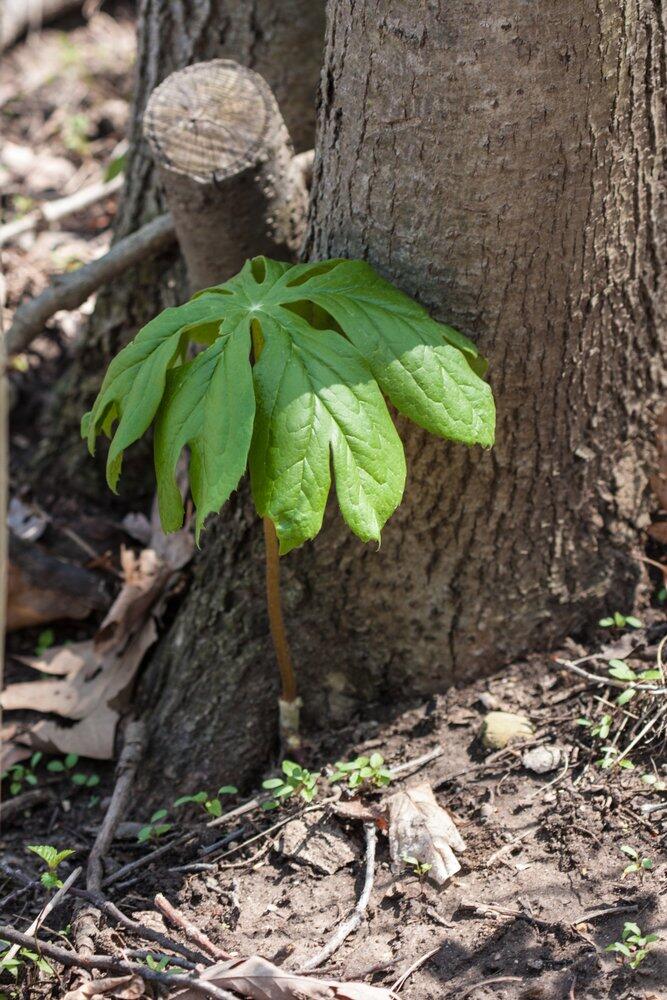
The May Apple is a charming native of the USA that grows across the forest floor in woodland ecosystems. This fairytale story plant produces two palmately lobed leaves atop slender stems reaching about 18 in height. In early spring, each plant produces one nodding cup-shaped white flower with delicate yellow stamens.
Once pollinated, the flowers develop into a fleshy fruit resembling a green apple, a characteristic which inspired this charming forest plant’s common name.
Often, these plants form a swath of individual stems originating from a single root system. These stems emerge from a creeping rhizome just below the soil surface. Some stems only bear one leaf and do not produce a flower; however, they contribute to the impressively dense and lush ground cover nonetheless.
May Apple Plant Details
Family: Berberidaceae
Hardiness Zones: 3 to 9
Light Requirement: Partial sun to partial shade
Water Needs: Moderate
Height: 12 to 18 in
Spread: 8 to 12 in
Growth Rate: Moderate
Bloom Time: Late spring
Flower Color: White with yellow stamens
Wildlife Value: Flowers attract pollinators, and woodland animals consume their fruit
The fruit of this plant is ripe once it is yellow and becomes soft to the touch. In the past, the fruit was used to make delicious jams and other treats; however, all parts of the plant, including the fruit, are poisonous when eaten in large quantities.
Interestingly, the ripened fruit produces an aroma that attracts box turtles for a feast. After passing through the turtle’s digestive system, the seeds are 40% more likely to germinate than if they germinate directly from the fruit's fall.
Landscape Uses and Maintenance
The May Apple plant grows well under pine trees and prefers medium-moist, well-drained soils in partial sun. It is a plant that deer and rabbits tolerate and has no serious pest or disease issues.
It produces a lovely ground cover that will emerge early in the spring. After the fruit has ripened, the plant goes dormant in summer and will reappear the following year. Given the plant’s cyclical growth habit, plant it with other perennials that emerge and flower later in the year to keep your woodland garden consistently bursting with life.
Noteworthy Characteristics
Attractive to pollinators, fruit enjoyed by wildlife, and dense ground cover.
This charming, umbrella-like, native perennial will produce a lush green ground cover in your woodland garden year after year, ensuring that you have something to look forward to after winter’s slumber. Shop for Mayapple plants online at TN Nursery. For 68 years, we have served the landscaping industry and homeowners with specimen plants.