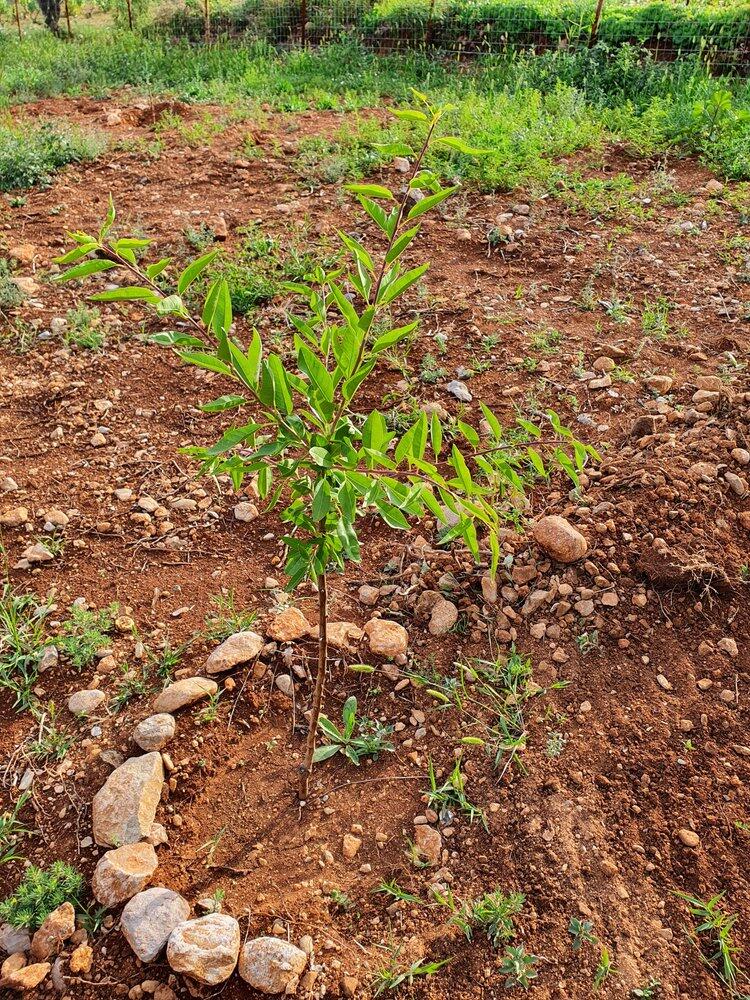
Hall's Hardy Almond Tree Details
Hall's Hardy Almond - Prunus Dulcis
The Hall's Hardy Almond Tree (Prunus dulcis) is ancient. It is one of the earliest domesticated fruit trees, and is rarely found wild in its original setting. There is even archaeological evidence of domesticated almond nut trees found from the early Bronze Age in the Middle East – so this tree truly has been feeding us for centuries. It is in the peach family and has blooms similar to those of the cherry. Its fluffy, light pink flowers grace the branches in spring, filling the air with their sweet fragrance.
Hall's Hardy Almond Tree Details
Family: Rosaceae
Light Requirement: Full sun
Water Needs: Moderate
Height: 10-15 ft
Spread: 10-20 ft
Growth Rate: Moderate, Fast
Soil Preference: Fertile, well-draining
Season of Interest: Spring
Flower Color: Light Pink, White
Fruit: Drupes (Almonds)
Wildlife Value: Birds, Small mammals, Bees, Butterflies
Notable Characteristics
This Almond Tree is beautiful and unique. It bears fruit that has no flesh but is considered a drupe, as it has a stone “pit”. Where the flesh is on a peach or plum is instead a soft, woody exterior, which dries out as the season continues. As it dries, it breaks open to reveal the almond in its shell, which can then be broken open.
Therefore, almonds are not actually considered a nut; they are actually a drupe. The tree itself has woody, medium-sized branches in a warm brown. The leaves are long and oval-shaped with pointed tips, and are a glossy, bright green. The flowers are white or very light pink, somewhat resembling cherry blossoms, and are beautifully fragrant.
Landscape and Maintenance
This glorious tree is native to the Mediterranean because it thrives in warm, dry summers and mild, wet winters. Currently, California is responsible for growing 80% of the world's almonds, but the trees require a high amount of acreage and water to thrive. Given the increase in drought and temperature due to climate change, almond nut trees are likely to be on the decline.
The Hall's Hardy Almond Tree provides early-season nectar to hungry pollinators like bees and butterflies, and the almonds that drop as its husk dries out provide food for birds and small mammals. This fragrant, showy tree is an absolute gem to grow in your yard.