
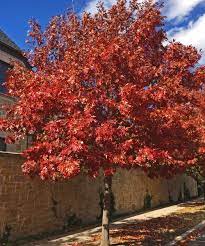
The Top Reasons to Plant a Red Oak
If you like to watch the leaves change during the summer, consider planting a Red Oak Tree in your office or home garden. It is an excellent addition to your landscape because it makes a robust and sturdy appearance. It is also a tree that grows well in various environmental conditions. While the northern Red Oak grows well in zones 3 to 7, the southern Red Oak grows well in zones 6 to 10. How much maintenance does the Red Oak require?
The Red Oak Does Not Require Much Maintenance
While you need to water your Red Oak regularly after planting it, it doesn't require supplemental irrigation. The Red Oak tree is a tree that grows well in just about any soil condition. It grows well in the wild, particularly in the Southeast, so it should also grow well in your yard! You might want to prune the tree, so it grows in the right shape for your yard; however, this is not always necessary.
Planting Red Oak
With a canopy width of 40 to 50 ft at maturity, it should not be planted closer than 25 ft (7.6 m) from a house foundation, driveway, or septic system, and 20 ft (6.1 m) from other large trees. On a small inner-city lot, it is not a tree for the future unless you are prepared to give it room to fill out to its mature size.
Quercus rubra ( red oak ) is one of the fastest growing oaks in Tennessee, growing more than 2 feet per year after establishment in the landscape. It provides good fall color in its young age, with new leaves ranging from red to russet. Mature trees are 60 to 75 feet tall, making it adaptable as a shade tree that has good fall color. It is one of the best choices for the USDA plant hardiness zones 4 through 8 that cover all of Tennessee.
If you want a native tree for long-term shade, wildlife value, and heat tolerance, our Southern Red Oak Seedlings are the clear pick here. They are suited to planting zones 6-10, ship bare-root, and grow into a large tree that can reach 60-80 feet at maturity. Look, this is not the tree for a tiny yard. It is the right tree for open ground, restoration work, and homeowners planting for decades, not just next season.
When it comes to red oak trees care , it's essential to provide space for growth these can grow to be 60 to 75 feet tall and spread out to 45 feet. Don't plant too close to structures or pipelines that run underground. Their roots need a lot of room to grow.
Water once a week for the first two years until the plant is well established. Water more frequently in extreme summer heat; after two years, rainfall is usually sufficient for Tennessee except during long-term drought.
In Tennessee, autumn, the period between early October and the beginning of December is the best time to plant trees. Planting any time in fall before the frost gets in the ground gives the roots of the plant several months to grow before spring's growing season. The second best time to plant is early in the spring after the earth can be worked but before the buds break.
Plant our southern red oak seedlings at the same depth they were growing before shipment. Since they arrive bare-root, spread the roots out naturally and set the root flare just at soil level, not buried under extra soil. We do not recommend planting deeper to "protect" the seedling. That often keeps the trunk too wet and slows early growth. After planting, mulch the root zone, but leave a few inches open around the trunk.
Backfill with native soil. Oaks do best with their roots growing into native soil rather than a pocket of compost or bagged topsoil created by adding too much amended soil around the rootball. Water well at planting and keep the root zone of new plants evenly moist but not wet and soggy during the first year.
When it come to red oak tree Planting , pick a spot that gets a lot of sun and has deep, well-drained soil. Water the plants often in the first few years to help their roots grow robust. Once they are established, Red Oaks can handle dry weather and don't need much care. They just need to be pruned and mulched every now and then.
As botanists and horticulturists took interest in the species they introduced it to areas beyond its original habitat. The species earns international admiration and recognition because of its valuable contributions to forestry practices while playing important roles in both conservation efforts and decorative planting.
The planting hole should be two times as wide as the root ball diameter and no deeper than the growing depth in the nursery. Planting too deep is one of the most common mistakes in the planting of oaks , and can stunt or kill them; the root flare (where the trunk flares out to become roots) should be at or above grade level.
Red Oak Care and Watering
Quercus rubra shows a degree of hardiness that is unmatched by most other species. Quercus rubra thrives successfully across USDA zones 3 through 8 because of its exceptional adaptability to various climates and soil conditions. The tree's deep roots provide drought resistance while its sturdy wood maintains stability during strong winds and storms. Because of its ability to grow well in both acidic and alkaline soils, this species stands out from other more sensitive ones and provides a practical option for different landscape types.
Watering cadence: deep watering once or twice a week in the first growing season, depending on rain
Red oak is easy to grow once established (usually by the second or third year), requiring little maintenance except for:
Longevity: Red Oaks can live for hundreds of years with the right and proper care, which makes them a true legacy tree.
These leaves are better left within the garden beds or under the tree, as they break down relatively slowly and are good free mulch that helps improve soils.
Pruning Red Oak
Prune when dormant to shape tree structurally in late winter. Remove crossing branches, dead wood or competing leaders early in life while tree is molding its form. Spring and early summer months (around April to July) should be avoided for pruning because freshly made stumps will attract the beetles responsible for spreading the oak wilt disease.
And one more thing. Hold off on trimming oak trees or shaping cuts in the first year unless you see broken wood. Light correction is fine, but heavy pruning oak trees can slow establishment when the tree should be building roots.
The most serious disease among these is oak wilt, caused by a fungal pathogen spread by sap beetles and root systems. Avoid pruning while sap beetles are at their height of activity (summer). Gypsy moth caterpillars and oak skeletonizers are also present, but they rarely cause lasting damage on established trees.
Soil and Sunlight for Red Oak
Start with space and sun. This tree needs room for a mature spread of about 50-60 feet and performs best in full sun with well-draining soil. If your site stays wet for long periods, this is probably not your best fit. In that case, people often compare oak types like a bur oak tree or even ask about white oak vs red oak, but for dry upland ground and strong heat tolerance, Southern Red Oak is the better match.
We grow these bare-root seedlings for sunny sites in zones 6-10. You get fast growth, fire-red late summer color, and a native red oak tree that handles dry soil once established.
We like bare-root seedlings for larger plantings because they establish well and ship efficiently in bundles of 25 plants. That makes them useful for restoration, property lines, and open home sites where you want shade years from now, not next month.
TN Nursery ships well established red oak saplings that are much more likely to take to their new location than younger saplings. They are much more established than saplings sold as bare root stock. And since the red oaks take so long to reach maturity, and since our saplings are already so established and so healthy, you can shave real years off the time before you will stand under real shade and real fall color.
Most seedlings spend their first phase building roots before they put on dramatic top growth. That is normal. Our Southern Red Oak Seedlings are listed as moderate to fast growing, but you should still expect the early payoff to happen below ground first. In a good sunny site with well-draining soil, you will usually see steadier, more confident growth after that root system settles in. Patience pays off with oaks.
About Red Oak
We ship all items by 3-4 day ground shipping. Our Southern Red Oak Seedlings ship now and arrive bare-root. We do not accept returns, and we do not offer refunds. But if there is an issue that qualifies under our terms, we may offer a reshipment instead. We also do not offer a warranty unless an extended warranty was purchased at the time of order.
Keep in mind: fast top growth is exciting, but the first year is really about root growth. Do not rush it with heavy feeding.
Early European settlers accepted herbal medicine's therapeutic benefits after it became widely understood. This medicine became essential for apothecaries who prescribed it to treat respiratory infections and reduce fever while also using it to stop internal bleeding. Today's herbal medicine practitioners recognize its advantages by using extracts to treat both inflammation and digestive issues through natural remedies.
Indigenous peoples knew and used Red Oak Tree for centuries but formal scientific classification took place during the 18th century. European botanists who explored the New World were amazed by the impressive stature and robust nature of the local flora. Carl Linnaeus established its official taxonomic classification through his pioneering botanical publications. Scientific literature continues to use the name Quercus rubra extensively because researchers focus on its ecological role and climate adaptability.
The basic textbook answer is that the green chlorophyll that gives leaves their color breaks down when days grow shorter and nights grow cooler and the deep red shades produced by anthocyanins that already exist in leaf tissue take over. The red oak produces more anthocyanin than many other oaks do, which is responsible for red oak's more vivid fall color compared to white oaks that only exhibit the more subtle bronzing effect.
Why Should You Plant a Red Oak Tree in Your Yard
Garden
There are several reasons you should plant a Red Oak in your yard. The top features include:
The Red Oak can provide a symphony of beautiful colors that rotate throughout the year between red, orange, yellow, bronze, and green.You can use the Red Oak as a reliable source of shade when the weather gets hot outside.
The towering Red Oak can be a great playpen for your children.
You can support local wildlife, such as deer and squirrels, which will love the acorns that drop from them during the year.
Take advantage of these beautiful Red Oak tree features and plant one in your yard today!
Red Oak Size and Growth Rate
Pick a site with room first. This tree can reach 60 to 80 feet tall with a 50 to 60 foot spread, so we only recommend it for open areas where a long-term canopy makes sense.
Depending on how they are cared for and how they grow, red oaks grow between 1.5 to 2 feet a year.
For a large southern oak , give each seedling plenty of room. We suggest at least 25 to 30 feet between trees if you want each one to develop a broad, strong crown.
The straight and powerful trunk together with its wide-reaching canopy allows Quercus rubra to stand out in any environment. The tree reaches 90 feet tall as its powerful branches stretch outward to create a balanced rounded crown. The tree's bark features rough ridges and a gray color that contrasts vividly with the foliage's rich green.
pine tree Fast Growth: A lot of people want to know how fast Red Oak trees grow. They can grow as much as two feet a year in the best conditions, which helps them get established quickly.
Red Oak and Wildlife
Small flowers appear on Quercus rubra in spring before developing into elongated acorns by autumn. The tree's shallow-capped acorns nourish various wildlife species while enhancing its aesthetic appeal. The bark develops increasingly deep textures as the tree matures which results in a more striking visual pattern.
Red Oak Varieties
Quercus rubra (Red Oak Tree) represents resilience along with strength and longevity through its enduring existence. North American indigenous tribes held Quercus rubra in high esteem because of its impressive stature and the resources it offered. After arriving in North America early European settlers quickly acknowledged the tree's durability which they used for making ships furniture and housing materials. Historical documentation reveals that this material was fundamentally used in numerous early American buildings such as barns and bridges which helped establish its reputation as a fundamental element of early craftsmanship. This species holds the position of being one of North America's most common trees which has significantly influenced both natural environments and human societies.
Ancient cultures attributed deep cultural meaning to Quercus rubra by linking it with wisdom and protective qualities. Numerous tribes perceived this species as a spiritual dwelling which caused them to use it frequently for ritualistic and spiritual meetings. The tree found new applications beyond construction when conservationists began recognizing its value in supporting diverse ecosystems.
Call TN Wholesale Nursery for a Healthy Red Oak Tree!
If you want a healthy tree to add to your landscape, consider going with the Red Oak tree. This robust and hearty tree proliferates and lives for decades. For this reason, the Red Oak could be the anchor that brings your entire home or office garden together! At TN Wholesale Nursery, we can work with you, helping you find the perfect Red Oak for your property! Contact us today!
Red Oak Problems and Pests
Traditional medicine historically used the inner bark of Quercus rubra to harness its astringent and anti-inflammatory effects. The Cherokee and Iroquois tribes utilized teas made from this bark to address health issues like diarrhea and sore throats. Ground bark poultices were applied to wounds and skin problems because their tannins helped fight infection and speed up healing.
Red Oak in the Landscape
Unlike most other maples, which require a certain number of days of freezing temperature to produce their most brilliant fall foliage, red oak turns russet red to brick red in autumn regardless of temperature. It turns late in the autumn (late October to mid-November in Tennessee) so it is useful in the landscape in which a long fall color season is desired after the fall color has passed, such as dogwood and sugar maple trees.


