
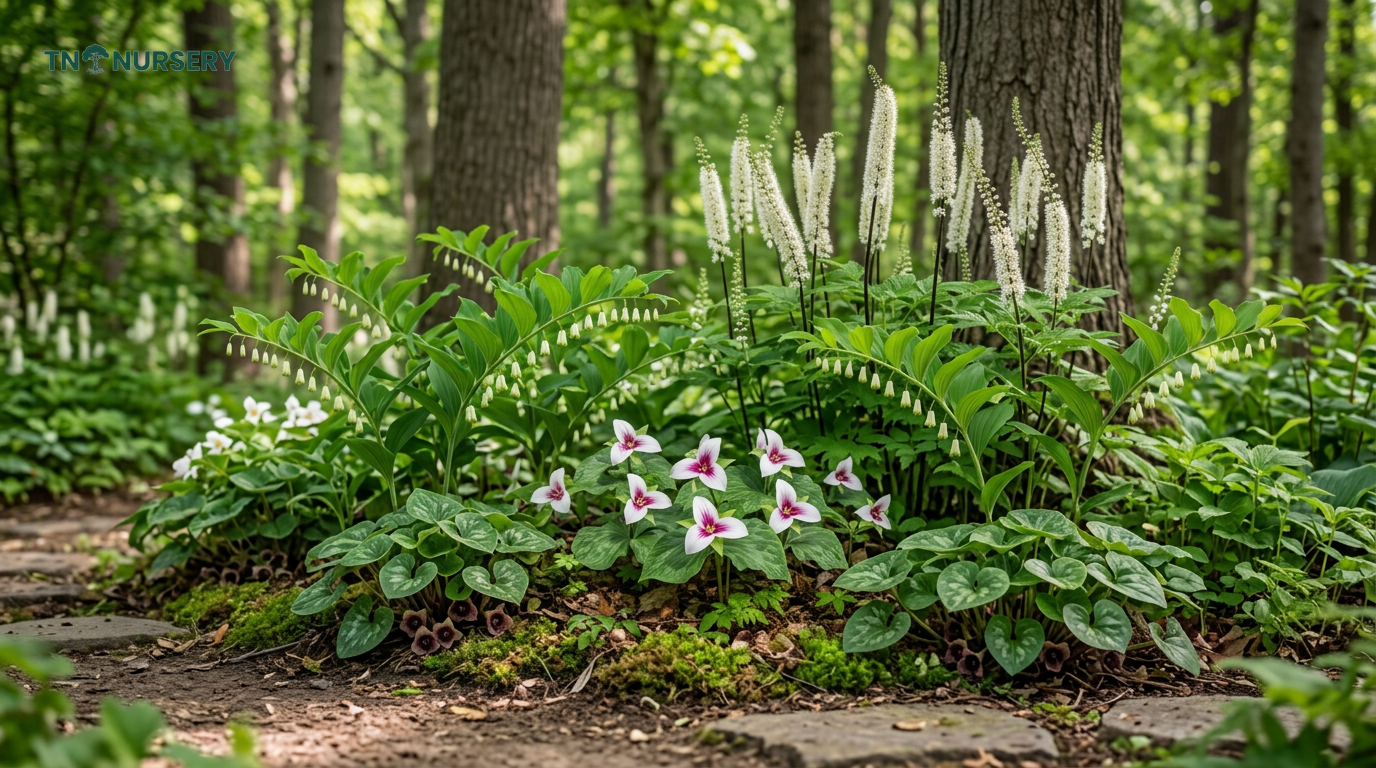
August Shade Garden Perennials That Keep Woodland Borders Alive
Shade beds do not have to fade by late summer. We’ll show you layered, low-maintenance picks for structure, texture, and zone-aware shade garden ideas that hold up in real yards.
What are the best August shade garden perennials to buy?
- Look for plants that handle filtered light and consistent woodland moisture.
- Choose a mix of upright forms, broad leaves, and fine texture for layered shade garden ideas.
- Prioritize foliage that still looks presentable in late summer, not just spring bloom.
- Pair low-maintenance woodland plants with shade fern and groundcover plantings for fuller borders.
- Use our zone-based shopping tools to narrow plants for your climate before you buy.
Our Top Pick for August Shade Garden Perennials

Dependable Woodland Structure for the Middle of a Shade Border
In an August border, we count on Solomon's Seal Plant for shape long after its spring flowers pass. Its arching stems, paired leaves, and white bell blooms give shade loving perennials a calm woodland look, while the 2 to 3 foot height helps bridge lower fillers and taller back-of-border planting. Keep in mind that it dies back and can leave gaps, so we plant it in rich organic soil with moderate moisture during establishment and let nearby ferns or ground-hugging companions keep the bed full.
- Arching stems with hanging white spring flowers and paired leaves for strong woodland form
- Thrives in partial to full shade across planting zones 3 through 9
- Slow-spreading perennial that returns each spring and fits the middle layer at 2 to 3 feet tall
Build an August Shade Border with Layered Shade Loving Perennials
Start with height, fill the middle, and finish the front edge. We built this woodland mix around August shade garden perennials that keep structure going now, while spring woodland companions hold the border together with foliage, texture, and natural spread after bloom has passed.


How We Build an August-Ready Woodland Border
By August, a shady border should still look settled and full. That is why we build with August shade garden perennials that carry the space on foliage as much as bloom. In woodland beds, broad leaves, airy fronds, and upright flower spikes do more work than bright summer color alone. You will get a richer result when you mix forms instead of planting one texture over and over.
How to choose the right August shade garden perennials?
Start with your USDA zone, then check how much light the bed actually gets. Morning sun and dry roots call for different shade loving perennials than deep shade with damp soil. We also suggest adding compost or leaf mold first, because woodland soil should hold moisture without staying heavy.
Start with vertical accents
Every shade border needs a few upright notes. Flower spikes and taller foliage keep the planting from looking flat, especially in late summer when many spring bloomers have already finished. Look, this is where structure matters most.
Fill the middle with arching or mounding foliage
This layer carries the bed through the longest stretch of summer. Use bold leaves beside fine, feathery shapes so your shade perennials read clearly from a distance. Hosta forms give weight. Ferns soften the edges. Woodland phlox adds a looser, natural drift that helps the border feel settled instead of stiff.
Finish with a living ground layer
Low growers tie everything together and hide bare soil. They also help a planting look older than it is. If you want reliable outdoor shade plants, plant in drifts rather than singles. Repetition always reads better in a woodland setting.
Many woodland natives peak in spring. But their real value is the calm, layered framework they keep through summer.
What are the best August shade garden perennials to buy?
For long color, browse our Long Blooming Perennials collection. It is a practical place to start when you want the best flowers for shade mixed with dependable foliage plants.
- Repeat white flowers to brighten dark corners and make dusk gardens easier to read.
- Plant in groups of three, five, or more so the border looks natural, not dotted.
- Mix leaf sizes with hosta shade plants, fern shade garden textures, and airy bloomers.
- Expect a bloom sequence that leans earlier in the year, then let foliage carry August.
- Build layers over time if you are also adding flowering trees, seedlings, shade ferns, or groundcover from our catalog.
Keep one tradeoff in mind. Deep shade can limit flower count, even with flowers that thrive in shade. So if your goal is nonstop bloom, choose brighter shade and richer soil. If your goal is a low-maintenance woodland plants look, foliage-led planting wins every time.
Front-Edge Shade Perennials That Finish the Bed
These August shade garden perennials cover the ground layer that taller woodland plantings leave open. We use them to soften path edges, fill tree bases, and keep shaded beds looking settled in late summer, even after spring bloom has passed.
Frequently Asked Questions
What are the best shade perennials for August texture and structure?
For August shade garden perennials, we usually tell customers to focus on leaf shape and lasting form, not just bloom. Hosta gives you broad, bold foliage that fills gaps fast. Ferns bring a softer outline and keep a border from looking heavy. Woodland phlox helps most in mixed plantings because it threads color through greener shade perennials. If you want a border that still looks finished in late summer, hosta and fern are the strongest backbone.
Can spring woodland plants still add value in late summer?
Yes, if you plant them for layering instead of expecting nonstop flowers. Woodland phlox often does its showiest blooming earlier, but it still earns its space by knitting together other outdoor shade plants and keeping the bed from looking empty. Ferns and hosta carry more of the late-summer load with foliage. Keep that tradeoff in mind. August color is great, but strong leaves usually matter more in a woodland border.
How do I keep a shade border looking full all season?
Use three layers. We like ferns in the back or middle for height, hosta in groups for body, and woodland phlox near the front to soften edges. That mix gives you better structure than relying on one plant alone. For practical shade garden ideas, repeat the same plant in drifts instead of planting one of everything. It looks calmer, and the bed reads fuller from July into August.
What soil do woodland perennials prefer?
Most low-maintenance woodland plants grow best in loose soil with organic matter and even moisture. We recommend soil that holds water long enough for roots to stay cool, but still drains so crowns do not sit in soggy ground. Hosta and woodland phlox both appreciate that balance. Ferns do too. If your soil is hard clay, loosen it before planting. If it dries fast, add compost and mulch.
How does TN Nursery ship live plants?
We ship all items by 3-4 day ground shipping. That applies to the live plants we sell, including perennial and shade fern orders. We keep the policy simple and factual so you know what to expect before you buy.
What is your return and refund policy on plants?
We do not offer refunds, and we do not accept returns. If a reshipment is available, we may offer that instead. We also do not offer a warranty on any product unless an extended warranty was purchased at the time of order. If the product is out, we may offer in-store credit.
How can I contact TN Nursery if I have an order question?
You can reach us at customerservice@tennesseewholesalenursery.com. Our mailing address is Tennessee Wholesale Nursery, 12847 State Route 108, Altamont TN 37301, United States. If you have a plant or shipping question, send us the order details so we can help faster.
Conclusion
Key Takeaways
- Use Solomon's Seal and Black Cohosh to anchor the border with height and structure.
- Fill gaps with Wild Ginger and Lily Of The Valley to create dense, natural groundcover.
- Layer foliage and form so the bed stays attractive after spring bloom ends.
- Check zone fit before planting to improve long-term survival and reduce upkeep.
