
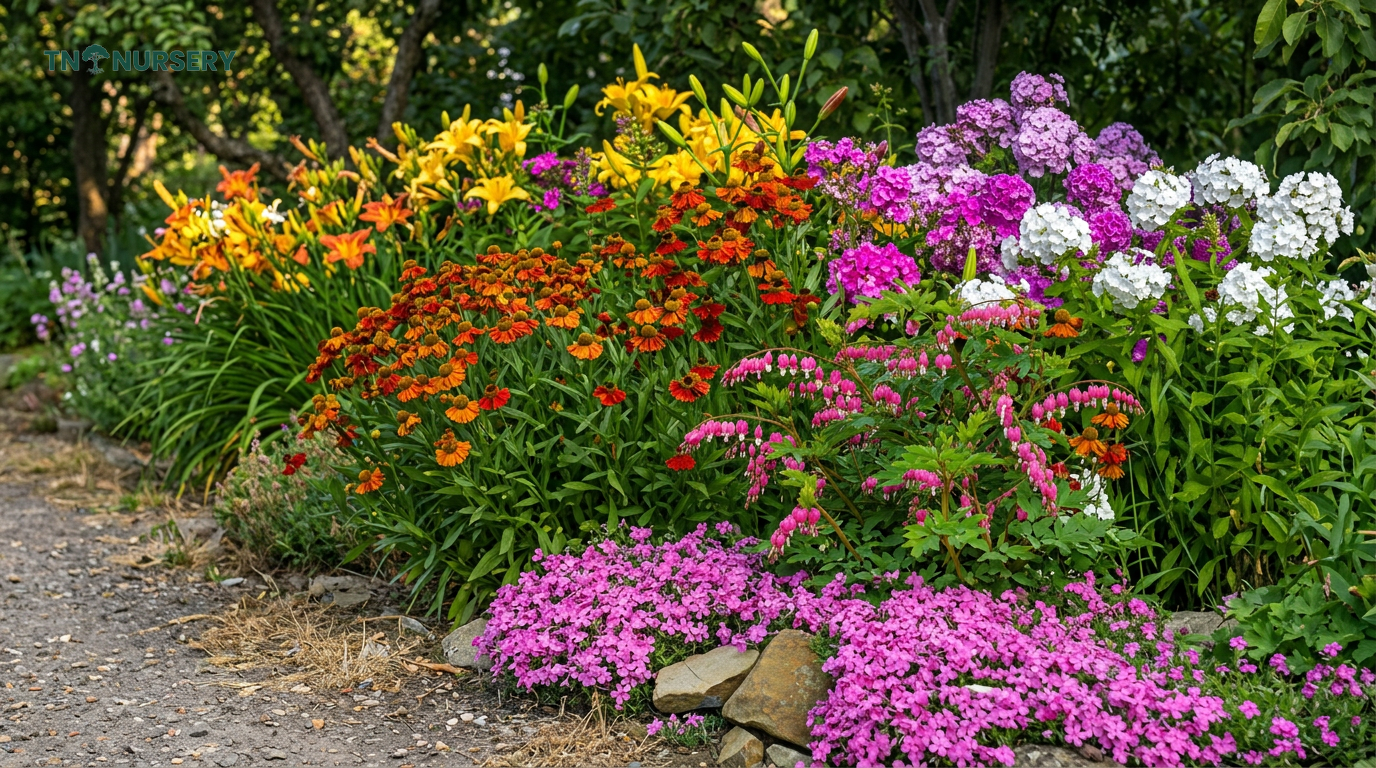
Perennials That Bloom All Summer, Even in Heat
We picked full sun perennials for real yards: lower water use, easier upkeep, and better survival when you match plants to your zone and soil.
How to choose the right perennials that bloom all summer?
- How to choose drought tolerant perennials by zone, soil drainage, and summer sun exposure
- Why six or more hours of direct light matters for strong bloom performance in hot weather
- When low-water perennial plants still need regular watering during establishment
- How perennials and flowering trees work together in layered beds, borders, and larger yard plans
How We Choose Drought-Tolerant Perennials That Keep Color Going
When you shop for perennials that bloom all summer, start with a practical goal: long weeks of color, not a promise of nonstop flowers every day. In most climates, perennial flowers that bloom all year is not realistic outdoors. What you can get is a long bloom window, repeat flushes, and plants that hold up when heat settles in.
How to choose the right perennials that bloom all summer?
We begin with your growing conditions. Our zone-based sorting helps you narrow plants fast, so you are not guessing which live plants can handle your winter lows and summer stress.
Start with Your Zone
Look, zone comes first. A plant that handles dry July soil still has to survive January where you live. We organize our catalog with that in mind, and that makes planning easier when you are comparing perennials, trees, seedlings, and groundcover for one yard.
"A drought-tolerant perennial earns that label after it establishes roots. The first season still needs regular watering."
Match Plants to Full Sun or Partial Shade
Many full sun perennials bloom harder with six or more hours of direct light. But keep in mind, hot afternoon exposure can still stress fresh plantings. If your bed gets morning sun and afternoon protection, use that to your advantage. It often means less scorch and steadier flowering.
Look for Reliable Rebloom or Long Bloom Windows
We would rather point you to a long-season performer than chase a short, flashy bloom. Rebloom matters. So does tidy foliage after the first flower cycle. That is where Long Blooming Perennials, Sun Perennials, and Shade Perennials help you shop by real garden use.
Choose Practical Companions Like Ground Covers and Trees
Pairing low growers with taller anchors makes dry beds easier to manage. Groundcover can shade soil and slow moisture loss. Trees can cast light afternoon shade where heat is harshest. And yes, our broad live-plant catalog helps here. You can plan with perennials, trees, mosses, seeds, and live stakes in one place.
Checklist for easy care perennials for hot weather
- Check your zone: Winter survival comes before summer bloom.
- Check the light: Match plants to sun or shade honestly.
- Plan first-year watering: Even low-water perennial plants need steady moisture while roots establish.
- Look for rebloom: Choose repeat color over a one-week show.
- Build layers: Mix perennials with trees or groundcover for cooler soil and simpler care.
- Shop by use: Browse Perennials when you want a wider starting point for low maintenance plants.
Our Top Pick for a Drought-Conscious Perennial Bed

10-Plant Perennial Package for Perennials That Bloom All Summer
If you want a simple starting point, our 10-plant perennial package keeps planning easier and cost more manageable at $22.99. We built it for gardeners who want color, texture, pollinator value, and deer-resistant selections in one mix, with plants suited to full sun to partial shade and hardy across zones 4-9. Keep in mind, bloom season is listed as spring, so local conditions still matter if you're building around full sun perennials and other low maintenance plants for zone 8.
- 10 bare-root perennial plants in one package for filling flower beds with mixed bloom color
- Pollinator-friendly mix that attracts hummingbirds and supports active flower gardens
- Grows in full sun to partial shade and fits planting zones 4-9, including zone 8 gardens
Choose Full Sun Perennials for a Lower-Maintenance Summer Bed
If you want perennials that bloom all summer, we’d start with these four picks because each one solves a different yard problem. You’ll find an easy starter mix, a fuller flowering collection, ground-hugging coverage for bare soil, and old-fashioned color that helps a border look settled sooner…


Layer a Bed That Stays Colorful Through Heat
When you plant perennials that bloom all summer, layout matters as much as plant choice. We get better results when we layer height, spread, and bloom time so your bed still looks full during dry weeks. You will also water less, because living ground layers help shade the soil.
How to choose the right perennials that bloom all summer?
Start with tall color in the middle or back of the bed, then repeat it in loose drifts instead of single plants. That gives your eye a clear pattern, and it keeps front beds from looking spotty by July. In hotter yards, place these groupings near Perennials with a nearby tree line for light afternoon shade.
For the base layer, use low growers from our Sun Perennials collection along path edges and slopes. They knit the bed together, slow surface drying, and soften hard lines around walkways. So the planting looks finished, even when rain is scarce.
Full sun perennials
In open sites, we suggest spacing taller clumps with enough room for airflow. That simple step cuts down on crowded foliage and helps leaves dry faster after watering. Keep in mind, a packed bed may look lush in May, but it often struggles more in August.
"A layered planting does two jobs at once. It keeps color up top and keeps the soil cooler below."
What are the best perennials that bloom all summer to buy?
The best layout uses long-blooming forms as focal points and low carpets as the frame. Browse our long blooming perennials for the flowering layer, then pair them with low-water perennial plants from our perennial flowers and ground-hugging perennials range.
- Front beds: Set taller bloomers in groups of three or five behind lower edging plants.
- Backyard borders: Repeat the same flowering drift every 6 to 8 feet for a calmer look.
- Slopes and path edges: Use spreading groundcover to hold the line and reduce splash-back.
- Hot sites: Add mulch, water deeply during establishment, and avoid overhead crowding.
And yes, pollinators benefit from this approach too. Repeated bloom drifts make nectar easier to find, while many easy care perennials for hot weather also offer some deer resistance. Once plants root in, upkeep stays simple: mulch lightly, pull weeds early, and water deep instead of often.
Frequently Asked Questions
How do I choose drought tolerant perennials for my zone?
Start with your sun exposure and local winter lows. For beds with long, bright sun, you'll usually do best shopping our perennials that bloom all summer from the Sun Perennials and Long Blooming Perennials collections. If you are wondering how to choose drought tolerant perennials, look for plants matched to your zone first, then pick by site conditions like dry soil, reflected heat, and open exposure.
Do low-water perennial plants need watering after planting?
Yes. Even low-water perennial plants need regular watering while roots settle in after planting. We tell customers to pay closest attention during the first stretch after planting, especially in full sun and fast-draining soil. After that, many established perennials need less frequent watering, but keep in mind that extreme summer heat can still dry young plants fast.
Which full sun perennials are easiest for beginners?
Our easiest place to start is the Sun Perennials collection. These are chosen for bright, exposed spots where many new gardeners struggle. If you want easy care perennials for hot weather, begin with plants suited to full sun, then avoid crowding them. Good airflow and correct spacing matter just as much as drought tolerance.
Can I mix flowering perennials with ground cover?
Yes, and it often makes a bed easier to manage. Flowering perennials bring height and color, while groundcover helps shade soil and reduce open, dry patches. But give each plant enough room. If you pack them too tightly, roots compete for water and summer performance drops.
How does TN Nursery ship live plants?
We ship all items by 3-4 day ground shipping. That shorter transit window helps live plants arrive in better condition than slower methods. If you are ordering during hot weather, unpack and water promptly once your shipment arrives.
Does TN Nursery accept returns or offer refunds?
No. We do not offer refunds, and we do not accept returns. We also do not offer a warranty unless an extended warranty is purchased at the time of order. If there is an issue and the product is available, we can offer a reshipment. If it is out, we can offer in-store credit.
How can I contact TN Nursery?
You can reach us by email at customerservice@tennesseewholesalenursery.com. If you prefer mail, write to Tennessee Wholesale Nursery, 12847 State Route 108, Altamont TN 37301, United States. And if you have a zone or planting question before ordering, send it over. We would rather help you choose the right garden plants the first time.
Conclusion
Key Takeaways
- Pick for heat tolerance, bloom performance, and zone fit first
- Use flowering perennials for steady color through dry summer weeks
- Layer perennials with ground cover to help hold moisture in beds and borders
- Plan long-term so your yard needs fewer replacements and less upkeep
