
Perennials that Don’t Need Sunlight for Your Garden: How to Prepare the Garden's Neglected Spots
What we imagine when we are designing gardens are enormous patches filled with bright sunlight, and the flowers and plants thriving under the burning sun. In reality, however, not all gardens are given the luxury of sunlight.
Even if you are dealing with dull, dark patches of the garden due to walls, overshadowing trees, and buildings, you should remember that there are plenty of wonderful, shade-loving hardy Herbaceous perennials that love the shade. In this guide, we will help you determine the most appropriate shade-loving perennials, and how you can use them to create a bright, lush garden even under challenging, shaded conditions.
Best Solar Light-free Perennials for the Garden
Light and other conditions are not uniformly applicable to all perennials. Some like it sunny, and some like it shady. Given below are some perennials that will grow very well under the shaded parts of your garden.
Astilbe
If you are looking for wonderful perennials for a shady garden, Astilbe will certainly not disappoint you. Astilbe plants are very attractive, with feathery flowers of different colors. These flowers bloom, and create vibrant pink, red, and white colors in the garden. Astilbe plants grow best in shadowy conditions with moist, well-drained soil. They can even survive in soggy soil, which makes them perfect for shaded areas with extra moisture.
Holiday Gifts' rel='' target='_blank'>GilliamJapanese Spurge (Pachysandra terminalis)
Japanese Spurge is an excellent candidate for gaps and bare patches where little to no sunlight penetrates. It produces glossy, dark green leaves and forms an evergreen, dense monoculture ground cover. Its ability to thrive in deep shade allows Japanese Spurge to grow underneath trees or around other dark and shady features to provide ground cover.
Hostas
Hostas are one of the first plants that come to the mind of a gardener when it comes to planting in the shade. They are available in a multitude of sizes, shapes, and colors, dark green and green bordered with creamy edges included. It thrives in soil with moisture that drains well. It can also grow in full and semi shade, making it usable in a variety of flower beds.
Periwinkle (Vinca minor)
Pervinkle also known as the ground cover vinca is also a great choice for full shade. It has evergreen foliage and in spring and early summer produces pretty purple or blue flowers. It is a low growing plant and is perfect for filling in ground spaces and areas under shrubs.
Lily of the Valley (Convallaria majalis)
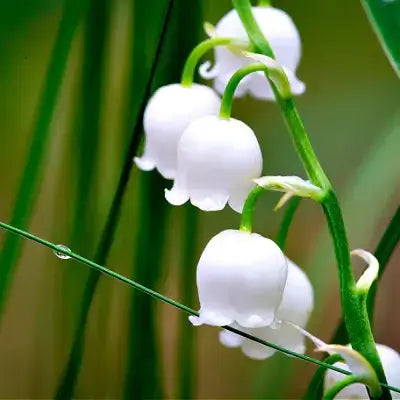
Lilies of the valley, or Convallaria majalis, thrive in minimal light, have small spring blooms with a sweet scent, and grow perennially. They prefer moist, well-drained soil, resemble bells, and spread as ground cover in shady garden areas.
Ferns
Ferns are another plant option that thrives in the shade. If the lady fern's delicate fronds and the more rugged Japanese painted fern are your favorites, there is a fern for you that will still work in the dimly lit region. Ferns proliferate in moisture, and soil rich in nitrogen. Ferns also create a touch more class, and light, the garden desperately needs.
Heuchera (Coral Bells)
Coral Bells, or Heuchera, is one of the top options for gardens with shade due to the incredible flowers and leaves that this plant produces. The leaves change color from purple, through a deep purple in the middle, and down to a vibrant lime green at the base, and this variety will surely liven up the garden. In the heart of summer, the plant will also bear flowers that are a cute touch.
Wild Aster (Aster divaricatus)
Wild Aster will fit perfectly in your garden in the areas that get a gentle touch of shade. These native perennials will bloom in small white star-like flowers in the late summer or fall. They flourish in soil that is moist, well-drained, and will improve the garden since they attract bees and butterflies.
Anemone
Anemone, or windflowers, help bring color into the corners of the garden that fall into the shade. Anemone have gentle blooms of pink, purple, or white; they also bloom in either early spring or late summer. They are easy to grow and flourish in many soil types which makes them an excellent choice for gardens lacking in intense sunlight.
Bishops Weed (Aegopodium podagraria)
Bishops Weed is a tough, fast-growing ground cover that will tolerate the shade. Its striking green and white mottled leaves spread easily which makes it useful for creating a cover for a stretch of ground. Although it is considered to be invasive in some places, it is useful in the situation of deep shade and low maintenance.
Some other important ones are Purple Coneflower and Mikweed.
Ways to Incorporate Perennials into Your Landscape Design
Shadowed flowers don’t take away from the variety, and the beauty of a garden, while still having lots of variety. Here's how to expand the area using the shadowed perennials.
Adding Dimension with Heights and Low Plant layers
For shadowed corners, use a taller grassy plant at the back row of the bed and at the front use a lower, ground covering plant like vinca minor. It adds to the depth and class of the garden.
Building a Peaceful Woodland
Create a back garden area with ferns, a hosta, and a wild aster garden. Add a couple of garden sculptures or stepping stones to help accentuate the garden and improve the woodland feel.
Primary Plant Textures and Foliage
If the area lacks sunlight, the garden can still look interesting, with different types of mono- colorful foliage. For ending layers, adding a hosta leaf to create even more depth while keeping the ferns clean and dominating the shadows.
Complete your shaded garden designs now!
The most difficult aspect of any garden is the area that receives the most shadow. Used strategically, shade loving perennials can take an otherwise dull area and transform it into an area of eye catching, vibrancy and texture. At TN Nursery, we have a full range of lifeless perennials waiting to breathe life and beauty into your garden. The time is now to browse and ensure that your garden receives the perfection it deserves!
FAQs
What perennials do best in full shade?
Hostas, Japanese spurge, and lily of the valley are perennials that grow best in full shade. These plants are able to survive in areas that get little light and no direct sun and are perfect for the corners of yards and areas around and under trees or other structures that provide shade.
What grows well in mostly shade?
Astilbe, wild asters, and ferns are plants that do well in mainly shaded areas. These plants do well in gardens that receive several hours of indirect sun and are not picky about the type of soil as long as it is moist and well-drained.
What is the 3 year rule for perennials?
The 3 year rule suggests that many perennials will take about three years to become established in the garden. While the plant is concentrating on expanding the root system in the first year, the second year is when it is predicted that the plant will grow the most. In three years, the plant is expected to reach full flower, which will be the loveliest it will ever be.
What is the 70/30 rule in gardening?
The rule of 70/30 in gardening focuses on how your time and effort should be divided for taking care and maintaining your garden. 70 percent of your time should be on garden planning, soil preparation, and planting. The remaining 30 percent should be on taking care of the garden like watering, trimming, and fighting any parasites.
Is October too late to plant perennials?
To begin, including perennials in your garden in October is completely possible, even though it was previously mentioned that perennials can be planted in the Fall. In these situations it is key that there is enough time for the perennials to generate a strong root system before the frost comes. In the winter months, colder regions should try to complete planting by mid October.
What is the most hardy perennial flower?
The most hardy perennial flowers are the Daylilies, Coneflowers and Sedums. These are some of the easiest flowers to take care of. These are perfect for gardening experts and amateurs alike that want a bit of time and effort.


