
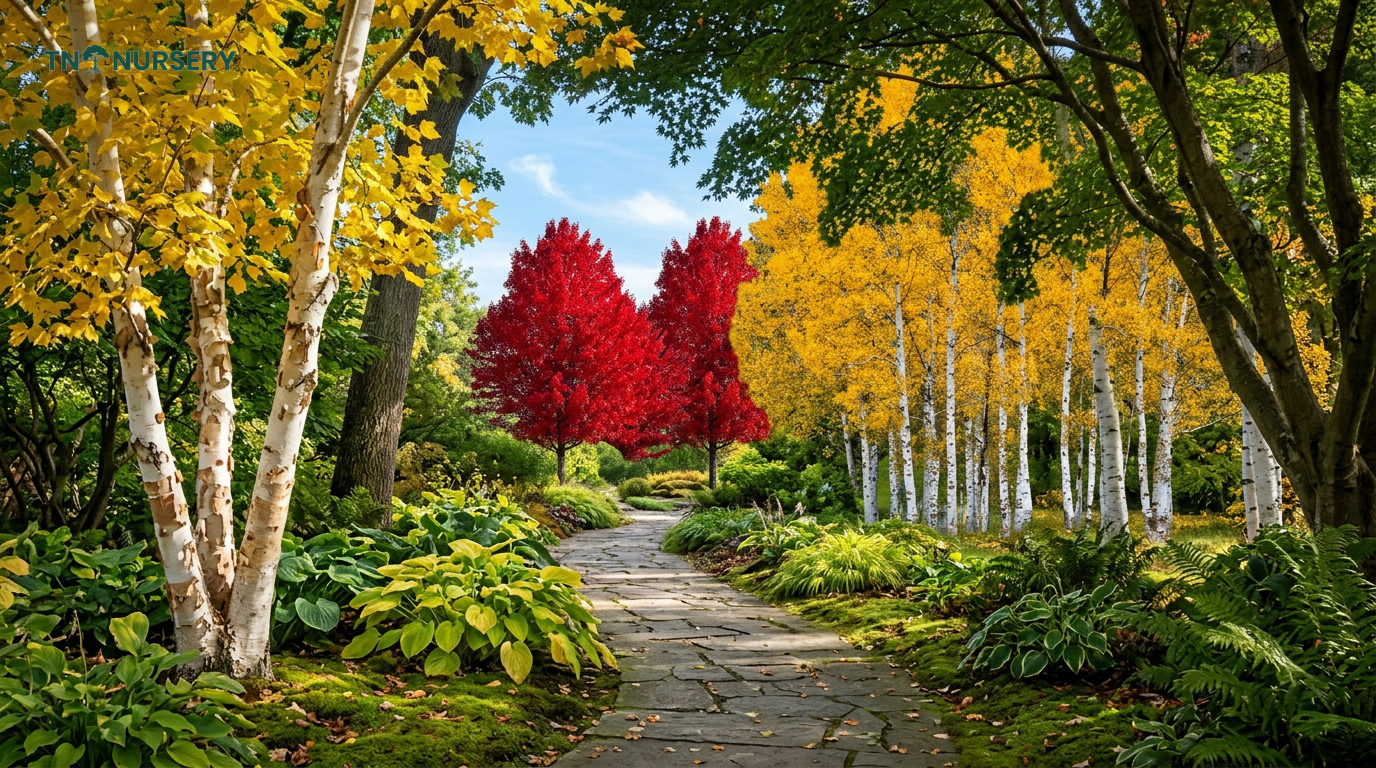
Red Maple Shade Trees for Cooler Yards in 2026
Picture a broad summer canopy and bright fall color. Many shoppers search japanese red maple tree or crimson queen japanese maple, but we focus on lasting shade, survival, and zone-friendly value.
How to choose the right japanese red maple tree?
- Compare growth speed, mature height, and canopy spread before you plant
- See how seasonal color changes affect curb appeal from spring through fall
- Match trees to sun, soil, and usable yard space instead of buying by photo alone
- Use our zone-based shopping tools to narrow choices that fit your climate
- Plan layered landscaping later with perennial, climber vines/groundcover, and shade fern plantings
Our Top Pick for Reliable Shade and Fall Color

The Dependable Alternative to a Trend-Driven japanese red maple tree
If you want a tree that earns its space year after year, our Red Maple Tree is the pick we suggest first. It handles planting zones 3-9, grows in full sun or partial shade, and brings useful summer shade with a graceful form. In fall, you get the color shift homeowners wait for, from red to orange and yellow. Keep in mind that it matures over 25 feet, so give it room to do the job a japanese maple, crimson queen japanese maple, or weeping japanese maple often cannot.
- Handles a wide range of yards with full sun or partial shade and planting zones 3-9
- Grows into a large shade tree over 25 feet tall for cooler outdoor spaces and added privacy
- Brings seasonal color and function with vibrant foliage, wildlife attraction, and erosion prevention
Planning a Red Maple for Full-Property Shade
A japanese red maple tree search often starts with color, but for most home landscapes, a red maple solves a bigger problem. We use it when you need real afternoon shade over a patio, a strong front-yard focal point, or a lawn anchor that cools a wide stretch of yard.
How to choose the right japanese red maple tree?
Start with space. Red maples need room for a broad canopy and a root zone that is not boxed in by walks, driveways, or tight foundation beds. We suggest planning for mature width first, then placing lower layers around that future shade instead of crowding the trunk on day one.
Where a red maple works best
- Patio shade: Place it where the canopy can cover late-day sun, not morning light.
- Front-yard focal point: Give it open lawn around the crown so the branching shows.
- Backyard cooling tree: Use it west or southwest of seating areas for the biggest temperature drop.
- Lawn anchor: Center it where the mature form can tie beds, turf, and walkways together.
Keep in mind, red maples are not tiny accent trees. If your lot is narrow, the spread can outgrow a small island bed faster than people expect. That tradeoff is real. You gain meaningful shade, but you need patience and proper spacing.
What are the best japanese red maple tree to buy?
For practical shade, we would pick a red maple over a small ornamental form every time. A japanese maple fits near entries and compact beds. A crimson queen japanese maple or weeping japanese maple gives color and texture, but not the same cooling canopy. And a vine maple suits a softer woodland look, not a broad lawn shade job.
Once shade develops, the ground below gets easier to manage. We often build that layer with perennials, shade ferns, and groundcover so you mow less and water more efficiently. Look, that is where a landscape starts to feel finished.
“Plan the canopy first. The planting underneath gets much easier once you know where the shade will land.”
If you want to build the whole yard over time, browse our Shade Trees, Native Trees, and Vibrant Foliage Trees collections. We also carry complementary trees, shrubs, fruit trees, mosses, seeds, and live stakes for filling in the rest of the landscape as your canopy grows.
Compare Shade Trees Beyond the Japanese Maple Look
If your goal is real canopy, start here. We picked these four trees because they solve different shade jobs better than a japanese red maple tree or crimson queen japanese maple when you need broad coverage, faster growth, screening, or tall structure.


Frequently Asked Questions
What’s the difference between a red maple and a japanese maple for landscape use?
For most home landscapes, a japanese red maple tree works best when you want color, shape, and a smaller footprint. A standard red maple usually grows larger and casts broader shade, while a japanese maple is better near patios, entry beds, and smaller yards. If you want a dramatic form, a weeping japanese maple gives you cascading branches and a softer outline. Keep in mind that japanese maples usually grow slower, so you trade fast canopy for finer texture and stronger focal-point value.
Which tree is best if I want shade quickly?
If quick shade is your main goal, we’d steer you toward our Shade Trees collection instead of expecting fast cover from a japanese maple. Japanese maples are planted more for structure, leaf color, and controlled size than for rapid overhead shade. So ask yourself where the tree will sit. Near a deck or front walk, a japanese maple often makes more sense. For a broad lawn, a larger shade tree is the better fit.
How do I choose the right tree for my USDA zone?
Start with your USDA zone, then match it to the tree before you order. We always suggest checking your local winter low first, because that decides long-term survival more than color or shape. If you’re choosing between a crimson queen japanese maple and a larger shade tree, think about both cold tolerance and summer exposure. Look, a sheltered yard can help, but it won’t fix a zone mismatch.
Can I plant under or around a shade tree later with perennials or shade ferns?
Yes, and that’s one of the easiest ways to make the planting look finished. We often see homeowners add Perennial plants or Shade Ferns once the tree is established and the light pattern is clear. Under a vine maple or another small ornamental tree, this usually works well because the root zone is easier to work around than under a very large shade tree. But give the tree time to settle first, and avoid digging tight against the trunk.
How are trees shipped?
We ship all items by 3-4 day ground shipping. That gives you a clear delivery window, and it helps you plan planting as soon as your order arrives. If you have a timing question before you buy, email us at customerservice@tennesseewholesalenursery.com.
What is TN Nursery’s return policy?
We do not offer refunds, and we do not accept returns. If there is an issue, we may offer a reshipment if the product is available. If it is not available, we may offer in-store credit. For help, contact us at customerservice@tennesseewholesalenursery.com or write to Tennessee Wholesale Nursery, 12847 State Route 108, Altamont TN 37301, United States.
Do your trees come with a warranty?
We do not offer a warranty on any product unless you purchase an extended warranty at the time of order. That includes trees and other live plants. So if warranty coverage matters to you, add it when you place the order, not later.
Conclusion
Key Takeaways
- Choose Red Maple Tree for the strongest all-around mix of shade, color, and adaptability.
- Choose Silver Maple Tree when your main goal is the fastest large-canopy shade.
- Choose Quaking Aspen Tree for quick coverage, a natural look, and constant leaf movement.
- Choose Tulip Tree for tall, statement-making structure in larger landscapes.
- Plan by zone and mature size first, then add perennials, climber vines/groundcover, and shade ferns to finish the space.
