

Complete Instructions On Growing Chokeberry Shrubs
Chokeberry shrubs (Aronia) complement virtually any yard! These hardy and versatile shrubs add interest year round from showing delicate flowers in spring, rich and dark berries in summer, to stunning fall foliage. Chokeberry shrubs are low-maintenance and provide lots of benefits, making them a top contender for any yard, no matter the experience level of the owner.
Chokeberries are some of the best plants to have in your yard, and are also native to North America. These shrubs are not just pretty and colorful, they have really good nutritional fruit that can be eaten. This guide will give you all the information you will need to grow Chokeberry and all the benefits that come with it.
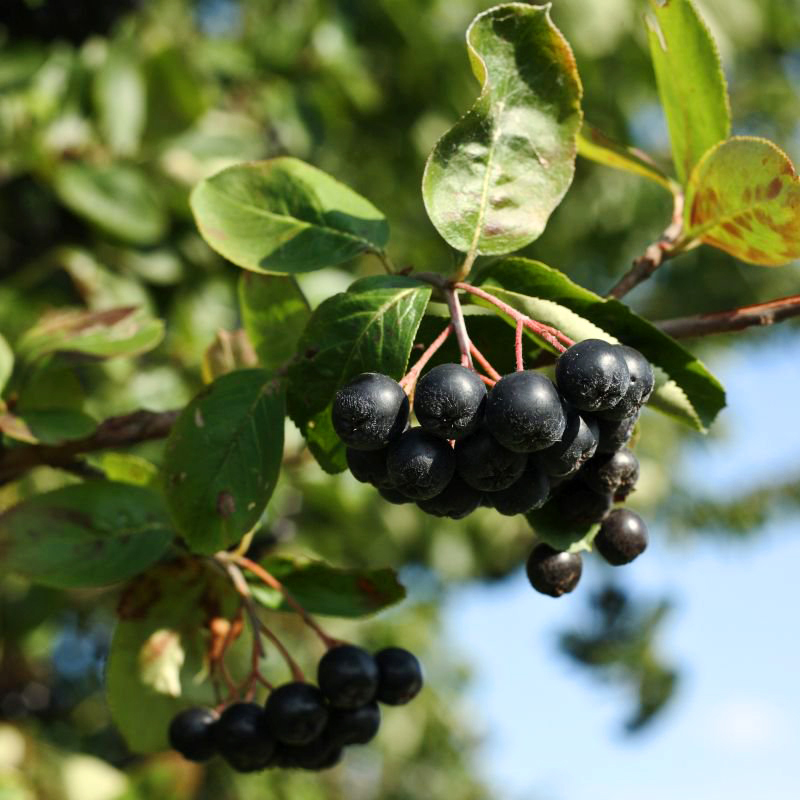
Understanding the Chokeberry Shrub
Chokeberry is a member of the Rosaceae family. It is a deciduous shrub, and the family it belongs to is the rose family. Chokeberries got their name due to how puckerish and as stringent the berries can be. Don't take the name the wrong way. These berries are super tasty and are also a great health and life hack in today's world.
Here are the two different types of species you will see:
Black Chokeberry (Aronia melanocarpa)
This is by far the most frequently seen one. It is usually around 3-6 feet tall and wide and creates a multi-stemmed bush. In the crow of spring, it creates clusters of small white flowers that are beautiful and climatically attract pollinators. After blooming, these flowers turn into small, dark purple-black, star-shaped fruits that are ripe during the last days of summer and live into the winter.
Red Chokeberry (Aronia arbutifolia)
This species is a tad taller, reaching 10 feet in height in some cases. It is mainly recognized by the vivid and rich red berries that it offers which serve as a beautiful and appetizing decoration for the fall and winter days. In the fall, the leaves turn to brilliant reddish color making it one of the best ornamental plants.
Growing and Care Conditions
Chokeberry shrubs are one of the most unbothered plants to take care of. They grow best in USDA hardiness from 3 and 7. They can easily grow in conditions which many other shrubs struggle in.
BerriesSunlight
They best grow in full sunlight; although they glow in partial shade as well and can work in multiple areas of the garden.
Soil
Moist and well-drained soil is best for shrubs Chokeberry shrubs, but they can survive in many different soil types like clay and sand. Once established, they can survive in both wet and dry conditions and are not picky with soil pH, growing best with the levels of 5.6-7.5. They even grow best in high salt levels, which allows for planting near roads.
Watering
Newly planted shrubs need regular water to help establish their strong root systems. Established shrubs are fairly drought resistant but will enjoy minimal water during especially dry times.
Pruning
ViburnumChokeberry shrubs do not need to be pruned much to keep their nice shape. However, you can trimmed them hugs to twice during the growing season to stimulate more flowering and fruiting. It is best to do this in the late winter or very early spring. Remove some branches that are dead, along with some that are crossing to make more space.
CherryThe Many Uses of Chokeberry
Chokeberry shrubs are not just for aesthetic purposes in the garden, they are valuable to both people and animals.
Edibility and Nutrition
Arguably, the most notable use of the chokeberry is the berries themselves. Though they have a rather astringent taste when eaten raw, the berries are a nutritious food. They're also extremely high in Vitamin C and even more antioxidants than blueberries.
Jams and Jellies
When the berries are cooked, they lose their tartness.
Baking
They are a great addition to berries of muffins, pies, etc. to provide flavor and nutrition.
Juice and Syrup
Processed chokeberry juice is very nutritious and can even be blended with sweeter fruit like grapes and apples.
Tea and Wine
Dried chokeberries can be used to make tea and fermented to make wine.
Landscaping and Ornamental Value
Chokeberry are great for landscaping because their multi-season value. In spring small white and pink flowers with their delicate look bloom. In summer chokeberry provide glossy and deep green foliage.
Spring: In spring, the white flowers, which have a touch of pink, bloom in clusters, providing comfort to bees and other important insects.
Summer: In summer, they have a deep green, glossy leaf that becomes a lush backdrop for other fruits and flowers in the garden.
Fall: The leaves turn to beautiful hues of red, orange, and purple. Concealed berries dangle in heavy clusters, generating a gorgeous juxtaposition.
Winter: The berries often remain on the branches throughout winter. This gives a food source to birds, and challenges the snowy sight with a different look.
Chokeberries also blend nicely in mixed borders, as foundational plant offerings or situated collectively to establish a hedge or screen. Plus, they can tolerate wet soil, making them incredible picks for rain gardens.
Planting Chokeberry
The red chokeberry is a native shrub that grows 6-10 feet tall and 3-6 feet wide but tends to sucker and form colonies. The plant has an upright habit with a fibrous root system that can tolerate wet or dry thickets as long as it's in the average moist range of 60%. In full sun, it produces the best fruit production. However, some flowers may still be made when grown in partial shade.
We ship all items by 3-4 day ground shipping. We keep the process simple, and that is the shipping method we use for plant orders. If you need help before or after an order, email us at customerservice@tennesseewholesalenursery.com.
We do not offer refunds, and we do not accept returns. We also do not offer a warranty on any product unless you purchase an extended warranty at the time of order. If a plant is unavailable for a covered reshipment situation, we will reship it if product is available, offer the extended warranty on a plant, or provide in-store credit if it is out of stock. You can also write to us at Tennessee Wholesale Nursery, 12847 State Route 108, Altamont TN 37301, United States.
That range matters. If you are planting for long-term survival, not short-lived trends, chokeberry keeps proving itself year after year.
This plant remains an outstanding choice for gardeners because its glossy dark green foliage creates a lush background throughout the entire year and is suitable for both formal and natural landscapes. When grown individually or within a mixed hedge, this plant maintains year-round visual interest through its spring flowers and striking fall foliage display.
European botanists first officially recorded Black Chokeberry as a separate species during the 18th century while they explored North America's plant diversity. This plant's importance extended thousands of years before European botanists officially classified it because Indigenous peoples had already used it in their everyday existence. The plant became highly regarded among scientists because it survives well in multiple conditions like wetlands and dry soils hence it became essential for botanical gardens and ecological restoration work. The plant has proven essential for conservation work because it thrives in regions experiencing soil degradation and erosion.
We make that planning easier because you can shop with zone-conscious choices across our Shrubs With Berries , Shrubs , Berry Plants , and Flowering Shrubs collections. So you can build layered plantings with shrubs, trees, fruit-bearing selections, perennials, mosses, seeds, and live stakes in one place. If you are ready to plant, chokeberry is the easiest next step.
The dark purple fruit becomes crucial for birds like cedar waxwings and thrushes because its nutrient-dense berries provide them nourishment during winter months. The fruit's sharp taste prevents it from being widely consumed by mammals yet it sustains those animal species that have evolved to endure its bitterness. Gardeners and conservationists who plant Aronia melanocarpa species help to support biodiversity while making sure that essential wildlife populations maintain their ability to thrive.
Aronia melanocarpa fascinates observers with its dynamic visual display that changes throughout the year. Early spring marks the period when this shrub displays delicate flowers with five petals which exhibit shades from soft pink to pure white that create a sophisticated contrast with its dark green leaves. The plant transitions from flowers to small glossy deep purple fruits throughout the seasons which stand out against the leafy backdrop.
Plants that Grow Well With Chokeberry Shrubs
To make a beautiful and thoughtful garden design, think about planting your chokeberry shrubs alongside other plants that are easy to grow.
Serviceberry (Amelanchier): Like the chokeberry, this small tree or large shrub has pretty flowers in spring, sweet fruit in the summer, and beautiful leaves in the fall.
Dogwood Shrubs (Cornus sericea): Varieties such as Red Twig Dogwood contribute to the beautiful and winter landscape with their colorful stems and complement the chokeberry.
Viburnum: Most viburnum plants compliment the garden with their spring flowers, summer fruit, and fall leaves which makes them good companions.
Perennials: Add some perennials like coneflower, black-eyed Susan, or ornamental grasses under your chokeberry shrubs for more colors and textures.
Helping Others with With Healthy Shrubs
Because chokecherry shrubs require little upkeep but provide great benefits, they are a great asset to any gardener. These plants help local wildlife and provide edible, nutrient dense fruit; all while being great to look at any time of year. You are sure to appreciate these plants with their great fall colors and beyond.
Locating Your Ideal Plants at TN Nursery.
Are you ready to enhance your landscape with these beautiful shrubs? TN Nursery has Black and Red Chokeberry
Tech, high-quality shrubs to complete your sustainable landscape. Visit TN Nursery today to enjoy the many rewards of Chokeberry shrubs.
FQAs
How big do chokeberry bushes get?
Black Chokeberry (Aronia melanocarpa) can reach between 3 to 6 feet tall, while the Red Chokeberry (Aronia arbutifolia) can reach up to 10 feet.
Chokeberry Size and Growth Rate
Black types: commonly reach about 3 to 6 feet, then spread into fuller colonies over time
Red and black forms offer flexible sizing, from 3 to 10 feet tall, with bright red or orange fall foliage
Red types: often mature around 6 to 8 feet tall with a slightly narrower look
Do chokeberry bushes spread?
Yes, chokeberry bushes spread from suckers which are little shoots that grow from the base of the plant. Because of this trait, they can create dense colonies or thickets for natural hedges or to fill spaces.
Are chokeberries good for wildlife?
Yes, they are. In the spring, the flowers attract pollinator insects, like bees and butterflies. In the fall and winter the berries are a food source for wildlife and birds, such as waxwing grouse and cedar, which is important since there are not many other food sources for them at this time.
Are chokeberry bushes invasive?
No, chokeberry bushes are not invasive. They are from eastern North America and, while they can spread and form colonies, their growth is easy to control and they benefit the ecosystem of the area.
Do you cut back chokeberry in the fall?
For chokeberry bushes, winter or early spring is the best time to cut back. It is not a good idea to cut back in fall, as you would be removing the berries which are food for the birds and look nice in winter. It is best to cut back a little in spring, just to keep the bushes from overgrowing and to help keep them healthy.
What’s the difference between a bush and a shrub?
There are many definitions for the terms "bush" and "shrub". Both describe a small, woody plant that has multiple stems rising from the ground instead of a single trunk. In many cases, "shrub" is the more technical, scientific name for these plants.


