
Planting nut trees in the backyard is one of the most rewarding investments that any kind of homeowner can make. The specific nut tree species offers you seasonal harvests, perpetual shade, and true ecological benefits in your yard. Such plants benefit soil life and wildlife and provide your landscape with a productive use every year. We grow high-quality and healthy nut trees at TN Nursery that we can easily grow in Tennessee.
What Are the Top Nut Trees for Year-Round Harvests?
The first step to selecting the appropriate nut tree species is to know which trees bear nuts throughout the seasons. With a USDA Hardiness ZONE of 5b to 8a, Tennessee has a great variety of productive varieties. The most productive ones are those that are healthy in roots, tolerant to local soil organisms, and yield high in nuts with less intervention.
The nut trees require well-draining soil with compost and organic matter to provide them with the microbial diversity they require to establish fast and yield reliably. In order to know what plants to plant where in the area, the American Horticultural Society is a free government site that all backyard gardeners should consider before they go out to plant.
Choosing the Right Nut Tree for Your Backyard Environment
Not every type of nut on trees is appropriate for all yards. Understand what you have to work with before choosing a variety, taking into account what space you have, how much sun, and how much soil. The following are the best selections of TN Nursery:
Hall’s Hardy Almond Tree
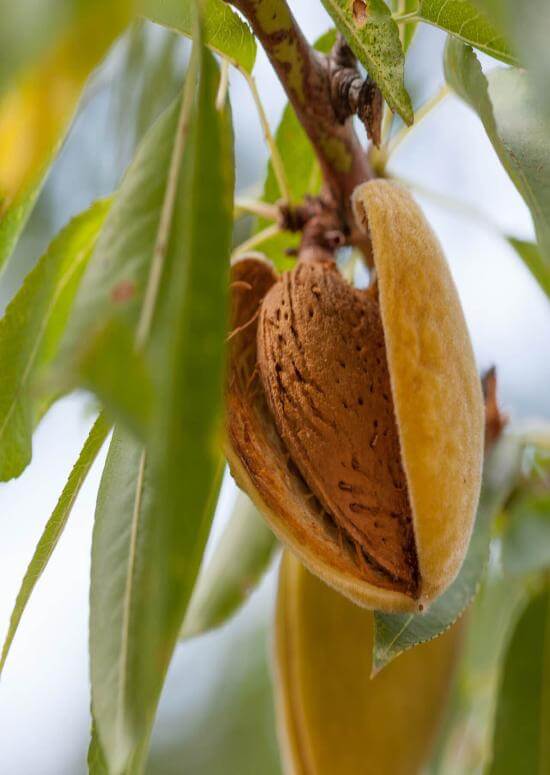
This is a small and cold-resistant species that grows sweet and thin-skinned almonds with little attention. The Hall’s Hardy Almond Tree is a tree that grows well in sunny areas with well-drained soil; hence, it is one of the most ideal fast-growing nut trees for a small backyard.
Black Walnut Tree
It is a type of tree, which is a native tree bearing nuts that are rich in taste and whose color during fall is wonderful. The Black Walnut Tree is a strongly growing tree in deep and fertile soils, and it is ranked among the best-known trees that produce nuts in Tennessee scenery.
White Oak Tree
A well-known tree, prized because of its acorns, extensive canopy, and unparalleled ability to promote wildlife, the White Oak Tree is a long-lived tree that accumulates soil organic matter and sustains microbial diversity over decades as the tree grows.
Hickory Nut Tree
This is a native hardwood that yields high-quality, tasty nuts that are very popular with people and wild animals. The Hickory Nut Tree has a deep root system, which enhances the soil structure, and is the most dependable nut tree species in Tennessee backyards.
Chestnut Oak
It is known by its unique bark and size of acorns that the Chestnut Oak flourishes in rocky and well-drained soils, where other trees cannot. It is a great option in sloping lawns that require erosion protection, as well as the kind of nuts on the trees that sustain wildlife in the area.
Which Nut Trees Thrive Best in Tennessee Backyards?
As a beginner to the idea of how to grow nuts at home, it is the most intelligent thing to begin with the native or local species. These varieties grow fast and yield good results with minimal effort:
-
Black Walnut: It is deep-rooted, quick-establishing, and most prolific.
-
Hickory Nut Tree: Once planted, it is drought-tolerant and low-maintenance.
-
White Oak: It lives long and is ecological and soil beneficial.
-
Hall Hardy Almond—small and fit to serve smaller areas.
Learning how to grow nuts successfully also requires proper preparation of the soil. Before planting, add compost and organic material into the planting place to promote the health of roots and the activity of the microbes in the very first season.
Seasonal Care Tips for Healthy Nut Trees
Nut trees have been properly taken care of throughout the seasons to grow well and have regular harvests. All novices are advised to take these three steps, which are
-
Select the appropriate site: The nut trees require between six and eight hours of direct sunlight every day and proper air circulation to remain healthy.
-
Soil preparation: Supply planting fields with compost and organic substances to promote plant microbes, drainage, and root development.
-
Water to drown: Trees that are new require a lot of watering, up to one or two times per week in the initial complete growing season.
In addition to planting, seasonal care also requires mulching around the base in the spring and removing dead or overgrown branches during the low winter months, as well as applying a balanced slow-release fertilizer with new growth. TN Nursery has detailed care instructions attached to each order to leave nothing to chance.
Combining Nut Trees for a Productive and Attractive Yard
Planting with a combination of nut tree species produces a multilayered and productive landscape that produces harvests throughout several seasons. Fast-growing nut trees such as Hall Hardy Almond fill in the gaps as the trees with longer lifespans, such as Black Walnut and White Oak, grow in the background.
- Stagger the harvest dates by combining early- and late-maturing producers.
- Canopy should be planted with taller species, such as Hickory, and the understory with smaller species.
- Native species naturally support soil organisms, enhance organic matter, and attract pollinators.
You can create an ecosystem in your backyard, which is self-sustainable and is even better than the past, when you plant fast-growing nut trees and deep-rooted natives. TN Nursery offers many species of nut trees, making it simple to design a high-productivity, low-maintenance, and good-looking yard starting with the ground.
Conclusion
The correct nut trees have the potential to change a backyard entirely by producing harvests throughout the seasons, providing permanent shade, and providing a significant wildlife benefit simultaneously. When you purchase either the small, yet powerful, Hardy Almond Tree by Hall; the strong, yet striking, Black Walnut Tree; the sturdy, yet economical Hickory Nut Tree; or the sturdier, yet superb, Chestnut Oak, you are investing in your property on a long-term plan. Relax and leave the planting of healthy nut tree species to a nursery grown in the trustworthy TN Nursery, where it will grow to its level best as soon as it is delivered to your door.
FAQs
Which nut trees are easiest to grow in Tennessee backyards?
Some of the easiest plants to grow in Tennessee's climate are Black Walnut, Hickory, and Hardy Almond by Black Walnut, Hickory, and Hall.
How do nut trees benefit soil and wildlife?
They have huge root systems that enhance the soil structure, organic material, and microbial diversity and provide food and shelter to wildlife.
Can I plant multiple nut tree varieties together?
Yes, interplanting varieties confuses harvest times and fashions a more fruitful and well-hydraulicized backyard garden.
What is the most profitable nut tree to grow?
Black Walnut is also regarded as one of the most valuable, and it is one that is highly valued because of its nuts as well as the quality timber it provides.
Are nut trees low-maintenance once established?
Yes, the native nut trees require very basic pruning and mulching and a few times a year of fertilizing after the initial few seasons.
Where can I buy healthy nut trees online?
TN Nursery provides high-quality climate-ready nut trees, and they provide expert guidance to take care of the trees with each purchase.
How long does it take for nut trees to produce nuts?
The largest varieties start yielding after three to seven years, according to species and conditions.


