
To make a beautiful garden, one does not necessarily need to spend many hours on the tedious task of weeding, watering, and worrying. Low-maintenance perennials are the best solution for a gardener, as they provide bright flowers and green leaves without the hassle of having to maintain them on a regular basis.
These are tough perennial plants for garden areas, as they represent the best use of these areas and can adjust to the environment with minimal care. We have spent decades assisting the gardeners of TN Nursery to plant the right plants in their gardens and have realized that the most successful gardens are those that do not contend with nature but align with it.
Low maintenance Perennial is tough, drought-resistant, and will not be judgmental, and is suitable for the beginner and the busy house owner alike. Be it perennial shade-loving plants or sun-loving bloomers, the correct choice will see your garden growing with minimal effort and offer you constant seasonal pleasure.
What Are the Best Low-Maintenance Perennials?
When picking the appropriate perennial plants for garden success, the first step would be to learn your particular growing environment and to select those plants that have been known to grow well in those environments. TN Nursery focuses on those varieties that grow fast and do not need much maintenance after establishment.
1. Coneflower Plant:
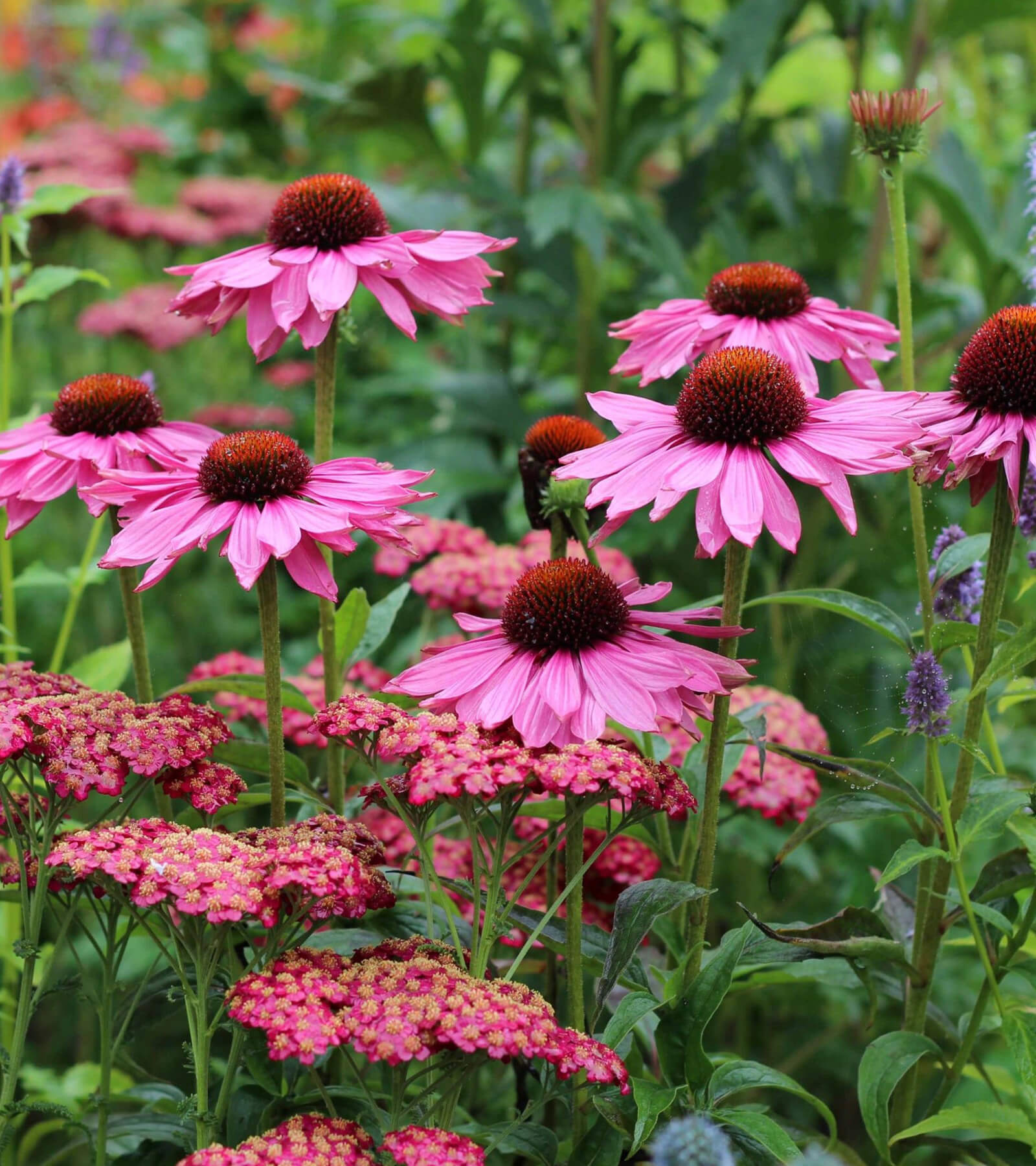
Coneflower Plant takes the first place in our list of easy-to-grow perennial plants. These local beauties will grow from the middle of summer to fall and will attract pollinators and also handle drought, heat, and bad soil. They have daisy-like flowers in pink, purple, and white to make beautiful shows with little or no attention other than frequent deadheading.
2. Wisteria Vine:
To add visual appeal to the vertical plane, the Wisteria Vine brings with it falling flowers, making arbors and pergolas perfumed with flowers every spring. Wisteria requires very little effort in the form of pruning once established to keep it in shape and to induce flowering.
3. Goats Beard Plant:
Goats Beard Plant is a perennial shade-loving plant that is best in woodland gardens and shaded borders. It is a wonderful perennial bearing feathery white mothballs on the result of ferny leaves, which succeed in the most damp, shady spots where so many others fail. The architectural presence is not distracting and requires no attention all the time.
4. Carex Pensylvanica:
Ground covers such as Carex Pennsylvania are able to address a variety of garden problems at once. This native sedge is dense in texture from weed-suppressing mats in the sun or shady areas. It can withstand different soil conditions and offers a texture all year round. It is one of the most reliable, low-maintenance, all-year-round plants for erosion control and lawn substitutes.
5. Blue Ridge Trio:
The Blue Ridge Trio is an immediate impact that is a blend of three complementary perennials that are chosen due to their compatibility and extended bloom times to provide unending color with a coordinated level of care.
Key Benefits of Planting Low-Maintenance Perennials
Easy-care perennial plants offer advantages beyond simple convenience. Knowing these benefits will allow gardeners to make correct decisions that benefit their lifestyle and their local ecosystems.
-
Economy: Perennials are a time-saving investment since their value is compounded over the years, whereas annuals have to be replaced seasonally.
-
Environmental sustainability: These plants have extensive root systems, which enhance soil structure, avert soil erosion, and are conducive to soil organisms and microbial diversity.
-
Pollinator support: Bees and butterflies are important food sources since many low-maintenance perennials are considered vital food sources. The USDA Natural Resources Conservation Service describes native perennials as having a specific benefit of benefiting local populations of pollinators, who are essential to ecosystem health.
-
Seasonal interest: Various perennial species flower at different times, providing a dynamic display over the growing season.
- Less water use: Perennials that are drought-resistant dramatically lower the amount of water used in the garden after they are planted.
How Can I Ensure Year-Round Color With Perennials?
Continuous color is a matter that needs to be planned. TN Nursery suggests using low-maintenance, year-round plants and those that have delayed bloom periods, and using types of foliage.
The show is started by spring bloomers and continued by early summer perennials such as coneflowers. The black-eyed susans and ornamental grasses are mid- to late-summer—they are one of the easy-to-grow perennial plants, and they withstand heat and drought. Fall interest is offered by asters and sedums, with the grasses to supply winter structure.
Foliage perennials bring the interest of visuals beyond the blossoms. In the spring to frost, hostas, coral bells, and carex provide color in their leaves. Layering Height gives the effect of depth—have higher plants such as goat's beard at the back, medium bloomers at the middle, and ground covers at the front, such as Carex Pensylvanica.
Step-by-Step Guide to Planting and Maintaining Perennials
Proper planting guarantees your perennial plants for garden areas will grow to their full potential with the least care. The perennials of TN Nursery are ready to be planted in a garden.
-
Preparation of site: Check drainage of soil and add organic matter and compost where necessary. The majority of perennials like well-drained soil.
-
Planting procedure: Excavate twice the root ball diameter in holes. Plants should be positioned in containers at the same depth as they were placed. Native soil is backfilled with compost.
-
Watering at the start of the planting period: Deep watering should be done at planting, and regular watering of the root area should be done throughout the first season, so that the roots stay healthy.
-
Mulching: Use two to three inches of organic matter in the area around plants. Mulch also sustains moisture and controls the temperature of the soil, as well as weeds.
- Very few requirements in terms of care: Once established, easy care perennial plants require only deadheading at occasional intervals, division every three to five years, and removal of dead foliage in late winter.
Designing a Perennial Garden That Combines Beauty and Ease
Creative design saves on maintenance and optimizes appearance. The practical layout principles are informed by the experience of TN Nursery dealing with various growing conditions.
-
Group by needs: Group plants with similar water, light, and soil demands. The perennial shade-loving plants are best planted in woodland setups.
-
Use adult sizes: Grow plants to full size to eliminate crowding and minimize the number of divisions.
-
Make drifts: To have drifts in a more natural way, plant in odd numbers.
-
Succession plan: Map the time of bloom prior to planting so that the garden is in full color.
- Adopt naturalistic planting: This is to use low-maintenance perennials, which you allow to self-sow in specific spots that are to be used for relaxed planting.
Conclusion
Low-maintenance perennial plants make gardens beautiful and valuable properties that do not require vigilant observation to provide a healthy environment and wealth to the property owners. Gardeners, by choosing established performers such as the Coneflower Plant, Wisteria Vine, Goats Beard Plant, Carex Pensylvanica, and Blue Ridge Trio, are able to get dividends on their investments day in and day out.
TN Nursery has become skilled in the procurement and cultivation of high-quality and garden-ready perennials, and this means that your investment will begin on a high note and go on growing without much need for human effort. The correct choices of perennials imply that you will spend more time in your garden and less time working in your garden.
FAQs
What are the best perennial plants?
Coneflowers, daylilies, hostas, sedums, and ornamental grasses are dependable, beautiful, and less demanding in terms of care in different growing areas.
How to take care of perennials?
Water thoroughly at planting, mulch every year, deadhead faded blossoms, divide overcrowded plants, and prune dead plants in late winter.
Are perennials low maintenance?
Yes, larger perennials need much less attention than the annuals, whether they are in their first year or already established, only occasionally watered, minimally fertilized, and cleaned once a year.
Which perennials are best for beginner gardeners?
Coneflowers, black-eyed Susans, daylilies, and sedums can withstand all types of conditions and allow an amateur to make common mistakes and give steady flowers.
Can perennials grow well in shade?
Definitely—hostas, goat's beard, astilbe, coral bells, and Carex Pensylvanica can be grown with minimal care in partial to full shade.
Where can I buy low-maintenance perennials online?
TN Nursery provides high-quality perennials that have been well-chosen for the garden and delivered to your doorstep with free advice on planting.
Goats


