
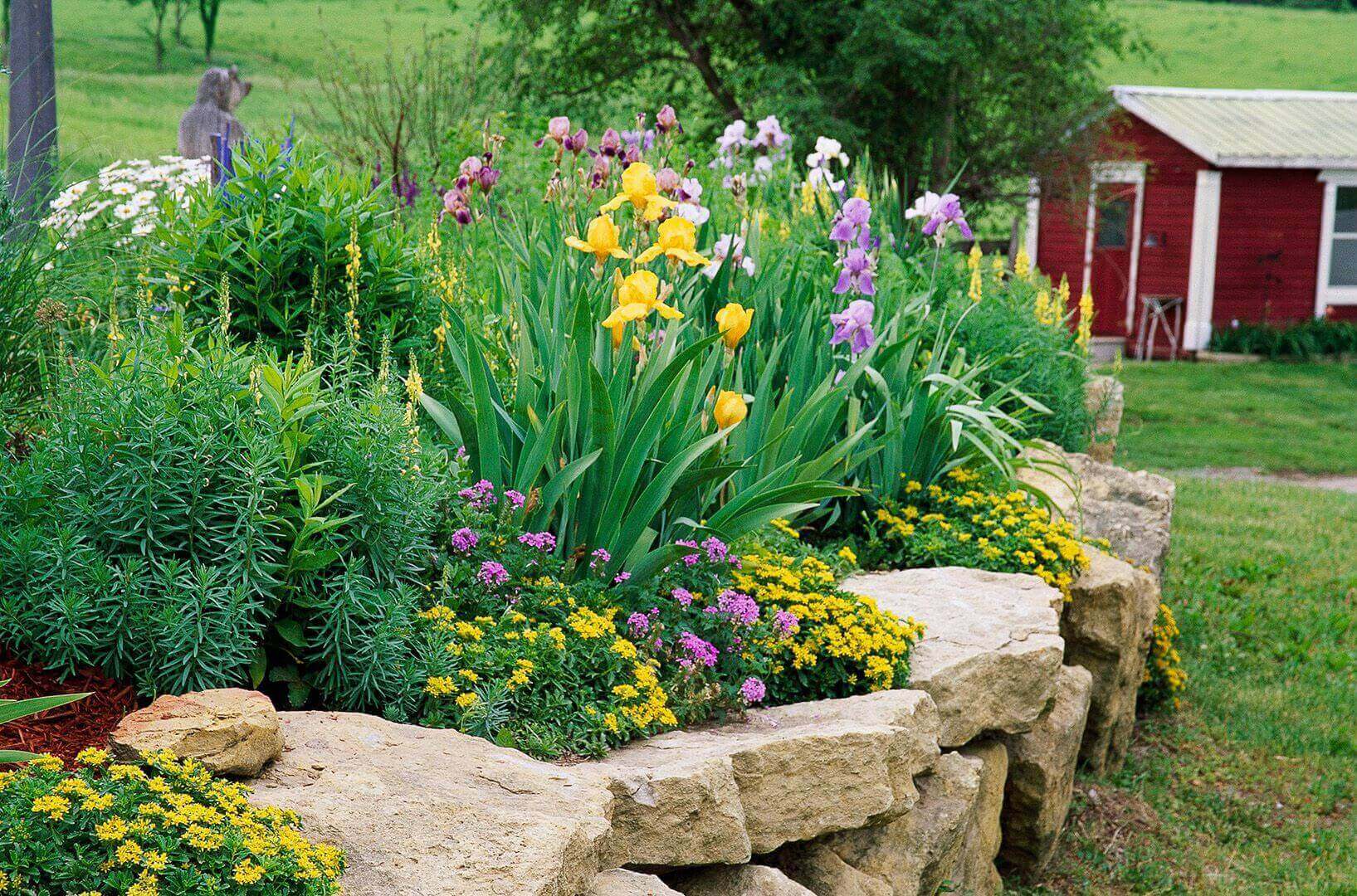
Plant perennials in your garden and they will provide you years of beautiful constant color with little work. Perennials bloom season after season unlike annuals that need to be replanted at the end of every season giving the gardeners a breath-taking view due to proper establishment. The key to long blooming perennials is being well informed of how to plant properly, how to prepare soil and what types of perennials will fit your landscape.
We have successfully assisted our thousands of gardeners in building successful perennial gardens using high quality plants and professional advice at TN Nursery. Regardless of
whether you are creating your first garden bed or adding to your already existing landscape, knowing the basics of perennial planting will result in a strong root system, strong growth and seasons of spectacular flowers. The composition of the soil used and the method of spacing, all these are important details that should be considered when creating a garden that will thrive over decades.
Why Proper Perennial Planting Matters ?
The distinction between a failing and a growing perennial usually boils down to the way in which the plant was introduced. When you plant perennials carefully, you create a good root system that is able to reach nutrients and water efficiently. This results in shallow roots and hindered growth and poor blooms that never are able to bloom to their potential due to poor planting practices.
Correct planting will provide a surrounding on which useful soil organisms will be flourishing together with your plants. These microorganisms decompose organic matter, thus producing important nutrients to support healthy growth. TN Nursery is also very strong in this background of practice since we have directly witnessed how proper installation methods can turn ordinary gardens into spectacular outdoors areas.
Long blooming perennials need stored energy in the healthy growth of the roots. Plants will grow more effectively, accumulate more nutrients and will yield more flowers during the growing season when roots are developed freely in well prepared soils. It is a biological success which begins when you put your perennial in the soil.
These are the advantages of appropriate planting:
- Prolonged bloom periods that take weeks more than poorly planted ones
- Greater endurance to drought by greater penetration of roots
- Improved disease resistance through stressed-free prolific growth
- Minimum maintenance since the existing plants have less requirements
- Increased cold resistance because of resilient root systems which endure winter variations
The years of experience of TN Nursery have shown that years of frustration can be avoided by spending time in doing the plants the right way. When planted properly, Celandine Poppy does very well in the forest where it forms golden carpets of spring flowers and naturalizes beautifully in the shady spots.
Choosing the Best Spot for Perennials
Perennial achievement is the result of sunlight needs more than any other element. Flowering perennials will require between six to eight hours of direct sunlight per day, however, there are several types that are excellent in partial shade. By knowing the light patterns of your garden as the day advances, you will avoid the setbacks of having to place plants in the wrong places.
Best shrubs for landscaping are often used as a backdrop to the perennial borders, however bear in mind that there are changes in the canopy of the trees and shrubs as they grow. A sunny location today may be shaded in five years when the surrounding shrubbery plants grow up. TN Nursery advises to monitor your location of planting in various seasons and then make long-term commitments.
In the choice of perennial locations, drainage is also very important. The majority of perennials are rotted in swamped soils and so they need locations where water drains through the soil in a few hours after rains. Drainage Test by excavating a hole, putting water in it, and noting speed of emptying.
To plant in shady gardens, there are some perennial that are more successful than the sun lovers. Our Vinca Minor carpets tackle steep slopes that are shaded with shiny evergreen leaves and soft purple flowers that overcome the erosion issues and provide all-year-round interest. This tough ground cover illustrates the simplicity of the beauty of matching plants to the situation.
Wind exposure has a serious health impact on perennial plants. Powerful winds dry up foliage, snap stems and cause unnecessary stress to vegetation. The areas that are shielded around buildings, fences or fixed shrubs give cover under which perennials can grow without having the elements bearing on them constantly.
Preparing Soil for Healthy Root Growth
The state of soil preparation is what will see your perennials just survive or even flourish. The best soil for perennials are those that strike a balance between drainage and moisture retention, which is composed of mineral particles with a large concentration of organic matter. Such a structure enables the roots to grow freely and get access to steady moisture and nutrients.
Begin by testing your soil texture. Sandy soils drain rapidly and contain less nutrient whereas clay soils retain water but suffocation of the roots by insufficient aeration. The perfect perennial soil has about the same amounts of sand, silt, and clay-forming a loamy texture that falls when touched and forms when pressed.
The improvement of the soil increases the two extremes:
- Sandy soils do not hold water well, so add 3-4 inches of compost to them
- Add coarse sand and organic material to clay to allow improved drainage
- Scatter aged manure or leaf litter across beds over long periods of time to provide fertility
- Use sulfur or lime to make adjustments to pH between 6.0-7.0
TN Nursery also focuses on the creation of soil health progressively instead of focusing on quick solutions. Compost supplies positive microorganisms which keep on enhancing soil structures over years. These microscopic laborers decompose organic matter producing humus that nourishes the plants naturally and increases the soil texture.
In planning the process of how to plant perennials, it is important to dig at depths of 12-18 inches to loosen up the compact layers. Such cultivation enables the roots to grow freely, which reaches the moisture when dry and forms the anchoring depth to sustain the tall flowering stems. Slimming preparation produces shallow roots, which cannot fight stress.
Healthy root growth for shrubs and perennials requires the presence of microbial diversity in the soil ecosystem. One should not take the soil too far by over-tilling the soil and they should never apply pesticides or artificial fertilizer that kills the friendly life. Our Creeping Buttercup thrives well in naturally fertile soils resulting in dazzling yellow flowers illuminating spring gardens.
Correct Planting Depth and Spacing
Planting depth has a direct effect on the perennial survival and performance. Excess deep and they rot when wet; too shallow and it dries up. Most perennials should have the crown (meeting the roots) at the same level with the surrounding soil surface.
How to plant perennials successfully involves the necessity to pay sufficient attention to the structure of roots. Container-grown perennials frequently have circling roots which have to be loosened prior to planting. Root balls: Gently tear roots apart or cut down roots vertically to stimulate growth outwards into the adjacent soil.
These are the depth guidelines:
-
Bare-root perennials: These spread over a mound of soil to grade their crowns
-
Container perennials: Identify bed surface as existing soil line on stems
-
Divided perennials: Plant as deeply as they used to grow before
- Deep rooted varieties: The depth of the hole should be adequate to permit complete root development
Spacing ensures that there is no overcrowding, hence poor air circulation, disease issues and low flowering. Although new beds appear sparse at the start, when space is done properly, the plants will be able to grow to their full size without competing with each other over resources. Most perennials need between 12-24 inches spacing between plants according to their larger spread.
Planting perennials in summer requires special spacing requirements as the plants require movement of air to keep them cool. Plantations which are crowded during summer are too stressed by heat than those which are spaced in the right way. TN Nursery suggests considering mature size rules despite the fact that plants appear small in installation.
Take into account growth habits:
- Perennial types of plants such as groundcovers can be spread with fewer plants per area
- The types of clumping can be brought nearer to strike faster
- Tall perennials should be spaced so as not to topple over the rest of the neighbors
- The slow fillers may be temporarily interplanted with faster fillers
Our Periwinkle Plant exhibits proper spacing standards- planted at 12-15 inch distance, each plant will be able to combine into continuous groundcover in two seasons, and still show healthy growth.
Watering Techniques for New Plantings
Newly planted perennial plants need regular watering up until new roots grow in the soils around them. Monitor soil moisture every week during the first growing season. The upper inch of the soil might dry between the waterings, but the root zone must always be kept continuously wet and not waterlogged.
Place 2-3 inches of organic mulch around plants in order to save moisture and control soil temperature as well as weeds. Mulch should be drawn away around plant tops slightly to prevent decay. Shredded bark, old wood chips or compost are all fine with perennial beds.
Fertilizing for Continuous Blooms
Long blooming perennials require balanced nutrition during the process of growing. TN Nursery suggests the use of organic fertilizer, which is slow in releasing nutrients, nourishing plants and beneficial soil organisms.
Use compost or old manure at the beginning of spring when a new growth appears. This top-dressing contains constant nutrition and enhances the soil structure. In case of heavy feeders or bad soils, use organic fertilizers as per package instructions.
Conclusion
To develop a garden with long blooming perennials, it is necessary to start with good planting procedures that would build good and robust root systems. When you plant perennials carefully to consider the site choice, soil cultivation, appropriate depth and spacing will provide a foundation on which years of splendid color with minimum maintenance may be attained.
The quality of the plants available and the professional advice of TN Nursery would help your perennial garden to thrive immediately. In the very varieties that we have chosen such as Celandine Poppy, Vinca Minor, Creeping Buttercup and Periwinkle Plant, they will perform well in your landscape provided that they are given the right foundation. Plant it right now and spend decades on the beauty perennials that come back stronger with each season.
FAQs
What is the best way to plant perennials ?
Find the right place with adequate sunlight, have soil ready with organic matter to a depth of 12-18 inches, planting at the right depth, crowns level with soil, spacing according to full size, and watering after planting at the deepest depth.
Which month is best to plant perennials?
Perennials should be planted during early spring (March-May) and in fall (September-October). Planting perennials in summer is possible but the plants will need additional watering.
What soil is best for perennial root growth ?
Loamy soil with organic matter such as compost content of 25-30 percent is the optimal soil used in perennials and gives the soil good drainage and at the same time maintains moisture with a pH of between 6.0-7.0.
Do perennials grow all year round ?
Perennial Gardens
Most perennials enter winter dormancy dying all the way to the ground but maintaining root life. The seasons range between spring and fall and in mild climates the growth is persistently carried out throughout the year by certain evergreen varieties.
How far should perennials be spaced ?
Growing to 12-24 inches spacing depending on size at maturity. Perennials that are small should have a minimum of 12-15 inches, medium-sized should have 18 inches, and large ones should have 24 inches and above.
Can perennials survive in clay soil?
Yes, a lot of perennials are planted in clay soils and with the addition of 4-6 inches of compost and coarse sand to enhance drainage and aeration to plant roots and grow shrubs and perennials.
Does TN Nursery ship perennials safely for planting?
Soil
Yes, TN Nursery packages with professionalism all perennials to ensure protection of plants during delivery. Our plants are delivered healthy, are ready to plant and come with elaborate planting instructions.


