
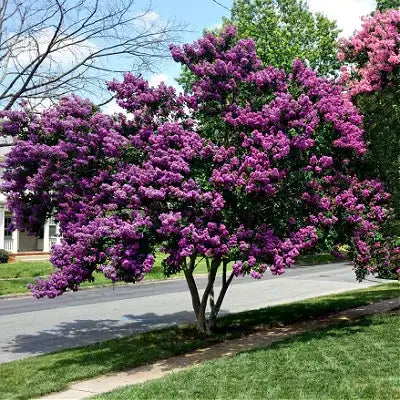
Crepe Myrtles: Adding Beauty to Each and Every Garden
Of all possible plants that can be used in gardening and landscaping, few can match the class and charm that Crepe Myrtles add to open spaces. Earning their keep with splendid, easily manageable flowers, along with their bright blossoms and unique bark, these Myrtles seem to be perfect for all types of gardens. These versatile, reliable merchants of delight will be the crown jewel of the outdoor spaces to be decorated, be it by a professional or a rookie.
Flowers in Every Hue and Shade
Crepe Myrtles are known best for their captivating range of colors, owing to the bountiful blossoms that sprout in summertime. Flowers of every range, including reddish hues, pink, and purple, and even pure white, can be enjoyed in a Crepe Myrtle. Their wide spectrum of colors can suit every type of preference or theme every gardener comes up with.
It goes without saying that Crepe Myrtles are immensely helpful for landscapers due to the sheer number of color options available. They are particularly used to enhance focal points. Be it solitary, in groups, or used as a flowering hedge, they can accentuate the design of any garden, forming the perfect balance of aesthetics and color.
Appeal Throughout the Year: Bark and Leaves
Crepe Myrtles certainly put on a magnificent display when in bloom, but the unique foliage and bark of the Myrtles make them beautiful throughout the year, as well. During winter, when most plants are dormant, the Myrtles perk up Myrtles perk up as the rest of the garden sleeps, thanks to their distinctive peeling bark. Myrtles are made of stunning pieces of bark in soft shades of cinnamon, gray, and taupe. Yes, their artful white peeling bark is a work of art, if only balanced against the drab carpet of the conifers.
Equally enthralling are the leaves of the Crepe Myrtle. Crepe Myrtle plants boast the broadest variety of foliage colors, ranging from rich deep green bronze to maroon. Foliage is in peak performance when in sync with the blooming flowers of the canopy, and continues to set a lush aesthetic after the bloom fades. These remarkable attributes of the Crepe Myrtle mean they play an important role in the year-round interest of any garden.
Adaptability and Versatility
Crepe Myrtles are exemplary plants because of how well they adapt to different growing situations. They can do well in almost any climate from sub-tropical to temperate with almost no problem and are well suited for urban and rural settings. As long as they get enough sunlight, are well-drained, and are taken care of, they can grow in almost any soil, which makes them great for many different types of gardeners.
Crepe Myrtles are bred in a variety of sizes, which can make them compact shrubs or trim trees. This feature can help them blend in with many different scales of gardens. For smaller areas, dwarf Crepe Myrtle types are best, but in larger areas, the taller, tree-like types work just as well. Because of these plants’ ability to adapt to changing situations as well as the variety in sizes, Crepe Myrtles are a recommended plant for landscapers, as they are both reliable and good-looking.
Low Maintenance Beauty
Most gardeners like plants that are interesting to look at but do not require a lot of work, and Crepe Myrtles fit this well. Most Crepe Myrtle trees require little work, only needing a bit of pruning and care. For this reason, they are the best trees for seasoned gardeners who want to relax in their gardens as well as beginners who are intimidated by difficult plants.
Like any tree in your yard, it is quite possible that it will be expansively decorated with a multitude of flowers. These beautiful structures will surely bloom all over your tree that will beautify it immensely but will surely take a large amount of nutrition out of the tree. If not taken care of with decoration and a large amount of flowers, it may be stripped of life over a very short amount of time. These gorgeous trees take root dominance in disrupted habitats during the late spring and mid-summer seasons, but still, all other types of trees in your yard may take root during the early spring season.
Pruning the tree or decoratively trimming it is a skill that requires practice and the right set of tools. A tree will be aesthetically pleasing if the numerous flowers shaped like 12 pointed stars bloom all over it at the correct point in time. Like any other artistic activity, pruning a tree to enhance its beauty requires eye care and a high amount of discipline, and needs to be done with slightly bookish creativity that perceives nature and its paints and brushes, and with proper timing, patience, and awe about the outcome that it will surely unfold.
The beautiful nature around these trees should be fully appreciated and decorated with stance that nature and its surroundings all should get the best care that keeps the balance of beauty and nature among all the trees and flowers fully intact. This activity surely needs to be done with balance and will beautify the tree and its flowers, but only if done with the purest intention of love for the tree.
Success Growing Crepe Myrtles
Crepe Myrtles are simple to grow, but there are a few key points to remember to help them thrive in your garden. Here are some considerations to keep in mind.
-
Right Variety: Pick a variety of Crepe Myrtle that works best with your climate, the size of your garden, and your style preferences. Make sure to check the height and width of the type's growth at maturity to see if there is enough space in your garden.
-
Right Position: Crepe Myrtles love sun, and without enough sunlight, there will be not enough flowers and the tree will not be healthy.
-
Right Type of Soil and Drainage: Soil that does not hold Crepe Myrtles is best. If your soil is heavy and sodden, use organic matter to help with drainage.
-
Watering Schedule: When established, Crepe Myrtles are pretty tough when it comes to drought but the first growing season is highly important for the roots to grow. They can be left to sit during dry weather but will then be puddled and soaked.
-
Right Type of Lid: To slow down evaporation, the right type of lid can be put around the tree's base.
-
Right Type of Shovel: Once the tree is healthy enough, the right type of shovel can be used to help shape the tree. When the temperature and moisture are right, the treetop can be carefully rounded to help the shape.
-
Fertilization: For Crepe Myrtles, there’s no need for heavy fertilization. In early spring, a balanced slow-release fertilizer can be applied, which can be beneficial for growth and flowering.
Trees
-
Pest and Disease Management: Myrtles possess a moderate amount of resistance to diseases and pests, though this does not mean they will be problem-free. Regular checking for issues and taking quick steps addresses them before they escalate.
Sleep
These traits, along with their beautiful flowers, interesting bark, and low care needs, mean that Crepe Myrtles are a welcomed addition to the garden of any gardener, be they new or seasoned. Myrtles are captivating features of the landscape that attract wildlife along with summer flowers and interesting bark in winter. The combination of these trees enhances the scenery of any garden all year, providing a stunning outdoor space. With the many accrued benefits of Crepe Myrtles, they are a wonderful part of any garden design.
Call to Action
Visit TN Nursery if you are ready to include Crape Myrtles and other gorgeous flowers to your garden. We promote good, healthy plants that will do well in your garden. Begin your gardening experience with us.
FAQs
What is the downside of crape myrtles?
Crepe Myrtles are relatively easy to grow and maintain, but they do come with certain disadvantages. The most prominent problem with them is mildew, especially in hot humid areas. Also, they need to be pruned regularly lest they become untidy, which is a hassle. The wood of some types is even brittle, which means it can cause damage to the tree during storms. Regardless of such concerns, Crepe Myrtles are still easy to maintain, and are a wonderful ornamental plant for the garden, provided the right care is given.
Is there a difference between a crepe myrtle tree and a crepe myrtle bush?
Yes, there is a difference between a Crepe Myrtle tree and a bush. Crepe Myrtle trees are not branched and have one central trunk, growing to much greater heights. They can reach up to 25 feet, or more, and can even be pruned to a tree form, which will make them have a more tree-like shape. In contrast, bush Crepe Myrtles have a cropped shape, multiple stems, and only grow to about 6-8 feet tall. The difference in focus is shape and size. Trees are more upright and singular, while bushes are more spread out and bushy.
Should crepe myrtles be cut back every year?
Pruning the myrtle is a very crucial part of the plants upkeep in order to keep its shape and in good health. It may not be needed every year, but in general very 1 to 3 prunes is enough to shape the plant and remove any of its deceased or damaged branches. The ideal time to do this, is the end of winter and the start of spring. … and do not fill the plant, this will hurt how the plant is structured and how it will grown in the future.
Where do crepe myrtles grow best?
Crepe Myrtles do very well in full sun. This is very important if you wish to have the best blooms in the region. Though they will do well in most soil, and will even tolerate drought and poor soil conditions, they thrive in slightly acidic well-drained soils. It does not matter to much if the climate is temperate or subtropical, and will do well both in urban and rural settings. These fauna are preferably placed in very sunny areas with ample space, like in gardens, parks, and even along roadways.
Why don't people like crepe myrtles?
Many people dislike Crape Myrtles because they can be rather messy. They can drop quite a few flowers on the ground, which creates quite a bit of litter. Some do not like the practice of topping, which is a way composed of cruel pruning to greatly alter the plant. Other people dislike the ease at which Crape Myrtles get illnesses like powdery mildew, especially in the humid parts of the world.
Where should you not plant a crape myrtle?
They best not be planted in areas of high soil saturation or very low soil drainage as they dislike very wet and soggy areas. They won’t perform well in areas of constant flooding. Also, they can’t be planted in areas of plentiful shade, as they perform best with full sunlight. They are best not placed in very windy areas, as their branches can be quite brittle.


