
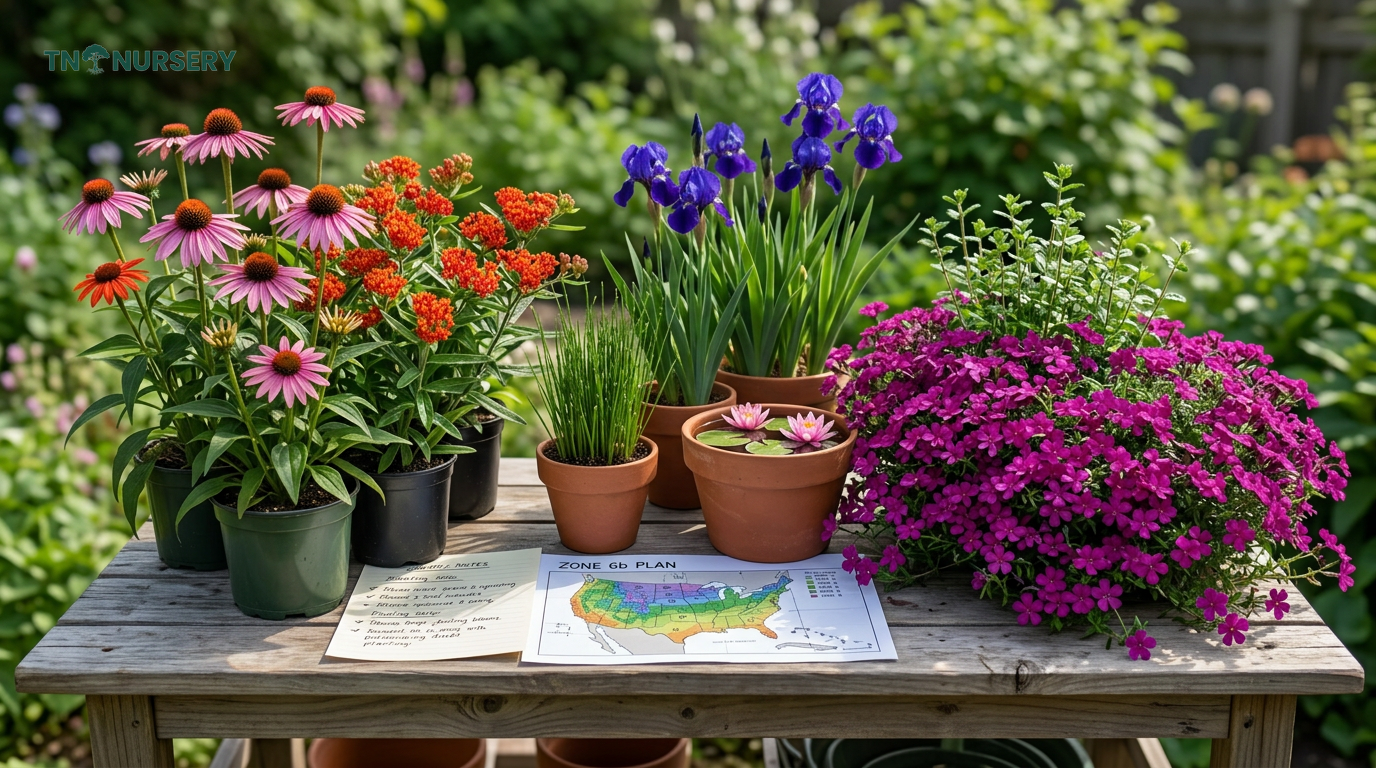
Zone 8 Perennials That Fit Your Yard
We’ll help you match zone 8 perennials to sun, shade, soil moisture, drainage, and deer pressure, so you choose plants that return instead of guessing by label alone.
What are the best zone 8 perennials to buy?
- Filter by sun exposure before anything else
- Match plants to dry, average, or wet soil
- Plan for deer pressure in open beds and edges
- Choose between ground coverage and bold color impact
Choose Perennials by Light, Moisture, and Coverage
If you are planting zone 8 perennials, start with your yard, not a wish list. We see the same pattern every year: long hot stretches in summer, dry spells that bake open beds, and then sudden heavy rain that can sit in low spots.
How to choose the right zone 8 perennials?
Match the plant to the light first. Then check how fast the soil dries after rain. That simple order saves a lot of replanting.
For open beds with six or more hours of sun, browse our Sun Perennials. For porches, wooded edges, and north-facing foundations, our Shade Perennials give you options that handle lower light better than sun-first bloomers.
Start With Sun and Shade
Shade changes everything. If a bed gets morning light and afternoon protection, you can use flowering plants there. But in deep shade, foliage often carries the space better than blooms.
That is where perennial flowers for shade need a little honesty. You will get softer bloom performance in darker spots, so we usually point customers toward a mix of shade perennials and shade ferns for a fuller look.
Match Plants to Moisture Levels
Zone 8 soil can swing fast. One week it cracks. The next week it stays soggy near downspouts or at the foot of a slope.
- Dry, sunny beds: Use upright flowering perennials that can handle heat and open exposure.
- Evenly moist shade: Use ferns and shade-loving perennials near trees, fences, and foundations.
- Poor drainage: Keep in mind that many flowering crowns dislike wet feet, especially in winter.
- Slopes: Groundcover and climber vines help hold soil and cover bare patches faster.
What are the best zone 8 perennials to buy?
The best picks are the ones that fit your exact site. For classic borders, many homeowners ask for purple perennial flowers because they pair well with green shrubs, stone edging, and pollinator-focused planting.
And yes, do perennials come back? They do when the plant matches your zone, light, and drainage. We organize our broad live-plant catalog by growing conditions, so you can shop our Perennials, Long Blooming Perennials, or Fall Blooming Perennials with real yard conditions in mind.
"A plant that fits the spot will usually beat a fussy favorite in the wrong spot."
One more quick answer we hear all the time: are peonies perennials? Yes. But they need the right drainage and enough sun, so they are not the first pick for heavy shade or soggy ground.
Our Top Pick for a Classic Perennial Foundation

15 Old-Fashioned Favorites for Zone 8 Perennials and Beyond
If you want a bed that feels established fast, our 15 Old Fashioned Perennial Favorites gives you a time-tested mix in one purchase. These plants grow in zones 3-9, so they fit many home gardens, including zone 8 perennials, and they bring mixed spring bloom color, layered foliage, and the familiar cottage-garden look many homeowners want. Some classic staples, like peonies, have earned their place because they come back from the same root system year after year.
- Hardy mix suited to planting zones 3-9 for broad landscape flexibility
- Mixed spring bloom color for layered cottage-style beds and mixed borders
- Ships now as bare-root plants for an easy way to plant 15 classic flowering perennials at once
Match Site Conditions First: Perennial Flowers for Shade, Sun, Wet Ground, and Deer Pressure
Hardiness matters, but planting success usually starts with moisture, browsing pressure, and sun exposure. We grouped these picks so you can match the right package to dry beds, soggy spots, wooded edges, or spreading groundcover needs before you choose your zone 8 perennials.


Compare perennial flowers for shade, starter bundles, and zone-matched garden boxes
If you want a simple way to shop zone 8 perennials, start here. We grouped these picks by real yard needs: low-cost starters, bigger landscape fills, monthly variety, water-friendly planting, and larger mixes for beds where foliage texture matters as much as bloom.


Frequently Asked Questions
Do perennials come back every year?
Yes. Most plants in our perennial plants collection return year after year when you match them to your site and soil. In zone 8 perennials, you'll usually see strong regrowth because winters stay mild enough for many roots to overwinter well. But keep this in mind: the top growth may die back in winter, and that is normal. The roots are the part doing the long-term work.
What are the best perennial flowers for shade in zone 8?
For low-light beds, we point customers to our perennial flowers for shade collection first. These plants fit spots with morning light, filtered sun, or tree cover where full-sun bloomers struggle. If your soil stays damp, shade choices usually settle in faster. If the area is dry under mature trees, expect to water more during the first growing season.
What purple perennial flowers work well in borders?
Our long blooming perennials and sun perennials are the first places we send shoppers looking for purple perennial flowers. Purple tones work especially well along walkways and mailbox beds because they hold their color against green shrubs and lawn. Look, border plants need more than color. You also want repeat bloom or a tidy habit, so the edge does not turn patchy by midsummer.
Are peonies perennials?
Yes, peonies are perennials. They come back from the root system each year rather than needing replanting like annual flowers. The tradeoff is simple: peonies are long-lived, but they are not the fastest plants to bulk up. If you want a bed to look full right away, mix your plan with other returning plants from our perennial collections.
Are mums perennials? Are geraniums perennials?
Some mums are perennial, and hardy garden mums can return when planted early enough to root in well before cold weather. Geraniums are a little trickier because the name covers both hardy perennial types and tender kinds grown as annuals. So, read the plant category closely before you buy. If your goal is fall color, our fall blooming perennials collection is the clearest place to start.
How do I choose between plants for dry beds, wet areas, deer pressure, or larger coverage?
Start with the site problem, not the flower color. Dry beds need plants that can handle faster drainage and hotter reflected heat. Wet areas need roots that tolerate longer moisture. And if deer browse your yard, plant placement matters just as much as plant choice. For larger coverage, buy with spread in mind so you fill space with fewer gaps and less mulch showing between plants.
How does shipping work, and what if there is a problem with my order?
We ship all items by 3-4 day ground shipping. If you need help with an order, email us at customerservice@tennesseewholesalenursery.com. We do not offer refunds or accept returns. We also do not include a warranty unless you purchased an extended warranty at the time of order. If stock is available, we may offer a reshipment, or in some cases in-store credit when applicable.
Conclusion
Key Takeaways
- Begin with USDA hardiness before choosing for color or bloom time.
- Refine your list by sun, shade, soil moisture, and deer pressure.
- Use shade-focused collections for low-light beds and sun-focused collections for open borders.
- Pick the planting size that matches your goal, from a small trio to a larger blooming package.
- Long-term success comes from matching the perennial to the exact site conditions in your yard.
