
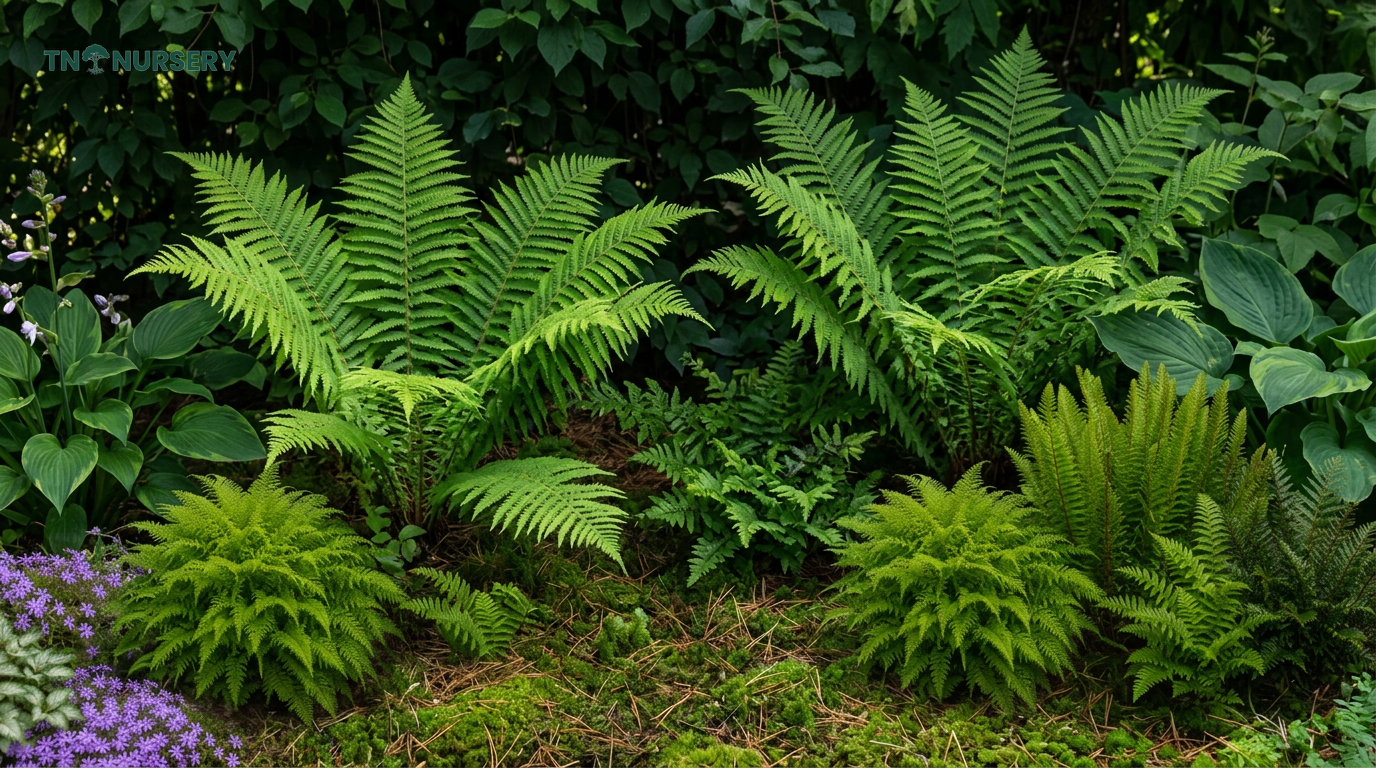
Plants That Improve Air Quality for Cooler Shade Gardens
We help you choose shade garden plants for zones 3-9 that settle under trees, along foundations, and beside patios, with fern options that stay practical through spring and summer.
What are the best plants that improve air quality to buy?
- Match plants to how the bed stays wet or dries out after rain
- Choose varieties that fit your USDA zone before you plan the layout
- Layer low, mid, and tall foliage so the bed looks full from spring through fall
- Focus on resilient plantings that create a healthier-feeling outdoor space
Shade Garden Design That Fills In Fast
In low-light beds, plants that improve air quality need to do more than survive. They need to make the space look finished. We see this all the time under trees, along north walls, and beside porches. Homeowners try to force bright sun bloomers into deep shade, then end up with thin stems, bare soil, and extra watering. A fern-first plan fixes that fast. You get layered foliage, softer edges, and coverage that looks settled instead of patched together.
What are the best plants that improve air quality to buy?
For shade, we start with ferns because they handle low light with fewer complaints than many shade plants and flowers. Their fronds overlap, arch, and spread visually, so a bed looks full even before every plant reaches mature size. That matters in under-canopy beds where color often fades, but texture still reads from the curb.
Why fern texture works
Look at a shady corner after rain. Flat leaves can disappear into the dark. Ferns do the opposite. Fine, divided fronds catch light and create contrast against mulch, stone, and tree bark. That layered foliage gives structure where people often search for full shade flowers and end up disappointed by short bloom windows.
"Shade gardens look better when foliage does the heavy lifting. Flowers can join in, but texture keeps the bed attractive for much longer."
Dense planting cuts down on work
We plant shade beds closer than open sunny borders. Not crowded. Just full enough to reduce exposed soil. That helps in three practical ways:
- Less bare ground: beds look established sooner
- Better moisture hold: shaded soil dries slower when roots and foliage cover it
- Fewer weed openings: dense foliage blocks light from weed seeds
But keep this in mind: shade does not always mean wet. Foundation beds under roof overhangs often stay dry for days. Woodland edges can do the same when tree roots pull moisture fast. So if you are shopping for waterwise plants or dependable zone 6 perennials, match your watering plan to the site, not the label.
Easy coverage for tricky spots
If you have searched for a low growing ground cover for shade, or wondered about full shade hosta and grass that will grow in the shade, here is our honest take. Hostas can work, and shade-tolerant grass has its place, but fern-heavy planting usually asks for less cleanup and looks more natural under trees. For woodland edges, use drifts instead of single plants. For foundation beds, repeat the same fern form in groups. And for an easy starting point, browse our easy ferns to grow collection for dependable, all-in-one shade coverage.
Our Top Pick for Plants That Improve Air Quality

Complete Shade Garden Air-Cleaning Plant Package
If you want one easy purchase instead of piecing together a bed plant by plant, our plants that improve air quality package is the cleanest way to do it. We use a grower’s choice assortment of 15 plants for shaded patios, porches, and layered borders, so you get texture and variety with less guesswork. Keep in mind that seasonal availability can change the exact mix, but that also means you receive a fresh 2026 assortment suited to current stock.
- Hand-selected 15-plant assortment with mixed summer bloom for a fuller garden refresh
- Chosen to help filter common indoor pollutants and improve air quality in urban areas
- Adapted for zones 3 through 9 and selected as a strong fit for shade gardens
Build Layers Beyond Full Shade Flowers
When deep shade makes bloom-heavy beds or grass that can grow in shade look thin, these fern picks add texture, coverage, and plants that improve air quality. We grouped them to help you match airy massing, rocky niches, mixed woodland texture, or faster fill from one practical lineup.


Compare Shade Plants and Flowers for Cleaner, Cooler Garden Beds
If you want plants that improve air quality and still handle shade, this lineup makes the choice easier. We grouped these picks for shoppers who want a full refresh, a natural fern colony look, or simple filler that works as good plants for landscaping in zones 3-9, including many zone 6 perennials.
Conclusion
Key Takeaways
- Choose the Air Purifying Plants Package - 15 Plants for larger shade garden refreshes near patios, porches, and big beds.
- Use smaller fern selections for under-tree planting, foundation borders, or a trial woodland corner.
- Match your planting plan to your growing zone before you buy.
- Build shade gardens in layers so coverage fits the space instead of crowding it.
