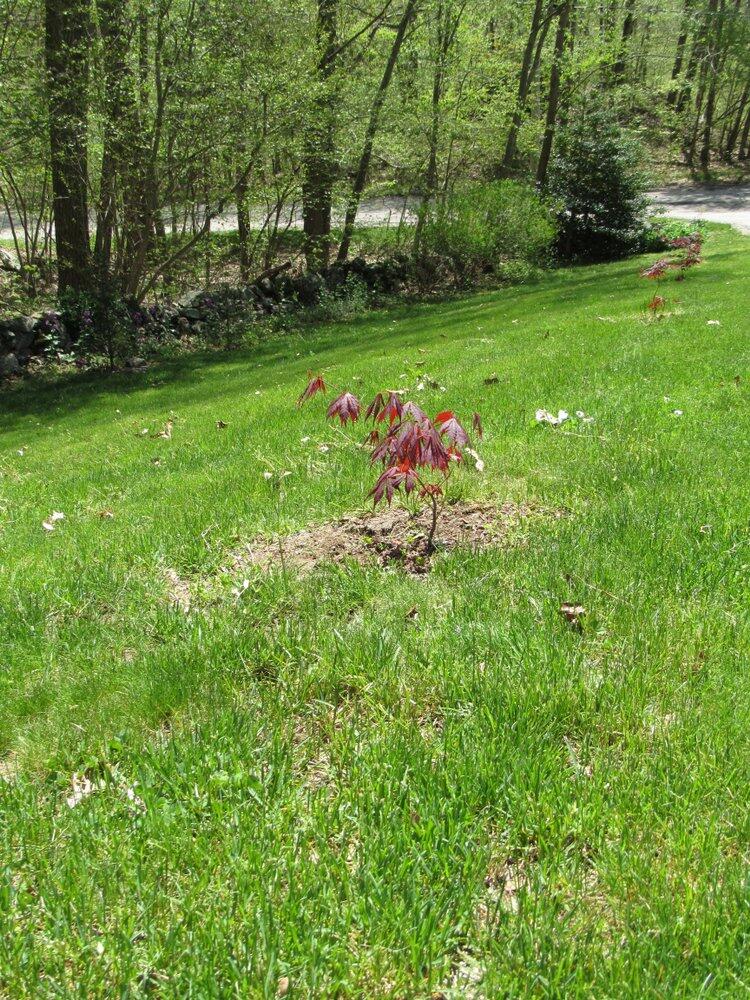
Sugar Maple Tree Details
Sugar Maple - Acer saccharum
The sugar maple is most prized for the brilliant color of its autumn foliage, and it's one of the most colorful trees you'll see in fall. In autumn, the leaves of the tree change color from a deep green to golden yellow, orange, and red. The tree stops making green chlorophyll, which reveals the yellows and oranges underneath, while sugars trapped in the leaves create the reds.
The Trees Behind Maple Syrup
Sugar maple (Acer saccharum) is the tree behind real maple syrup. In late winter, when sunny days thaw and nights still freeze, the sap starts to run. It takes about 40 gallons of sap to boil down to one gallon of syrup, and a tree is usually big enough to tap once its trunk reaches about 10 to 12 inches across.
Beauty, Shade, and Four-Season Interest
The broad, rounded crowns of sugar maples provide ample shade, making them suitable for planting in parks, gardens, and residential yards. They create cool, shady groves when planted in groups. Keep in mind that the shade is dense, so grass often struggles underneath. As garden trees, their continued merit lies in the way they change their character through the seasons: their new spring foliage is a paler yellow-green, their fall foliage is a riot of orange, red, and yellow, and they form an attractive outline against the skyline even in winter.
Sugar Maple Trees Support a Wide Variety of Wildlife
Hundreds of insect and animal species depend on sugar maples, which makes them a key part of many ecosystems. Sugar maple seeds are a food source for many birds and small mammals, and birds often nest in its branches. In early spring, its small yellow-green flowers give bees some of the first pollen of the year. In the spring and summer, sugar maple trees are a food source for caterpillars, which in turn feed nesting birds.
Sugar Maple Tree for Sale: A Slow-Growing Tree That Reaches Towering Heights
Sugar maples are sturdy, upright trees that can reach 60 to 75 feet tall and 40 to 50 feet wide. They grow slowly to moderately, about a foot a year once settled in. Native to eastern North America, sugar maples do best in rich, moist, well-drained soil that's slightly acidic to neutral, in full sun to partial shade. Sugar maples can live for hundreds of years and often become landmarks for generations.
If you're looking at a sugar maple tree for sale, check your site first. It's hardy in USDA zones 3 through 8, but it doesn't like heat, drought, compacted soil, or road salt. Skip spots next to salted roads or tight city lots, and plant it at least 20 feet from your house so it has room to spread. Once it's settled in a good spot, gardeners appreciate how little care it needs.
This plant ships bare root. Soak the roots for a couple of hours, then plant it with the root flare (where the trunk widens at the base) right at soil level. Water deeply, spread 2 to 3 inches of mulch in a wide ring, and keep the mulch off the trunk. Give it about an inch of water a week through the first season during dry spells. Don't worry if it barely grows that first year, because it's busy putting down roots.
Planting & Growing Information
Ships: Ships Between November 15–29
Planting Zone: 3–8
Height at Maturity: 60–75 Feet
Water Needs: Moderate
Sun or Shade: Full sun and Partial shade
Bloom Season: Early spring (March–April)
Care: Sugar maples prefer moist, well-drained, loamy soil. Water regularly during dry spells. Spread 2 to 3 inches of mulch around the base, keeping it off the trunk. Prune in summer once the leaves are fully out, to avoid heavy sap bleeding.
Exposure: At least 4–6 hours of direct sun gives the best fall color; afternoon shade helps in hot climates.
Plant Attributes: Brilliant fall color, Sap for maple syrup, Long-lived
For more tips on planting, growing, and caring for sugar maple trees, explore our Sugar Maple guide. You can also browse our collection of trees to discover more varieties for shade, beautiful fall color, and landscape planting.