
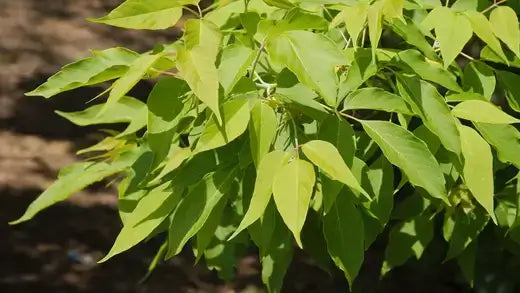
Wildlife and Biodiversity Enhancement
The beauty of landscapes should not only be appreciated but also cherished, since they beautify and support rich biodiversity and house various wildlife species. Box Elder trees, which some might consider early successional species, actually provide tremendous benefits for wildlife. The diverse communities of plants and Box Elder-attending insects capture the attention of wildlife, including birds and several species of small terrestrial mammals.
After a period of undisturbed establishment, the Box Elder live stakes provide functional habitats. The leaves, seeds, and bark of these trees are food sources for many species of wildlife. The Box Elder trees are favored for nesting by birds and woodpeckers, and their flowers attract insect visitors, for nectar, including butterflies and bees. The live stakes of Box Elder trees in scenic landscapes reflect nature and the harmonized beauty of interconnected ecosystems.
Other Flora for Improving Your Landscape
Even though Box Elder live stakes provide many benefits, other plants can be added to complement your specific landscape design. For example:
Willow Trees
They are also great for controlling erosion along rivers and in wetlands. Like Box Elder, willow trees also have fast-growing roots that help stabilize soil and provide wildlife with a variety of habitats.
Red Maple
During fall months, Red Maples show off their beautiful and distinct red leaves. Red Maples are great for any landscape because of their beauty and their ability to provide shade and prevent soil erosion.
American Sycamore
This tree has fast growth and can adapt to various soil types. Therefore, it's a great option for landscaping, especially for sites with wet and moist soils.
When planted along with Box Elder live stakes, these trees can form a biodiverse and fully functional landscape, and at the same time, improve the beauty and appearance of the area.
Cultural and Historical Significance
Beautiful landscapes often have cultural and historical significance and tell the story of the people and the landscape in the area. As native species, Box Elder trees also have some historical significance related to the areas where they have historically grown. Indigenous people may have had traditional non-timber uses of the tree parts for medicinal purposes or crafts.
Integrating Elder live stakes Box Elder live stakes into beautiful landscapes provides a connection to history, and with these trees a sense of continuity with the history of the land and it’s Indigenous people. Using the Box Elders Box Elders and other native species in the landscape is a way of honoring the land’s natural history.
What are Box Elder Live Stakes Good for in Landscaping?
In landscape architecture, the use of live stakes is an effective, ecologically harmonious tool that provides both function and beauty to the landscape. While subtle, these cuttings function to stabilize riverbanks, alleviate erosion, promote biodiversity, and fill a place of cultural value. Most importantly, they quickly establish vivid and pleasing foliage and thus function to fulfill the landscape’s beauty demands.
Using Box Elder live stakes in landscaping is entirely holistic and shows a deep respect for the ecology and artistic beauty of the landscape. This live stake is a perfect bench and uses landscaping and shows great respect for the art of landscape design and the ecology of the landscape.
Conclusion
Thanks to this collaboration, Box Elder live stakes offer the opportunity to improve the scenic beauty of a landscape while ensuring ecological balance and vitality in the landscape. This balance creates a landscape that ultimately serves multiple purposes, be it an enhanced garden, a stabilized riparian zone, or an increased population of local wildlife. Box Elder Live Stakes can provide a landscape that is thriving and also positively fulfills the ecological purpose.
Box Elder Live Stakes are perfect for enhancing your landscaping. Visit TN Nursery for more plants and trees to add to your ecosystem!
FAQs
What is the life expectancy of a box elder tree?
Box Elder trees live for around 30 to 60 years if the conditions are good. These trees grow faster than other species, but live for a shorter time than average. Extreme weather, diseases, and pests can shorten the life of a Box Elder tree, but overall, they grow quickly.
How long should live stakes be?
Box Elder live stakes are usually cut to 12-18 inches long to give each stake enough length to grow a healthy root system, while also making it easier for the planter to manage the stake. If longer stakes are available, they can also be used, depending on the growth and planting conditions.
What are the cons of box elder trees?
Box Elder trees are very fast-growing and can help a lot with erosion control, but they can be very messy trees. They are also weak wood, which can be dangerous in high winds. Their seeds can spread very easily and aggressively, which can be a problem in a lot of urban areas.
Do squirrels eat box elder seeds?
Definitely, squirrels, along with other smaller mammals, consume seeds from Box elder trees. These seeds help feed wildlife, especially during the winter when other food is not available.
What does the 10/20/30 rule in tree planting refer to?
The 10 20 30 rule is a planting strategy for trees to help maintain diversity and resilience in ecosystems. It is to help promote diversity and to ensure that the planting does not lead to a monoculture where a single pest or disease could wipe out the entire stand. 10% of one species, 20% of a second species and 30% of a third.
Is October too late to plant trees?
October is a generally a really good time to plant trees, especially box elder live stakes. Root establishment happens when trees are planted in the fall before the winter cold arrives. However, trees should be planted before the the first frost so the trees have enough time to get settled in the soil.


