
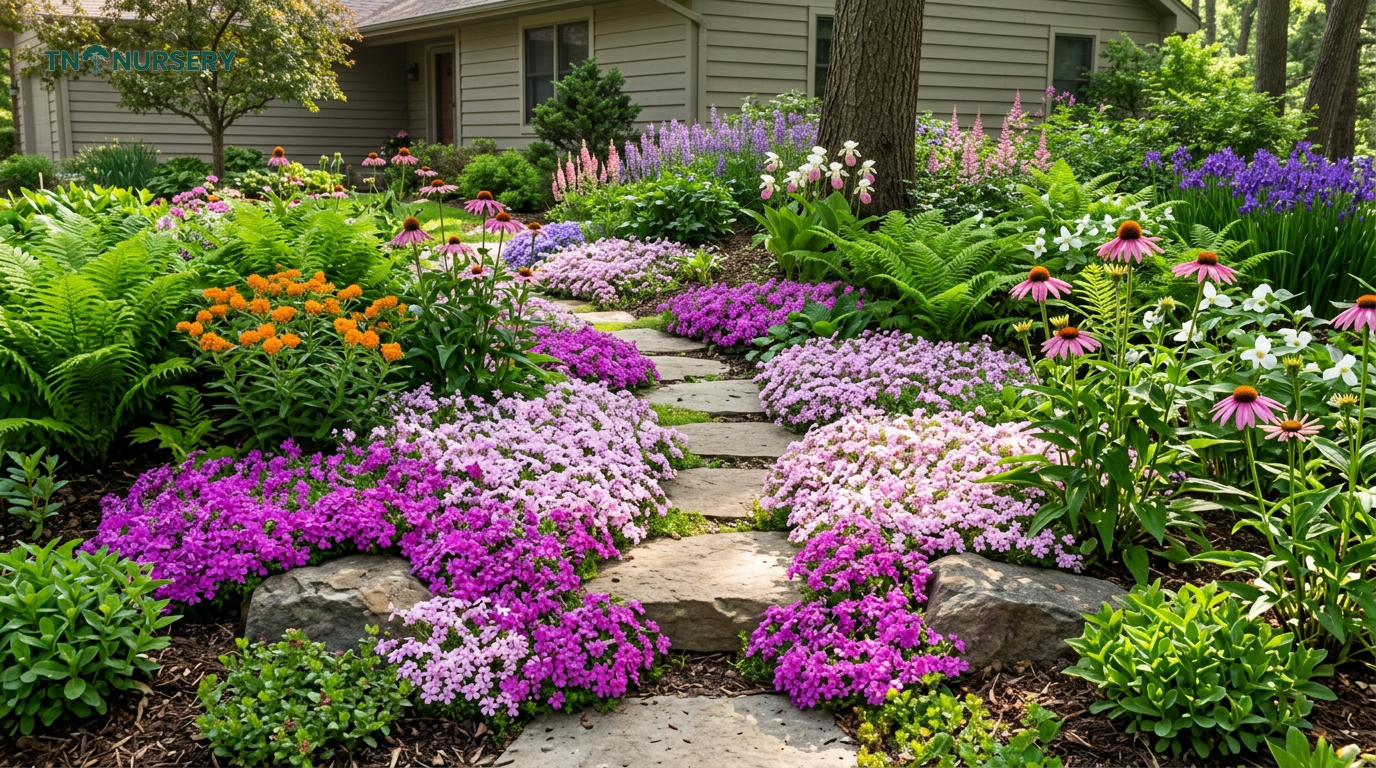
Ground Covers for Landscaping That Cut Front Yard Work
Replace patchy lawn with layered, low-care planting. We match options by growing zone, so you get better moisture retention, fewer weeds, and stronger spring-to-summer survival.
How to choose the right ground covers for landscaping?
- Choose evergreen options when you want year-round coverage in foundation beds, along entry walks, and in winter-bare front yard spaces.
- Use flowering or textural ground covers where you want softer bed edges, more seasonal color, or contrast around stone paths and tree rings.
- Pick site-matched plants for sun, shade, dry soil, wet soil, slopes, and areas with deer pressure to avoid replanting later.
- Ground covers can reduce mowing, block light from weed seeds, and help hold soil on banks and other erosion-prone spots.
- This guide focuses on practical low maintenance landscaping ideas front yard homeowners can actually use.
Our Top Pick for Ground Covers for Landscaping

25 Zone-Matched Ground Covers for Easier Planting
If you want a broad planting mix without sorting through dozens of individual species, this is where we’d start. Our ground covers for landscaping package includes 25 low growers selected for your climate zone, so you can fill sunny borders, dappled shade, erosion-prone slopes, and open spaces between larger front yard plants with less guesswork.
- 25 bare-root plants selected to match planting zones 3-9 for easier establishment in your climate
- Low growing ground cover habit that stays under 12 inches and works well in borders, slopes, and open landscape spaces
- Adaptable mix for sun or dappled shade that helps with weed control, erosion reduction, and soil moisture retention
How to Choose Ground Cover Packages That Fit Your Yard
If you want ground covers for landscaping that actually fill in and stay manageable, start with the site, not the plant name. We help customers match live plants to sun, moisture, and zone so you get steady coverage instead of patchy gaps by midsummer.
What are the best ground covers for landscaping to buy?
The best pick depends on where the bed sits all day. A hot slope needs different plants than a shaded fence line, and a damp swale needs something else again.
When customers ask for one exact plant, we often widen the search. If your goal is coverage, a broader collection usually gives you better survival and faster fill.
For Sunny, Dry Areas
If you came here looking for sedum ground cover, keep an open mind. In dry front beds, we often point shoppers toward our Deer Resistant Perennials and Groundcover Vines for Sale collections because dependable spread matters more than chasing one species.
- Space most low spreaders 12 to 18 inches apart for quicker knit-in.
- Mulch lightly. Keep stems clear so new growth does not stay damp.
- Water deeply once or twice a week in the first season.
For Shade and Woodland Edges
Shade changes everything. A low growing ground cover works best here when it can handle root competition from nearby trees and still cover bare soil under open canopies.
We also like layering. Use groundcover at the front, then add structure behind it with plants from our Evergreen Shrubs for Landscaping collection.
For Wet or Low-Lying Spots
Look, wet ground needs patience. Plant a little wider than you would on dry soil, and do not pile mulch thickly over crowns. That keeps rot pressure lower while roots settle in.
For Front Yard Foundation Beds
If you want an evergreen ground cover effect or something more ground cover deer resistant, we usually build the bed in layers. Groundcover softens the edge, shrubs hold the middle, and a small tree gives the planting height and shape.
And keep this in mind: tighter spacing costs more up front. But wider spacing means you will stare at mulch longer. For most homeowners, the middle ground is the best-looking plan.
Plan Low Growing Ground Cover Projects With These Yard-Ready Plant Bundles
If you're mapping out ground covers for landscaping, this lineup makes the job simpler. We grouped these nine bundles around real front-yard needs: quick starter planting, mixed bloom color, shade coverage, deer pressure, wet spots, and dry sunny beds.


Frequently Asked Questions
What is the best low growing ground cover for a front yard?
For neat, easy coverage, we usually point homeowners to options in our ground covers for landscaping range under groundcover vines. They stay low, help soften bed edges, and fit well around walkways and mailbox plantings. If you want a front yard that looks tidy with less mowing, this is one of our most practical picks.
Are there ground cover deer resistant options?
Yes. You'll find deer-aware choices in our deer resistant plants, plus added options in deer resistant perennials and deer resistant shrubs. Keep in mind, deer resistant does not mean deer proof. If food is scarce, deer may still browse new growth.
Can ground covers work in shade?
They can, but site conditions matter. We recommend checking how many hours of direct sun your area gets before you order. That helps us match you with a low growing ground cover that has a better shot at filling in instead of thinning out.
What should I plant in wet areas?
Wet spots need plants that can handle extra moisture, not just any evergreen ground cover. If you have standing water after rain, tell us before you order. We'll help you narrow down plants from our catalog that fit your zone and drainage conditions.
How are plants selected for my zone?
We know plant survival matters. When you shop with us, zone fit should come first, especially for front yard plants that stay in full view all year. If you're unsure, contact us with your planting location and we can help you choose low maintenance landscaping ideas front yard gardeners can actually keep alive.
When will my order ship?
We ship all items by 3-4 day ground shipping. That gives your order a straightforward transit window, and it's the shipping method we use across the store.
Can I return live plants?
We do not offer refunds, and we do not accept returns. If a problem comes up, we may offer a reshipment if the item is available. If it is not available, we may offer an extended warranty on a plant or in-store credit. We only offer a product warranty if an extended warranty was purchased at the time of order.
How do I contact TN Nursery?
You can reach us at customerservice@tennesseewholesalenursery.com. If you need to mail us, our address is Tennessee Wholesale Nursery, 12847 State Route 108, Altamont TN 37301, United States.
Conclusion
Key Takeaways
- Match each planting area by zone, sun, and soil moisture before you buy.
- Use drought-tolerant ground covers in sunny spaces to cut back on watering.
- Choose moisture-loving plants for wet or shaded spots where dry-site plants struggle.
- Start with deer-resistant collections if browsing pressure is common in your yard.
- Plan with live plants from our zone-based collections for longer-lasting, lower-upkeep results.
