
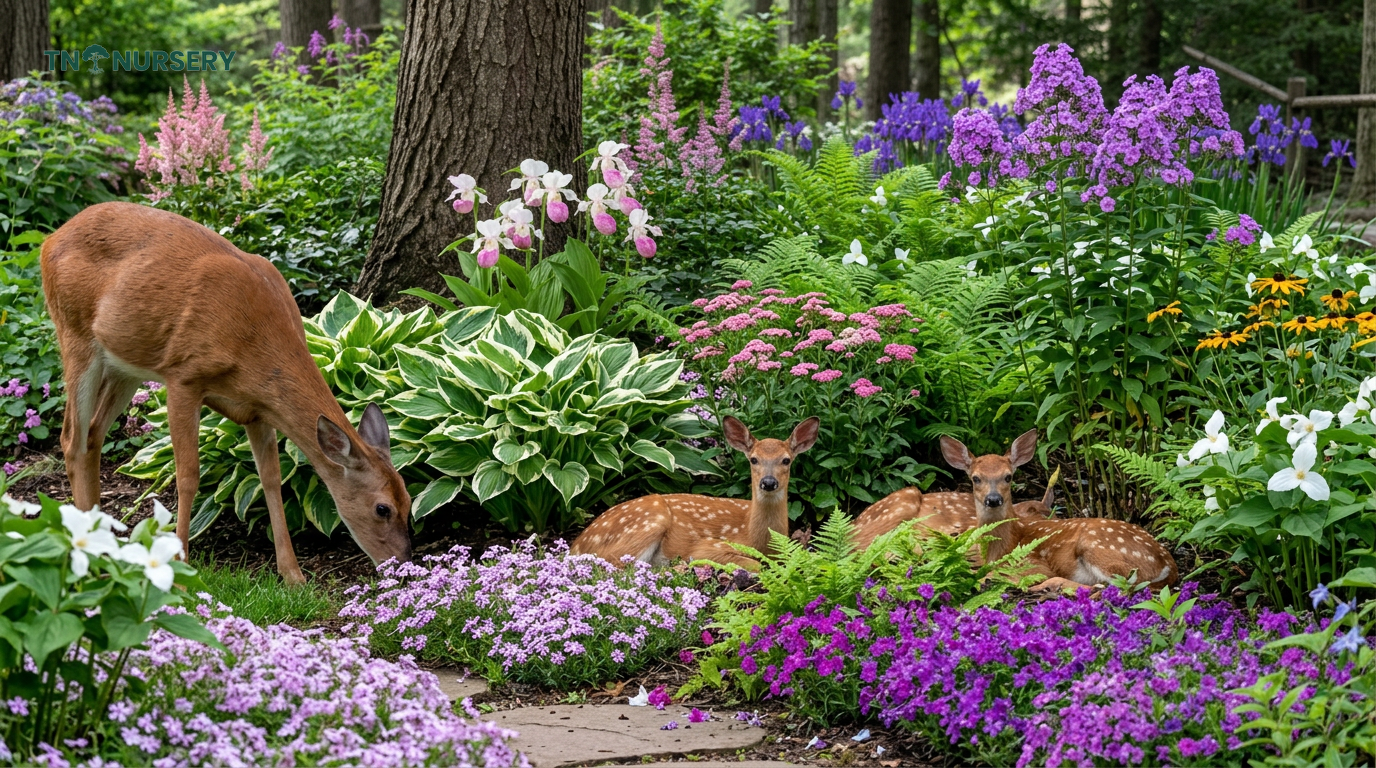
Spring to Summer Deer Resistant Plants for Easier Beds
We help you cut browsing pressure in borders, foundation beds, and wooded edges. No plant is deer-proof, but better picks mean less fuss and more reliable growth by zone.
How to choose the right deer resistant plants?
- Learn how to match plants to full sun, part shade, and deep shade
- See why perennials lower replanting costs by returning each season
- Use zone-based shopping to improve plant survival in real yard conditions
- Find easier-care options that reduce deer browsing once established
Our Top Pick for Deer Resistant Plants

10-Plant Starter Package for Easier Deer-Resistant Planting
If you want a simple place to start, this package gets right to it. We send 10 perennial plants, with 2 to 5 varieties selected by our growers for your zone and the current season, which gives you better odds of establishment than guessing on your own. You can use them in borders, foundation beds, wooded property lines, or naturalized areas. Keep in mind, deer resistant means deer often avoid these plants when other food is available, not that every planting is fully deer-proof.
- Includes 10 perennial plants in a seasonal assortment of 2 to 5 varieties
- Grower-selected for your planting zone and current season to support establishment
- Works well for borders, foundation plantings, wooded lines, and naturalized beds with minimal upkeep once established
How to Choose Deer Resistant Perennials That Stay Easy
When customers ask us for deer resistant plants, we start with one honest point. Deer resistant does not mean deer proof. But plants with fuzzy leaves, strong scent, thick texture, or bitter sap usually get passed over first, which saves you time and frustration through the season.
How to choose the right deer resistant plants?
Choose plants that fit your light, soil, and moisture before you focus on anything else. We see better results when you match the plant to the spot, because stressed plants invite trouble fast.
For sunny beds, many full sun perennials handle heat and dry spells once roots settle in. In lower light, shade loving perennials often keep better leaf color and need less watering, but keep in mind that damp shade can invite mildew if plants are crowded.
What makes a perennial feel lower maintenance?
- Tough foliage: leathery, fuzzy, or fragrant leaves often discourage browsing.
- Established roots: after the first season, many perennials need less frequent watering.
- Regional fit: plants adapted to your zone usually recover faster from heat, cold, and summer swings.
- Correct moisture: a dry-site plant in wet soil struggles, even if deer leave it alone.
"Plant the right perennial in the right place, and routine care gets much simpler."
What are the best deer resistant plants to buy?
We suggest starting with grouped selections instead of buying one plant at a time. Our deer resistant perennials make planning easier, and our shade perennials help if your yard gets morning sun or tree cover.
If you need spreading coverage, look at a ground cover deer resistant planting plan so bare soil does not turn into extra weeding. And if you want simple structure around the border, browse our deer resistant plants collection and group by sun, shade, and moisture from the start.
Simple care habits that cut work
- Mulch 2 to 3 inches deep to slow weeds and hold soil moisture.
- Water deeply during establishment, especially in the first growing season.
- Space plants for airflow so foliage dries faster after rain.
- Group plants by site conditions so you are not overwatering one area and drying out another.
Choose a Low Maintenance Plants Package That Fits Your Space
If you're ready to grow past a starter bed, these six packages give you clear ways to plant more with less guesswork. We’ve grouped them for real yard needs, from a simple trio and nostalgic bloomers to shade-filling mixes and ground cover deer resistant style plantings, while keeping the focus on…


Match Low Maintenance Plants to the Tough Spots in Your Yard
If deer resistant plants are on your list, start by matching the bed to the right trio. We grouped these picks by real garden conditions, so you can choose for dry sun, wet ground, or an easy all-around planting without second-guessing.


Choose Deer Resistant Plants for Your Yard Conditions
Choosing deer resistant plants gets easier when you match the planting area to light, moisture, and the amount of upkeep you want. We guide customers this way every day because a sunny front bed needs a different mix than a damp low spot. And if you plant for your zone from the start, you usually replace fewer plants later.
How to choose the right deer resistant plants?
Start with the site, not the color chart. Measure the bed, watch how long the sun stays there, and note whether water drains fast or sits after rain. Then choose from our Deer Resistant Plants, because that collection helps narrow the field before you sort by size or exposure.
Small front beds and tidy entry plantings
For compact spaces, we usually point shoppers to Deer Resistant Perennials. They give you repeat bloom and cleaner edges without the bulk of larger woody plantings. If you want more color through the season, mixed perennial packages make the strongest case here. You get shifting texture instead of one short bloom window.
Shady side yards: shade loving perennials
Side yards can feel tricky. But our Shade Perennials collection helps fill dim areas where turf often thins out. This is the better route when you need coverage under trees or along the north side of the house.
Dry slopes and open beds: ground cover deer resistant
On banks and hard-to-water edges, a ground-hugging planting can cut back on bare soil and weed pressure. That matters on slopes, where mulch tends to wash. Keep in mind, ground cover takes a little patience in year one while it fills.
Larger borders, low spots, and long-term value
For deep rural borders, we often see shoppers combine perennials with structure from Deer Resistant Shrubs or Evergreen Shrubs. Use that approach when you want winter shape, screening, and less empty space after frost. In moisture-heavy low spots, focus on plants suited to wet feet rather than forcing dry-site choices.
- Full sun perennials: Best for bright beds, mailbox gardens, and hot foundation lines.
- Low maintenance plants: Best when you want fewer replacements, less staking, and simpler seasonal cleanup.
- Zone-suited assortments: Often cost less over time because they settle in faster and fail less often.
Common questions usually come down to three things: how deer resistant a planting really is, how assortments ship, and what kind of size mix to expect on arrival.
So if you're deciding between a dense cover, a color-heavy perennial mix, or a shrub-backed border, start with the conditions in front of you. We'll help you choose a collection that fits the space and your workload.
Frequently Asked Questions
Are any plants completely deer-proof?
No. We never call any planting completely deer-proof. Hungry deer will sample almost anything, especially in dry weather or when food is scarce. But deer resistant plants are still a practical way to cut damage. You’ll usually get better results when you plant from our Deer Resistant Plants and Deer Resistant Perennials collections in spots deer pass through often.
How do I improve success with deer resistant plants?
Start with the right place. Full sun perennials need open light for most of the day, while shade loving perennials do better where trees, fences, or the house block strong afternoon sun. And keep spacing in mind. Crowded roots and soggy soil stress plants fast. If you want a tidy slope or border, a ground cover deer resistant planting helps fill gaps and leaves less bare soil for weeds.
What is the difference between full sun perennials and shade loving perennials?
Full sun perennials handle brighter, hotter spots and usually flower best with long daily light. Shade loving perennials suit woodland edges, north sides of homes, and other lower-light areas. Look, this matters more than people think. A plant in the wrong light may survive, but it often grows thin, blooms less, or stalls out.
Do you offer evergreen options for year-round structure?
Yes. If you want winter color and screening, we carry evergreen choices through our Evergreen Shrubs collection, and many shoppers also search for deer resistant evergreen trees for that same year-round job. Keep one tradeoff in mind, though. Evergreen plants give structure in every season, but they still need the right zone and planting spot to settle in well.
How does TN Nursery ship plants?
We ship all items by 3-4 day ground shipping. That keeps orders moving without long warehouse holds. So if you’re planning a bed refresh or replacing damaged landscaping, you can time your planting window with a little more confidence.
Can I return plants or get a refund?
We do not accept returns, and we do not offer refunds. We also do not offer a warranty unless you purchase an extended warranty at the time of your order. If there is an issue, we may offer a reshipment when stock is available.
What happens if my plant cannot be reshipped, and how can I contact you?
If a product is unavailable for reshipment, we may offer in-store credit. For help with an order, email us at customerservice@tennesseewholesalenursery.com. You can also write to Tennessee Wholesale Nursery, 12847 State Route 108, Altamont TN 37301, United States.
Conclusion
Key Takeaways
- Match plants to your zone, light, and moisture conditions first
- Use full sun perennials and shade loving perennials where they naturally fit
- Ground cover deer resistant choices help fill gaps and reduce bare-soil upkeep
- Deer resistance lowers damage risk, but no plant is completely deer proof
- Start small, watch how your landscape performs, then expand with confidence
