
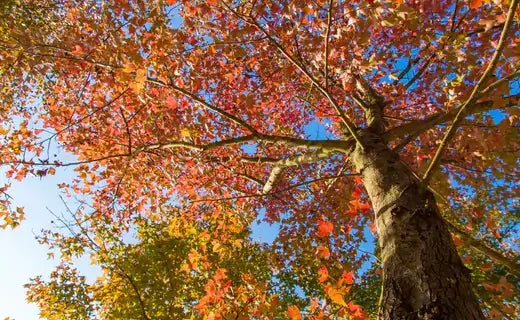
Here‚ then‚ are five trees which exhibit an attractive strength‚ and an impressive beauty‚ in their several ways․
White Oak‚ Maple‚ Tulip Poplar‚ Black Walnut‚ and Sweet Gum trees have their own special charms: strong‚ decay resistant wood‚ beautiful fall color‚ quick shade‚ edible nuts‚ great fall foliage and so on․ Here is a discussion of the special qualities of each tree so you can choose the perfect tree for your yard: knowledgeable‚ not a guess․ What we know after three decades of growing these species in the Southeast:
White Oak (Quercus alba)
Slow growth in early years is no handicap․ Once established‚ White Oak can be relied on to grow 12 to 15 inches (30 to 38 cm) annually․ It matures about 60 to 100 ft (18 to 30 m) in height and generally as wide․ It may survive over 500 years․ A number of individual trees have been dated to over 500 years east of the Mississippi․
Hardy in USDA zones 3 through 9 (all of Tennessee)‚ this tree prefers moist soil with good drainage and full sun․ It has a reputation for tolerating more shade than other oaks․ The tree has a deep taproot system and it gets established more easily when picked up when it is young and planted rather than transplanting a larger tree․ If you must plant a tree‚ it is easier to establish a bare root or very young sapling than a larger tree․
The wood has been prized for centuries by shipbuilders and companies that make barrels for cooperage‚ because the high-tannin‚ tightly-grained white oak is water resistant; hence‚ bourbon barrels are almost exclusively White Oak․ The mature tree also makes one of the best wildlife trees you can plant‚ providing thousands of acorns to deer‚ turkey and squirrels in a good mast year which lasts well into the fall and winter months․
Maple Trees (Acer spp․)
Red Maple grows relatively quickly (two feet per year)‚ and in wet soils better than most Maples․ If you live in the state of Tennessee‚ and want to plant some sort of Maple in the lower part of your yard‚ it is a good choice․ Sugar Maple (A․ saccharum) is slower growing‚ and requires good drainage‚ but has the most consistently orange-red fall color․ It is the variety most commonly tapped for syrup․
Both grow well in hardiness zones 3 through 9 although Sugar Maple is borderline as a planting in the hottest driest West Tennessee summer if not irrigated for the first three years after planting․ Maples are best planted in the fall‚ allowing the roots to establish before summer heat stress․
However‚ it does not reach a productive age (sufficient production of sap such as to make it worth tapping the tree and drilling holes to collect sap to make syrup and not simply add to tree growth) until 30 to 40 years of age‚ and 10 inches (25 cm) in trunk diameter․ For most‚ the simple draw is fall foliage‚ entire streets painted red and gold by mid-October in Middle Tennessee․
Tulip Poplar (Liriodendron tulipifera)
The Tulip Poplar is a fast-growing tree‚ growing 2 to 3 ft (0․61 to 0․91 m) per year‚ and is one of the fastest-growing large shade trees in the eastern United States․ It stands over 100 ft (30 m) tall․ It can provide quick shade but needs space․ It should be placed at least 15 ft (5 m) away from house foundations and power lines․
The leaves are shaped like tulips‚ and the greenish-yellow flowers in the spring (they are really more like tulips than any other tree flower) are distinctive․ The flowers are pollinated by bees and hummingbirds‚ so it's a good choice if you want to be pollinator-friendly․
Tulip Poplar grows in USDA Hardiness Zones 4-9․ It does well in the heavy clay soils of Tennessee‚ where its growth can be surprisingly good so long as the soil profile has not been saturated with water․ Space it 40 ft (12 m) away from buildings and large trees․ Staking for a year or two is recommended for young trees because of their top-heavy nature that puts them at a higher risk of falling․
Black Walnut (Juglans nigra)
Black Walnut is grown as a crop tree because its timber and veneer logs are valuable‚ selling for thousands of dollars‚ and its edible nuts are of interest both to wildlife and to humans․
One additional thing that is not covered by many guides is that Black Walnut trees release juglone which is toxic to tomatoes‚ peppers‚ apple tree and some azaleas․ When planting these plants‚ and if a Black Walnut tree is growing nearby‚ then it must be at least 50 feet away from the Black Walnut tree․ So this is not a minor footnote‚ this is probably the single most important thing․
It is a medium growing tree from 50 - 75 feet (15 to 23 m) tall growing at a rate of 12 to 24 inches (30 to 61 cm) a year․ It is hardy between zones 4 and 9‚ and grows well in deep rich well-drained soil․ The nuts drop in the fall․ Plant the trees some distance from driveways and patios‚ as the husks stain concrete and skin․


