
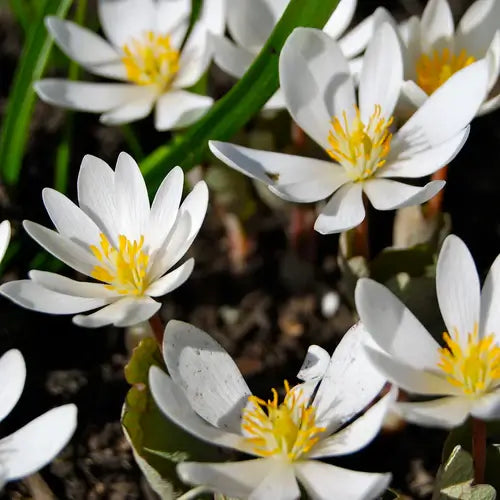
The Blood Root plant, also known as Tetterwort, is an herbaceous perennial plant in eastern North America.
It grows in the areas between Canada and Florida all down the Appalachian mountain range. The bloodroot grows to a height 0f 20-50 cm. The plant has only one leaf that surrounds the stem. The flowers are white and bloom in the spring areas between March and May, often before the leaves appear. The flowers have large 8-12 petals and have different shapes depending on the subspecies.
The main use of Bloodroot is a decoration.
The plant's beautiful white flower is a prized possession for those who have them, as they are lovely. These flowers attract many different kinds of bees and butterflies, allowing better pollination of the surrounding plants. Deer are also attracted to these plants as they are an excellent food source for them in the early spring, making it a hit for wildlife watchers. These plants prefer shady, moist areas like stream banks and floodplains. That makes his plant a must-have for shady water gardens. After many years a colony of these plants will grow around the original area by using rhizomes, making them very useful in gradually taking an area over like a groundcover.
The bloodroot is also very poisonous. The extract from the plant attacks and kills the cells of animals and humans. The extract has been thought to be used for skin cancer at burning it away but only leaves scared skin sections. Another use for the bloodrootbloodroot is in the dye, as it has been used for centuries to dye hair, baskets, clothes, and other items. Overall the plant is a must for water gardens and can improve the look of any garden.
Bloodroot Size and Growth Rate
In addition to their rhizomes, bloodroot seeds are dispersed by ants through a fascinating process called myrmecochory. The seeds have an attractive, nutrient-rich appendage that ants harvest for food, carrying the seeds back to their nests. Once the ants discard the seeds, they germinate and grow into new plants. This natural propagation method means that while Bloodroot may appear contained in one area for some time, it can spread to other parts of your garden or nearby woodland areas.
The Benefits of Bloodroot
Bloodroot (Sanguinaria canadensis) is a perennial in the eastern North American woodlands. You can identify the Bloodroot Bloodroot through its delicate white petals and the red-orange sap that emerges from the rhizome when damaged. Various Indigenous communities have valued this vibrant sap for centuries because of its reputed medicinal benefits. Bloodroot research continues to develop but already attracts herbal practitioners and holistic health enthusiasts. This section outlines the typical benefits of Bloodroot while providing necessary information about its correct application.
Bloodroot stands out because it possesses properties that can improve skin health. Bloodroot extracts have historically been topical treatments for skin growths, warts, and other skin irregularities. The sap's active elements, such as sanguinarine, demonstrate antimicrobial and anti-inflammatory aspects, which could help alleviate specific skin conditions. External use of bloodroot-based salves and ointments reportedly assists in eliminating dead or abnormal tissue and improves skin appearance. Properly using Bloodroot requires professional medical consultation because incorrect application risks causing skin irritation or damage.
Bloodroot has attracted interest for potential benefits in oral health beyond its topical use applications. Natural oral care products employ sanguinarine because it allegedly fights bacteria responsible for plaque formation. Sanguinarine prevents bacterial growth in the mouth, which helps control common dental issues like plaque formation and bad breath. Improved gum health and a fresher mouthfeel may result from this process. Commercial oral care products incorporating bloodroot derivatives utilize precise formulations. Professional supervision is required before using pure bloodroot extract instead of standard dental care products.
Native American communities and herbal practitioners have historically used Bloodroot to alleviate respiratory issues, including congestion and throat irritation. Bioactive components found in the plant show mild expectorant effects that help break down mucus and offer short-term relief. Traditional practices involving Bloodroot need to be approached cautiously. The potent alkaloids in Bloodroot can become toxic when misused or taken excessively. Before incorporating Bloodroot into treatments for respiratory issues or other internal conditions, you should seek advice from a professional healthcare provider.
UnderstandingBloodroot is often examined for its possible ability to fight inflammation. Bloodroot supporters claim its extracts can regulate the body's inflammatory response during specific situations because inflammation influences numerous health conditions. Initial studies of sanguinarine show potential effectiveness against inflammation. Still, large-scale, scientifically validated studies are scarce. These findings present interesting possibilities but require cautious evaluation before endorsing herbal treatments.
The established benefits of Bloodroot related to skin health and oral hygiene, along with its potential anti-inflammatory properties, suggest that this herb could provide significant advantages when applied correctly. Responsible use of herbal preparations requires consulting an expert practitioner and understanding proper dosages and the plant's potency. Historical applications of Bloodroot in Indigenous communities demonstrate its importance in traditional herbal medicine, while ongoing research aims to reveal its applications in contemporary holistic health practices. People interested in Bloodroot's potential properties should consult medical professionals and follow evidence-based recommendations before adding it to their wellness practices.
Planting Bloodroot
The best time for planting is early spring or fall because it occurs before the plant's delicate leaves and flowers emerge and after they've gone dormant. Prepare a shallow hole that fits the rhizome perfectly before placing it horizontally and adding one to two inches of soil for coverage. Keep plants six to twelve inches apart to ensure their gradual growth allows enough space for clustering without leading to overcrowding. Bloodroot plants form an attractive community when they grow without interference and consistently appear in spring to mark the seasonal transition.
Maintenance for Bloodroot is relatively low. The plant will thrive with minimal maintenance when it has access to rich soil and sufficient moisture and receives the right shade. In late spring or early summer, the Bloodroot enters its dormant period, resulting in leaf loss, which leaves behind a bare area until new growth returns next spring. You can sustain visual appeal in your garden by planting shade-loving perennials that bloom later, like hostas or ferns, alongside Bloodroot. By planting complementary species alongside Bloodroot, you can maintain year-round visual appeal in your garden as they fill the space left by the Bloodroot's dormancy.
Moisture is another critical factor. Bloodroot enjoys consistently moist soil, though it should never be waterlogged. Mulching with organic materials such as leaf litter or bark can help retain moisture and provide the nutrients the plant needs. During dry spells, regular watering will be essential to keep the Bloodroot happy, especially during its first few years. Once established, it becomes more drought-tolerant but will still appreciate some supplemental watering in dry conditions.
The striking red sap stands out as the plant's most remarkable feature because it has fascinated botanists and plant lovers for hundreds of years. Broken roots and stems release this vibrant crimson liquid which creates an almost magical attraction. The ability of this natural element to act as a dye led Indigenous communities to use it historically for coloring fabrics and creating artwork as well as body paint.
Bloodroot Plant represents renewal and transformation that has endured for hundreds of years. The plant arrives during early spring to signify natural cycles while its medicinal heritage demonstrates plants' important role in human health. People who encounter this woodland wonder remain captivated because they admire its beauty, cultivate it for conservation purposes or study its botanical significance.
About Bloodroot
When properly cared for, bloodroot can thrive for years, providing a delightful display of delicate blooms year after year.
2. Allergic Reactions: Individuals with allergies or sensitive skin are at higher risk of experiencing allergic reactions. Discontinue Use immediately if adverse reactions occur and seek medical attention if symptoms worsen.
5. Pregnancy and Lactation: Pregnant and breastfeeding individuals should avoid Bloodroot due to the lack of safety data during these periods.
1. Skin Irritation and Burns: Direct contact with Bloodroot can cause skin irritation, redness, and even chemical burns. It's crucial to perform a patch test before using bloodroot-based products on larger areas of skin to assess sensitivity.
Consider dividing the plants every few years to rejuvenate them and promote vigorous growth. Early spring is the ideal time for division as plants emerge from dormancy.
3. Systemic Toxicity: Bloodroot's alkaloids can be toxic when absorbed into the bloodstream. Ingesting Bloodroot or using it excessively can lead to symptoms such as nausea, vomiting, diarrhea, and more severe effects.
4. Interaction with Medications: Bloodroot's compounds can interact with certain medications for heart conditions and blood pressure regulation. Consultation with a healthcare professional is crucial if you are taking any medications.
2. Anticancer Potential: Some studies suggest that Bloodroot's alkaloids could have anticancer effects. Sanguinarine, for instance, has shown inhibitory effects on various cancer cell lines in laboratory studies. However, this research is preliminary, and robust clinical evidence does not support using Bloodroot as a cancer treatment.


