
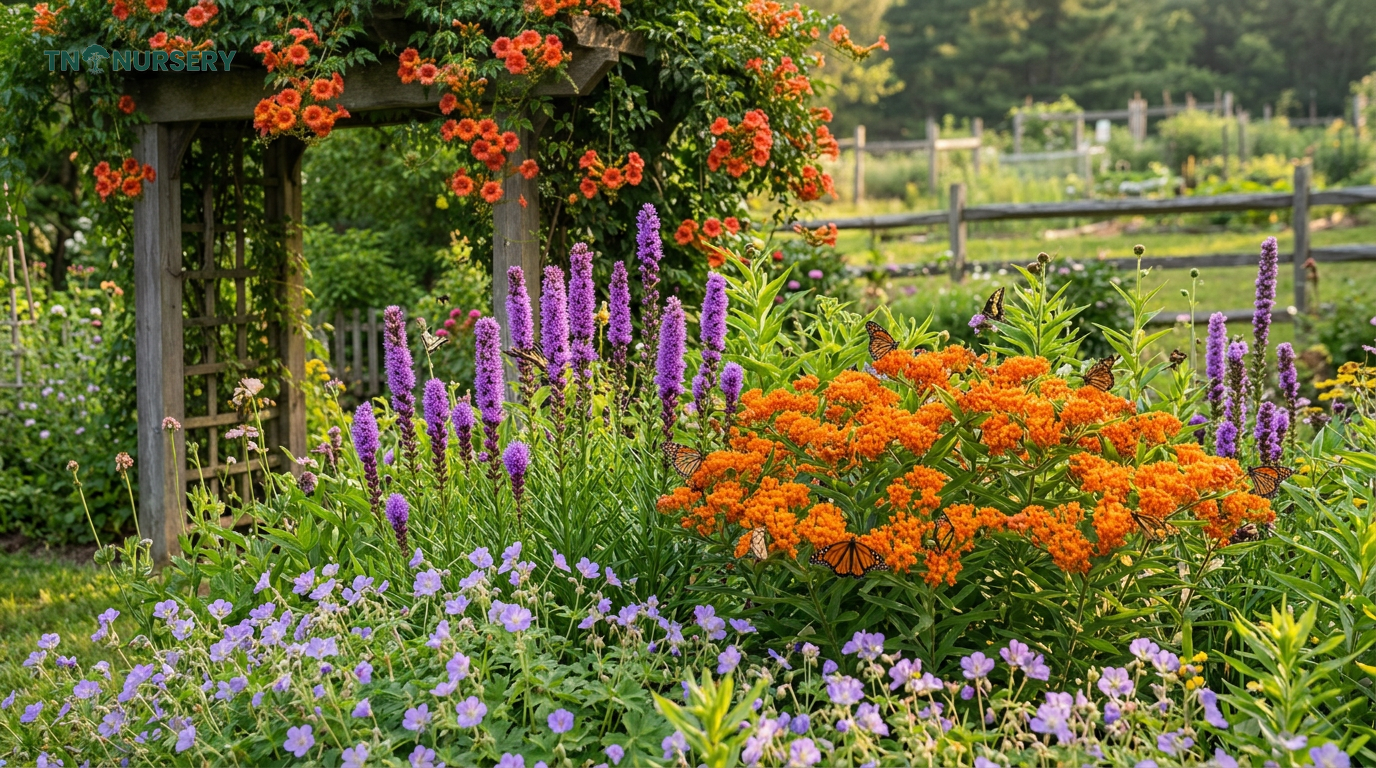
Summer Garden Color Perennials That Fit Your Zone
Plan 2026 beds with native plants for wildlife gardens. We match long bloom, pollinator support, and lower upkeep to sunny borders, woodland edges, and vertical accents.
Build Summer Color in Layers, Not in One Burst
- Choose by USDA zone first, then narrow by full sun, part shade, or woodland light.
- Combine host plants such as butterfly weed with nectar-rich bloomers for longer pollinator support.
- Use early bloomers, midsummer flowers, and climbers together so color does not peak all at once.
- Focus on low maintenance perennial plants that return each year after they establish.
Compare Full Sun Perennials and Shade Natives for Summer Wildlife Color
These five picks give you bright blooms, strong pollinator activity, and useful variety in form. We grouped them because they mix upright spikes, mounding flowers, shade performers, and fast vertical cover, so you can build summer garden color perennials that work hard after establishment.


A Reliable Pick for Summer Garden Color Perennials

Butterfly Weed for Bright Full-Sun Wildlife Borders
If you want strong color that keeps going through summer, we keep coming back to our Butterfly Weed. Its orange blooms bring heat to sunny beds, and the plant pulls real traffic from monarchs, bees, bumblebees, and even some hummingbirds. Keep in mind that it wants at least 6 hours of direct sun, but once you give it that, you'll have an easy fit for native plants for wildlife gardens and a strong contrast beside upright late-season bloomers.
- Bright summer bloom with orange flowers for sunny planting areas
- Needs full sun with at least 6 hours of direct light for best flowering
- Pollinator-focused planting that supports monarchs, butterflies, bees, and bumblebees in zones 3-9
Build Season-Long Color With Native Layers
Strong gardens do not start in June. We build summer garden color perennials into a longer story by pairing early woodland bloomers with taller summer plants that fill the space later. You get color sooner, fewer bare patches, and a yard that feeds wildlife from spring into late summer.
How to choose the right summer garden color perennials?
Start with timing. We group plants by when they show up, how tall they grow, and what their leaves do after bloom. Early woodland plants earn their place by flowering before tree canopies thicken, then easing back as nearby foliage expands.
That handoff matters. It keeps the bed looking planned instead of thin. And it helps native plants for wildlife gardens support bees, butterflies, and hummingbirds across more of the season.
Use bloom succession, height, and leaf texture
- Front of bed: Place early, lower growers where you can enjoy spring bloom up close.
- Middle layer: Add broader leaves behind them to cover fading foliage by early summer.
- Back layer: Finish with taller summer bloomers that carry color through heat.
- Edge zones: Use transition areas between shade and sun for the widest seasonal overlap.
Look, this is where many gardens either click or fall apart. Fine leaves next to bold leaves create contrast even when flowers pause. A clump with arching foliage can hide receding spring stems better than mulch ever will.
What are the best summer garden color perennials to buy?
For long performance, we suggest building around proven groups from our Long Blooming Perennials collection. These are useful when you need full sun perennials to carry the bright months after spring woodland flowers finish.
"The best gardens do not peak once. They shift on purpose."
Keep one tradeoff in mind. Some early natives fade fast after bloom, especially in heat, so they need neighboring foliage to cover that gap. But when you shop by zone with us, it gets easier to build combinations that fit your real site, including pollinator friendly native plants and other low maintenance perennial plants that hold the garden together all season.
Shade Natives That Bridge Spring Into Summer Garden Color Perennials
These native plants for wildlife gardens fill woodland edges and shaded pockets before taller summer bloomers take over. We group them together because they offer early nectar, distinct foliage, and a smooth handoff to ferns, shade perennials, and even nearby full sun perennials in a layered…


A Vertical Accent for Summer Garden Color Perennials

Blazing Star Liatris for Height, Motion, and Pollinator Traffic
If you want a border to feel taller and more alive, we keep coming back to Blazing Star Liatris Plant. Its purple flower spikes rise above lower plantings and add that prairie look many native plants for wildlife gardens need. Plant it in full sun, water it regularly while it settles in, and deadhead spent blooms if you want a cleaner look. Keep in mind that shade cuts flowering, so placement matters.
- Purple flower spikes with an upright habit that adds strong vertical contrast in flower gardens
- Thrives with at least six hours of sun and grows across planting zones 3 through 9
- Pollinator-focused planting choice shipped bare-root and suited to gardeners who want low ongoing effort
Frequently Asked Questions
Which native plants bloom longest for summer color?
For summer garden color perennials, start with our Long Blooming Perennials collection at /collections/long-blooming-perennials. These are the plants we group for extended bloom performance, so you get color through more of summer instead of one short flush. Keep in mind that bloom length still depends on sun, soil moisture, and deadheading.
Which pollinator-friendly native plants work best in full sun?
Full sun is where many of our native flowering perennials do their best work. If you want pollinator friendly native plants, place them where they get at least six hours of direct light and decent air flow. You will usually see stronger stems, better flowering, and more bee and butterfly activity there.
Are there hummingbird plants that are also low maintenance?
Yes. Many native flowering perennials that attract hummingbirds also fit a low-work yard, especially once roots establish. We suggest choosing plants matched to your zone and sun exposure first. That cuts watering and replacement problems more than anything else.
Is milkweed a perennial?
Yes, milkweed is a perennial. It comes back year after year in the right growing conditions, and it is one of the most useful native choices for butterfly habitat. But soil and zone still matter, so check the plant details before you order.
How do I combine shade and sun plants in one yard?
Treat your yard like separate planting zones. Put sun-loving natives in open areas, then use shade-tolerant perennials near trees, fences, or the north side of the house. Look, this matters more than trying to force one plant everywhere. You will get better survival and a cleaner layout.
How does TN Nursery ship plants?
We ship all items by 3-4 day ground shipping. That keeps delivery simple and consistent for perennial plants, seedlings, flowering trees, and trees. If you need help before ordering, contact us at customerservice@tennesseewholesalenursery.com.
What is your return and refund policy?
We do not offer refunds, and we do not accept returns. If there is an issue, we may offer a reshipment if available. If the product is out, we may offer in-store credit. We also do not offer a warranty unless an extended warranty was purchased at the time of order.
Conclusion
Key Takeaways
- Use early bloomers, summer perennials, and vertical accents to keep the garden active all season
- Choose regionally appropriate natives for better survival and easier long-term care
- Match plants to your zone and sun exposure before you plant
- Give new plantings steady water at first, then expect lower upkeep as roots establish
