
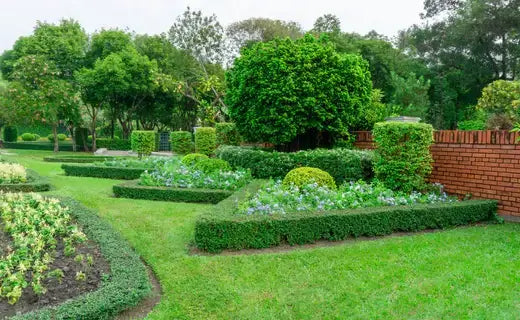
Geometric Lawn and Landscaping: How to Design Structured Gardens That Actually Work
The primary influence on geometric lawns is their incorporation of long‚ straight lines‚ repetition of specific shapes‚ and near-mirror plantings to create a sense of order amid a seemingly random collection of plantings․ It could be a rectangular hedge‚ circular beds bisected by a square lawn‚ or evenly spaced boxwoods along a path․ It is one of the oldest forms of modern landscaping‚ and it works because the human eye is naturally drawn to patterns and symmetry․
For Tennessee homeowners‚ there’s also the good news that this sort of geometric garden is forgiving in our clay soil and hot and humid summers in that it’s made up of boxwoods‚ hollies and other dense evergreens that thrive in Zones 6 to 8 without requiring special treatment․
Why the Geometric Design Still Works
Cottage gardens and naturalistic plantings look good for about three years‚ then get shaggy and start fighting each other for space․ Geometric layouts age differently․ As the plants are selected for their regularity of habit and pruned to conform‚ a well-planned geometric garden can look generally as it did in year one even a decade later (provided you remember to prune)․
That said‚ geometric design is more than just ““plant things in straight lines․”” There are four elements that separate a truly well-executed geometric landscape from a stiff or lifeless one: symmetry‚ movement‚ shape variety‚ and balance․
Symmetry comprised the backbone of the design․
Symmetry is a mirrored or balanced state‚ with like parts on either side of a dividing line‚ which may be a path‚ door‚ or centerline of a lawn․ A geometric garden is very much about that symmetry․ It is what your first impression is‚ and it is something to be measured‚ not eyeballed․
Because Wintergreen Boxwood forms a naturally symmetrical‚ dense mound‚ with virtually no correction‚ two planted 4 feet apart on either side of a front walk will almost always hold their shape and your symmetry for years‚ rather than one side outgrowing the other․
Movement: Keeping It From Feeling Static
Pure symmetry‚ taken too far‚ can be read as sterile․ That’s where Soft Touch Holly fits․ Its arching branches and its leaves which shimmer and wave to the breezes when stiff shrubbery does not‚ make it a valuable agent of softening in a plant composition․ It may be used to good advantage at corners and between the lines of a hedge․
This is something that a lot of geometric gardens miss; the gardeners get so caught up in the precision that it looks like a geometry problem rather than a place to gather‚ but one or two plants with softer textures get around that problem․
Shape Variety: More Than Squares and Circles
Rectangles are the fundamental geometrical shape․ The best designs are built from two or three of these․ A circular shaped bed surrounded by rectangular hedge borders can be complemented well with a triangular bed in the corner of an intersecting fence line․ A repetition of the same shape throughout a yard can be boring․ A repetition of a family of shapes with variations creates visual interest․
Green Velvet Boxwood may be sheared into a tightly rounded mound once or twice a year in Tennessee to form gently rounded borders contrasting with the straight hedge lines in other areas of the design (see above)․
Balance: Distributing Weight Across the Space
Balance doesn’t have to be symmetrical‚ but it does mean that the visual ““weight”” of the plantings‚ hardscapes‚ and open lawn appear to be distributed evenly․ A common mistake is to bulk up dense evergreen structure on one side of the yard and leave the other completely bare; the planting scheme will feel unbalanced even though both sides appear sound․
One easy rule is wherever possible‚ if you’re planting a run of boxwoods on one property line‚ you create an equal but different mass across the way․ It doesn’t have to be the same plant but should be an equivalent mass․
Selecting Plants for Your Tennessee Climate Zone
Many of the plants used in conjunction with the geometric designs are well-suited to Tennessee’s Zone 6b-7b hot‚ humid summers․
Wintergreen Boxwood does not exhibit the bronzing that occurs with other boxwoods in winter and can survive the summer heat and humidity of Middle and West Tennessee with little disease․ It grows 3 to 6 inches a year until it reaches its maturity height of 3 to 4 feet and can be maintained in size by shearing annually․
Soft Touch Holly is a very slow grower (adding 2 to 4 inches of height per year)‚ which is actually good for the home gardener who does not want to prune it regularly․ It will grow no taller than 3 feet either way․


