
How To Manage Weeds Organically
Gardens should be calming places within nature. You should be able to see life thrive and, even be able to get some food for your family. That peaceful place can be ruined when you see your favorite areas of your garden filled with weeds. These annoying plants can steal moisture and block light, even nutrients that are for your favorite plants.
After spotting the enemy, many are tempted to grab a spray bottle filled with toxic chemicals to get them done quickly and efficiently. The problem, however, stems far deeper. Losing the ability to control one’s land and one’s garden is a loss for the ecosystem.
Weeds are not the problem; their control is perfectly possible through the use of appropriate knowledge, tools, and unrelenting commitment. As Ms. Sons says, with the right approach, a garden can become and remain weed-free.
The Dangers of Poisonous Herbicides
Using a spray bottle of glyphosate and other poisons is simple, but that simplicity is dangerous. These synthetic products do not simply remain on the leaves of the weeds. They wash into the soil, sink into the water and even contaminate the groundwater we depend on.
Moreover, the poisons can be taken up by the plants you want to keep. If you are growing food, this is a big concern. Imagine that you spray weeds that are around a vegetable patch. The poisons can move into the roots and even the fruit of the crops.
Then, when you eat those peppers or tomatoes, you eat the herbicide that is on it. Even ornamental plants are affected by the poisons, as it can be taken up by their roots and it stunts growth and even kills soil microbes that are vital to the well-being of a garden.
Focusing on Vulnerable Plants: The Tomato
Now, to demonstrate the reason why weeds are so harmful, we can talk about everyone's favorite: the Tomato plant. Tomato plants Tomato plants are very needy when it comes to plants. They are heavy feeders.
Problematic weeds like crabgrass and pigweed that grow around tomato plants serve as parasites. Weeds grow quicker than tomatoes and form a root system that absorbs water and nitrogen. Because of their growth and root system, even healthy tomatoes can become weak, develop yellow leaves, and produce little to no fruit.
By using organic methods of weed control, people often think of just 'cleaning up'. But, organic methods of weed control allows your plants, which are heavy nutrient feeders, to access more of the nutrients that they require.
This is also true with plants that require high nitrogen needs like Hydrangeas, former, and fruit-bearing bushes like blueberries.
Best Methods for Weed Control Is Your Hands
Weeding is a chore, but it is also a practice of cultivation. Your garden can be kept clean by using a variety of non-toxic methods which are outlined below.
Tilling The Garden
Preparation of the space where you are going to plant is your first line of defense. Before you plant a single seed, you can till the garden to remove a good majority of weeds. This is a process involving turning over the top 6 to 10 inches of soil.
When you till the soil you break the cycle of existing weeds and bury leftover weeds deeper underground. This is sometimes called making a "stale seedbed." By tilling the soil a couple of weeks before planting it helps you to let the weeds sprout, and then burying them again helps to get rid of a large percentage of those weeds.
Hoeing the Topsoil
The hoe is a legendary tool, and for a good reason. But strategy is important. You shouldn't dig deep trenches. The main focus is to just cut the weed stems off from their roots, just below the surface.
Using a sharp hoe (A stirrup hoe works great) you can make short, shallow strokes. It works the best when the soil is dry. When you cut the weeds and leave them to the open dry air they dry and die quickly. You have to be careful around the roots of plants like hostas and Azaleas because deep hoeing can damage their roots.
Weed Control Fabric
For permanent landscape beds, weed weed control fabric, or landscape fabric, is a great choice. It is a tool that acts as a wall that weeds and their seeds can not get through.
Setting this up is simply a process. Take the material that is landscape fabric and put it over the area you'll be planting. Make sure to use landscape staples to keep it in place. Next, you can make slits in the shape of an X for the spots that you'll want to make holes to put in your plants.
This landscape material is porous which means that it has holes that will allow air and water to get to the soil. This will keep the soil healthy for your plants while keeping dirt and roots from sunlight. This practice works shrub borders and even perennial black gardens.
The Miracle of Mulch
If there is one miracle worker in organic gardening, it is mulch. Mulch mimics the forest floor, covering the soil with organic matter. Adding a thick layer (2-4 inches) of mulch on top of your soil- or on top of weed control fabric- is perhaps the single best way to suppress weeds.
Mulch does three things:
Blocks Light: weed seeds need light to germinate. Mulch keeps them in the dark.
Less Moisture: It reduces evaporation keeping your desired plants hydrated.
Improves Soil: As organic mulch, like wood chips, straw, or even shredded leaves, breaks down, it adds nutrients back into the soil.
Plants that like the cooler area mulch can include ferns. Adding on to that, weeds will not like it at all because they have nowhere to get attached to the soil.
Hand Pulling
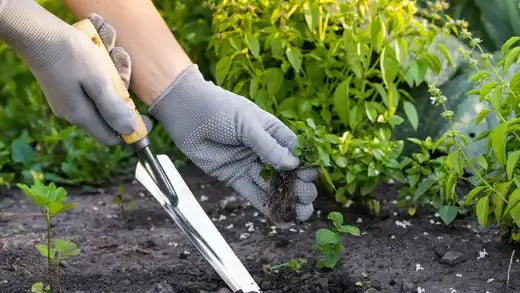
This method of dealing with weeds requires some effort. Hand removal is quick, decisive, and more cost effective than any other method. It is also the most refined method, if you want to call it surgical.
After a rainstorm, water is soaked up in the weeds and the soil is loosened up. If you leave the root, many weeds (like dandelions) simply grow back. It is good garden practice to simply bend and pull weeds as it promotes a pleasant and beautiful looking garden. Remember to pull weeds prior to their seeding stage to avoid the scattered weedy seeds around the garden for the blossoming season next year.
Boiling Water and Vinegar
If there are any weeds sprouting from cracks in your sidewalks and driveways, you can use some household items. Pouring boiling water on a weed will instantly kill it and is a good method that requires no cost. Horticultural vinegar is also a good option as it is very acidic and will burn the weeds, although it is more effective with the foliage of the weed.
Other than that, these options are not too selective. They're good for killing weeds, but if you have other plants around, such as some of your prized roses, they will die just as fast as the weeds, so be careful.
Patience is required in order to successfully grow a lovely garden. This is in no way a quick endeavor. However, when you opt out of using chemicals and instead go for other solutions, you end up creating a garden space that is safe for local kids, animals, and wildlife.
The Perfect Plants for Your Weed-Free Garden
Now that you know to prepare your soil and keep it free of invasive weeds, it is time to fill that space with lovely, high-quality plants. Whether you want to have strong Hostas, delicate Ferns, or trees that produce fruit, it's important to start with healthy stock.
Going to TN Nursery for Your Gardening Supply Needs
Ready for a change in your landscape? Go to TN Nursery so you can look at a huge variety of plants that will work for your organic garden.
FAQs
How to organically get rid of weeds?
Weeds can be pulled out by hand (make sure you get the roots), hoe and cut the weeds at the soil level, or cut weeds by smothering them with cardboard or mulch to block the sunlight and soil moisture.
How do organic farmers control weeds without chemicals?
Without using synthetic herbicides, farmers manage the farmland with no chemicals by practicing crop rotation, cover cropping, mechanical tilling, flame weeding, and using mulch to suppress the growth of weeds.
Is there a non-toxic way to kill weeds?
Yes, you can kill weeds quite simply without using any chemicals. Pouring boiling water on weeds is effective for driveways. Horticultural vinegar sprays can burn foliage. However, the most effective method is to simply remove the weeds or to cut them off at the soil level and then cover them.
What is the best thing to kill weeds naturally?
The best way to kill garden weeds is to mulch the bed of the garden with a layer of thick wood chips. If you are wanting to kill weeds in the pavement, then boiling water or a mixture of vinegar, salt, and dish soap will work best. This will kill any unwanted growing plants.
What is the best method in organic farming to remove weeds?
The best way to weed is with careful weed management systems. One of these is the “stale seedbed” technique, where soil is tilled, weeds are allowed to sprout and are killed before the main crop is planted in an effort to reduce the seed bank.
How do you permanently stop weeds from growing?
Unfortunately, because of outside factors such as wind and birds, nothing is permanent. However, for years, the use of landscape fabric topped with 3 inches of mulch creates a barrier that stops 99% of weed growth.


