
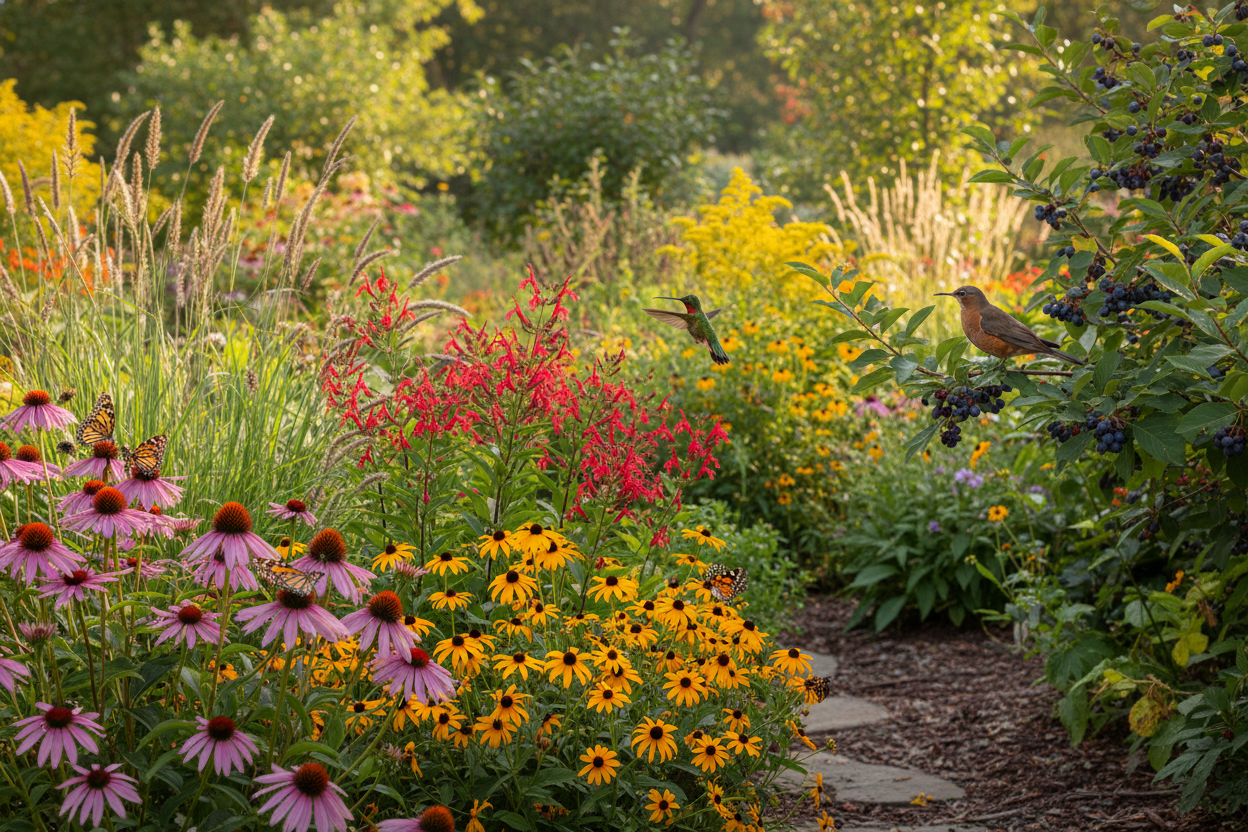
Filling their yard with plants for wildlife is one of the greatest things that a homeowner can ever do. The appropriate choices provide food, shelter, and good habitat to the birds, pollinators, and small mammals in all seasons. Whether you have a large or small space, consider gardening for wildlife, as it transforms your living space by forming a wildlife ecosystem directly outside your door. TN Nursery offers high-quality and healthy wildlife plants that are best adapted to the natural habitat in Tennessee.
Which Plants Attract the Most Wildlife to Your Property?
The most wildlife-attracting plants are the ones that are useful in a variety of ways, like producing berries, nuts, or fruit, and also providing shelter as well as nesting material. Berry bushes such as Elderberry and Black Raspberry are the best, with more than 50 species of birds and innumerable pollinators per season. The native oaks, such as Overcup Oak and Pin Oak, bear acorns upon which deer, turkeys, and squirrels rely in fall and winter.
Bees and butterflies will be most attracted to pollinator-friendly plants that are open with nectar-filled flowers and that bloom over several seasons. Shrubs such as Cistena Plum, which are fruiting, attract their springtime pollinators and feed the birds with their fruit in the summer. The more diversity you add, the greater the number of wildlife your yard will accommodate at all seasons of the year.
To find reliable and evidence-based advice on how to take care of native organisms, the USDA Plants Database is a reliable free source that you can consult before setting up your wildlife garden.
How Do Native Plants Support Local Ecosystems?
Any successful wildlife garden will be based on native plants for wildlife habitat. These species have been able to develop over thousands of years in association with local birds, insects, and mammals and are therefore much more valuable ecologically than the non-native alternatives. They contribute to the soil life, enhance the microbial communities, and increase the organic matter in a manner that cannot be repeated by the introduced species.
Native Tennessee pollinator-friendly plants have the proper pollen and nectar mix on which local bee and butterfly species have become dependent. When established, native plants use a fraction of the water, fertilizer, and intervention and therefore make the best long-term decision to be taken in any gardening for wildlife landscapes.
Top Plants to Enhance Tennessee Wildlife Habitats
TN Nursery has one of the best native plants for wildlife habitat. The following are the best Tennessee wildlife gardens:
Overcup Oak Seedlings
One of the hearty native oaks that grow and bear numerous acorns upon which deer, turkeys, squirrels, and songbirds thrive. The Overcup Oak Seedlings have robust root systems that enhance soil structure and organic matter; hence, they are one of the most ecologically significant plants for wildlife in any vast landscape environment.
Elderberry Live Stakes
It is a rapid plant, a native shrub that is a large berry producer that grows in masses, and is the favorite of more than 50 varieties of birds. The Elderberry Live Stakes are highly productive, pollinator-friendly plants that attract the bees and butterflies through their white cluster of flowers and later in the season bear fruit.
Cistena Plum
This is a small ornamental shrub with dark burgundy leaves and pink flowers that are very fragrant in the spring, and early pollinators would love to visit the flowers. Cistena Plum has small fruit that forms a good source of food for the birds and supports gardening for wildlife in both formal and naturalized gardens.
Pin oak
It is a tree that quickly grows to be tall and offers a large canopy shelter to nesting birds and produces small acorns that are relied upon by wildlife during the fall and winter. One of the most dependable long-term plants for wildlife habitat that promotes diversity of microbes and organisms in the soil is the Pin oak, which supports decades of growth.
Black Raspberry
An aggressive indigenous bramble that bears sweet, dark fruits consumed by birds, foxes, and small mammals. The Black Raspberry also offers thick cover that smaller wildlife species nest and seek shelter in, thus making it a very productive addition to any planting plan that focuses on wildlife.
Seasonal Planting Tips for Wildlife Areas
The planting tips for wildlife are not universal, and when and how well you plant out affects the success and effectiveness of your habitat creation greatly. The following is what should be aimed at all year round:
-
Spring: This is the most appropriate season to plant native plants for wildlife habitat. The soil is getting warmer, the precipitation is regular, and the plants grow fast before the summer sun rays. Include compost and other organic matter in planting beds, which helps in supporting root health and the diversity of the microbes.
-
Summer: Pay attention to the intensive watering of recently planted shrubs and trees between one and two times a week. Fertilization is discouraged during the time of day when it is hot because this is a stressful factor for plants. It is also the time to see which part of your yard attracts the greatest amount of wildlife activity so that you can plant more plants for wildlife there.
-
Fall: It is a good secondary season for planting trees and shrubs. Low temperatures lower the level of transplant stress and enable root systems to establish prior to winter. Plant species that bear berries, such as Elderberry and Black Raspberry, should be planted now so that they are prepared to bear fruit next season.
-
Winter: Do not plant in the hard freeze periods. Rather, take this time to design your plan for gardening for wildlife for the next season. Place your order with TN Nursery and get planting beds mulched and stocked with organic materials so the soil is ready when spring comes.
With these seasonal planting tips for wildlife, you will have a productive, healthy, and always appealing habitat for the birds, pollinators, and mammals all year round.
Conclusion
Wise gardening for wildlife makes a simple backyard a healthy and independent environment. The productive Overcup Oak Seedlings, or the berry-tinged Elderberry Live Stakes, and the beautiful Cistena Plum, and the stately Pin Oak, and the vigorous Black Raspberry, all the plants contribute positively to hosting local birds, pollinators, and mammals. Trust TN Nursery to supply healthy nursery-grown plants for wildlife that are fit to plant and grow immediately upon arrival at your door.
FAQs
What is the best consideration for choosing plant species for wildlife?
Plant native plants for wildlife habitat, as they provide both food and shelter as well as nesting habitats throughout the year.
How do native plants support local ecosystems?
They nourish soil organisms, enhance the diversity of microbes, and give the local wildlife a particular food source that it has adapted to.
What are the easiest plants to grow for wildlife areas?
Tennessee wildlife gardens can have elderberry Live Stakes, black raspberry, and Pin Oak, all of which are low maintenance and establish fast.
How to make a shrub garden for wildlife?
Plant pollinator-friendly plants and berry-producing plants, stratify the shrubs, and avoid using pesticides to ensure the habitat remains healthy.
Are native plants better than non-native plants for wildlife habitats?
Unquestionably, native plants for wildlife habitat are much more ecologically significant and need much less maintenance once established.
Where can I buy healthy wildlife plants online?
TN Nursery sells high-quality, climate-adaptive plants for wildlife and includes professional advice on each purchase.
How do I maintain plants for year-round wildlife support?
Annually mulch, do not use pesticides, leave winter seed heads on, and follow seasonal planting tips for wildlife to ensure year-long habitats.


