


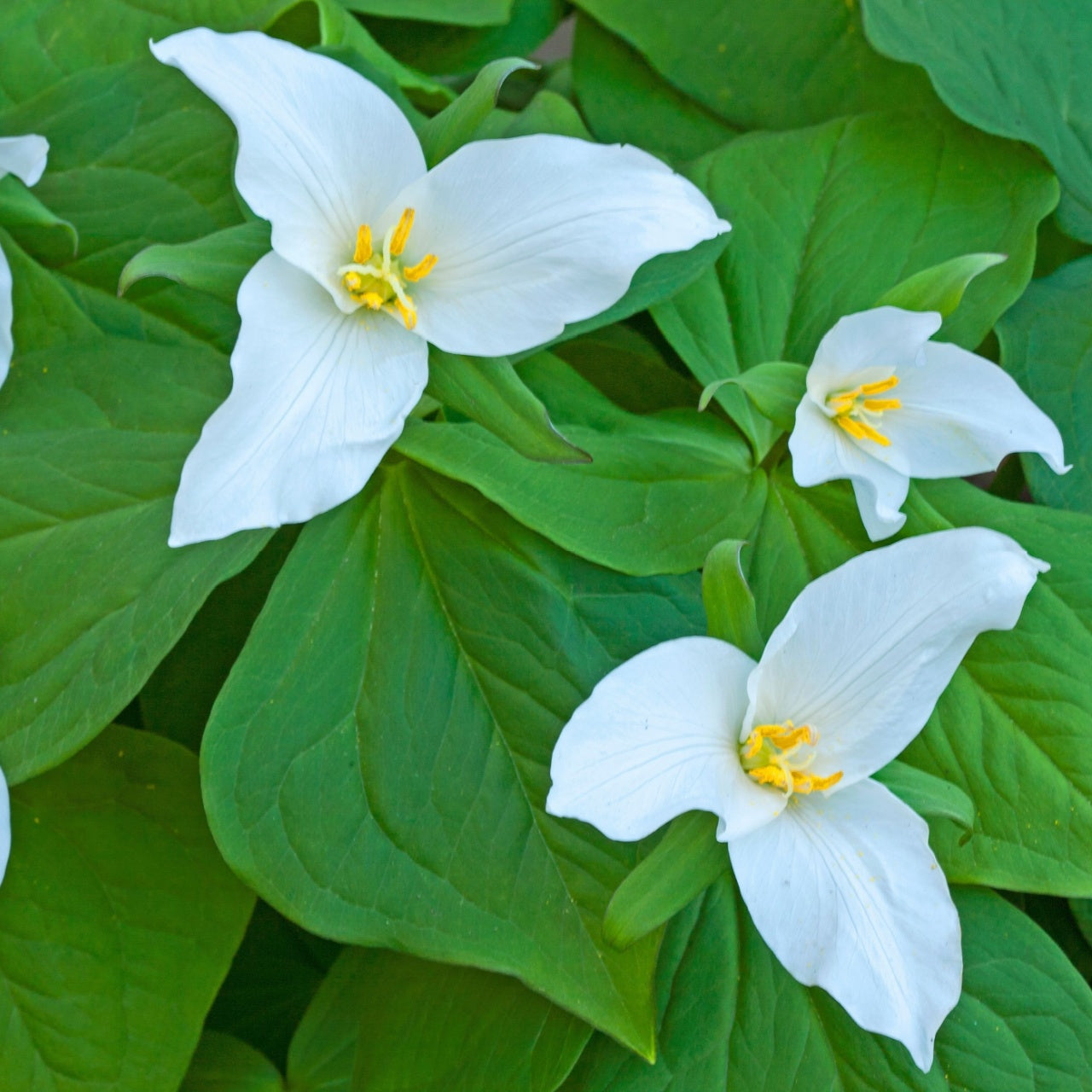



Great White Trillium Plants For Sale
Great White Trillium will become your latest horticultural obsession the second you see one in person. This rare, uniquely beautiful find deserves a spot in your garden. It has creamy white flowers, three-petaled petals, and three large leaves. It not only attracts pollinators to your shade garden, but it also takes this beauty seven years to bloom. At TN Nursery, we sell blooming perennial plants. This is a rare and exotic species you will hardly find online or offline.

Tammy Sons states, "The Great White Trillium is a showstopper because of its aesthetics, rarity, and ability to thrive in almost any type of soil: It's one TN Nursery does not advertise due to its limited availability.
Great White Trillium Grandiflorum Plant Details
Family: Melanthiaceae
Light Requirement: Full Shade
Water Needs: Moist
Height: 10 – 12 in.
Spread: 6 – 12 in.
Growth Rate: Slow
Bloom Time: Spring
Flower Color: White
Wildlife Value: Attracts bees
Landscape Uses and Maintenance
These perennial plants are long-lasting, herbaceous perennials that will add vibrant beauty to any garden for many years. Their pure white flowers bloom in spring. In its native habitat, you can find them in deciduous forests, but conservationists have been watching them. Buy this rare plant to have it in your garden and support the population.
Shade gardeners, look no further! Plants are dappled sunlight to keep it happy. It prefers full to partial shade to direct sunlight. Plant it in the border, in your shade garden, or in a large group in a woodland garden. This plant will naturalize and spread over time. Plant it in abundance with Twinleaf, ferns, Bleeding Heart, and other spring-blooming flowers.
Noteworthy Characteristics
White Trillium Grandiflorum and others in this family get their botanical name from “Tri” due to their unique pairs: three petals and three leaves.

Customer Reviews
I’ve been adding native plants to my garden, and this Trillium was an excellent pick. Arrived with healthy roots, lush leaves, and is thriving in the shade.
My White Trillium opened with striking white flowers against rich green foliage. It really brightened up the woodland bed and looks amazing this season.
The plants arrived in excellent shape, and within weeks they settled in perfectly. This Trillium is a true gem for shady gardens—highly recommend.
I planted them right away and the foliage looks fine. Since Trillium usually takes time, I’m expecting the best results in the coming season.
The roots were solid and hydrated. So far, the leaves look nice, but I’ll need to wait for the real spring bloom show.
Where to plant white trillium?
Plant White Trillium in a shaded or partially shaded area with rich, moist, well-drained soil. It thrives best in woodland-style gardens that mimic its natural forest habitat. With gentle shade and organic soil, it grows beautifully and returns each spring.
What are the benefits of great white trillium?
Great White Trillium offers many benefits, adding natural beauty and elegance to shaded gardens. It provides early spring blooms that attract pollinators and signal the start of the growing season. Once established, it spreads gently, creating a stunning carpet of white flowers year after year.
Should I cut down Great White Trillium in the fall?
No, you should not cut down Great White Trillium in the fall. Let the leaves die back naturally so the plant can store energy for next year’s growth. Once the foliage fades completely, it’s safe to remove only the dead parts.
Exposure
White Trillium (grandiflorum) thrives in dappled or partial shade, mimicking its natural woodland habitat. It prefers filtered light with protection from direct sun, which can help maintain its delicate foliage and promote healthy growth.
Height at Maturity
Under 12"
Usage
Shade Plant
Shipped As
Bare-root
Ships
USPS
Planting Zones
3-9
How To Grow
How to Grow and Care for Bare Root Perennials, Tubers, and Bulbs
Bare root perennials, tubers, and bulbs are an easy and economical way to jumpstart your garden with lasting beauty. These dormant plants should be planted in early spring or fall while the soil is cool and workable. Before planting, soak bare roots in water for 1–2 hours to rehydrate them. Choose a location based on the plant’s light needs—most flowering types prefer full sun, while others thrive in partial shade.
For bare root perennials, dig a shallow hole and spread the roots out naturally, ensuring the crown is level with the soil surface. For tubers and bulbs, plant with the pointed side facing up at a depth about two to three times their height. Cover with soil, gently press down, and water thoroughly.
Keep soil consistently moist (not soggy) until new growth appears. Add mulch to retain moisture and suppress weeds, but avoid covering the crown or bulb tops. Once established, these plants require little maintenance—just seasonal watering, occasional dividing, and deadheading or pruning as needed. With proper care, they’ll return and thrive year after year.

