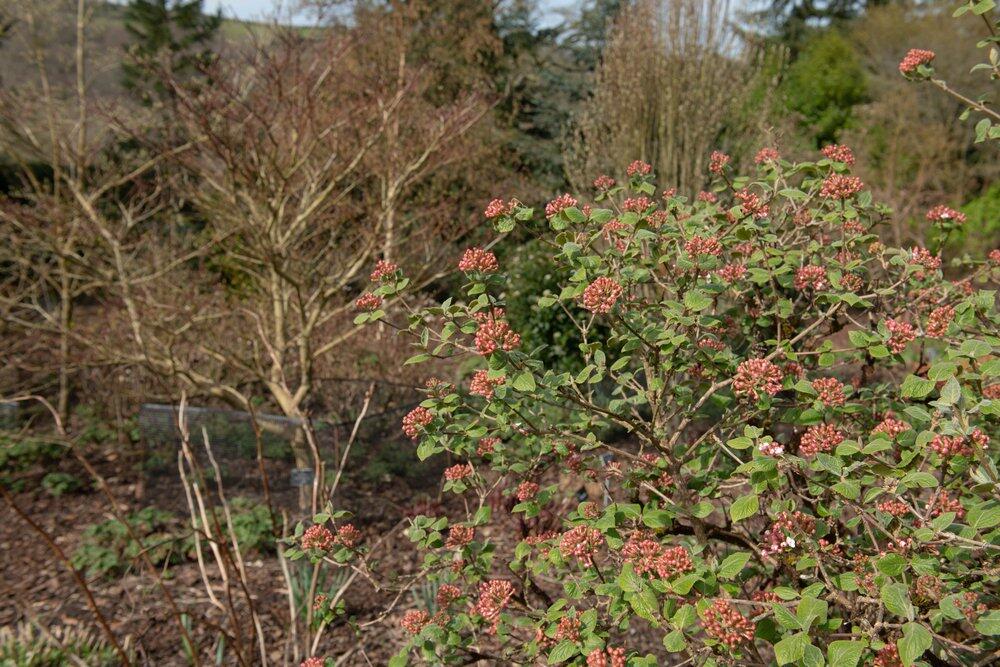
Viburnum Dentatum for Sale
Viburnum dentatum is a deciduous shrub native to North America. It features attractive clusters of white flowers, vibrant blue-black berries, and toothed leaves, making it a versatile and popular choice for hedges and wildlife gardens.
It earned its name because the inhabitants of the areas where it grew used the branches to create arrows in past centuries. The deciduous shrub's straight branches made it an ideal choice for that purpose.

The Looks Of The Viburnum Dentatum
The shrubs produce small clusters of white flowers about 4 inches wide, which start appearing in the spring. They also produce small fruits as the summer progresses. Although they can expand as tall as 15 feet, they often stand under 10 feet in height. Their impressive size makes them a great shrub for hedgerows. Many people plant arrowwood shrubs individually in their yards or gardens. However, they are also popular choices to adorn the shores of creeks or ponds.
Viburnum Dentatum Arrowwood Has A Elegant Appearance
This rounded shrub has a graceful, elegant appearance. The branches and twigs have a grayish-brown color and are slender. With their ridges, they add a touch of rustic appeal. Greenish-brown buds create a contrast that commands attention. Its white flowers are delicate and look stunning against its colorful leaves. The toothed edges of the leaves give the plant its name. Although they start with a green hue, they gradually turn yellow and red as the seasons change. During the summer, the bluish-black fruits add even more beauty. For anyone who enjoys a colorful landscape, this type of shrub does not disappoint. Order your Viburnum Dentatum today.
It Is A Native Shrub That Attracts Wildlife
In addition to its aesthetic benefits, there may be health benefits for some. It is also an excellent choice for people who want to attract wildlife. Several songbirds enjoy the fruit, and some animals eat the twigs and leaves. Since the flowers have nectar, they are helpful to bees. butterflies are also attracted to the flowers. It is an excellent example of nature's profound beauty and ability to change. It is a great choice for anyone because of its ecological, aesthetic, and other potential benefits.
What is the common name for it?
Another name for it is Arrowwood. This is because native Americans used them to make arrows.
Can you grow them from cuttings?
Indeed, Viburnum Dentatum can be propagated from softwood cuttings taken during the early summer. This will work most effectively if done by placing the cuttings in rooting hormone before placing them in soil that has moderate moisture content and good drainage.
What pairs well with it?
Viburnum Dentatum look good with perennials and ornamental grasses or annuals such as coneflowers and black-eyed Susans. It also does well as an underplanting for smaller shrubs or in wildlife gardens.
Which fertilizer should I use on it?
The recommended fertilizer is a slow-release fertilizer with a neutral NPK balance of 10-10-10. Apply to plants in the first weeks of spring to keep them healthy.

Customer Reviews
TN Nursery truly delivered premium shrubs. My Viburnum Dentatum arrived in impeccable condition and has been growing steadily since planting. The customer service was outstanding, and the plants bring timeless elegance to my outdoor design.
Viburnum Dentatum Brings Life to My Backyard
Ordering from TN Nursery was the best decision for my landscaping project. The Viburnum Dentatum shrubs arrived fresh, green, and carefully packaged. They’ve already become a lush focal point in my backyard, attracting birds and adding natural beauty.
I love how effortlessly my Viburnum Dentatum shrubs from TN Nursery adjusted to my yard. They’re low-maintenance yet deliver such a bold, polished look. The quality of these plants is beyond impressive and I recommend them wholeheartedly.
From the moment I unboxed my Viburnum Dentatum shrubs, I could tell they were high quality. TN Nursery delivered them with sturdy root systems and vibrant greenery. They established quickly and now bring texture and elegance to my garden.
The Viburnum Dentatum I planted from TN Nursery is flourishing and quickly transforming my landscape. Its dense foliage and neat form add both beauty and property value. The quality and service I received were exceptional.
Why is viburnum dentatum arrowwood popular among gardeners?
Gardeners love it for its beautiful white blooms, colorful fall leaves, and wildlife appeal. It fits easily into different landscapes and stays attractive through every season.
Is Arrowwood Viburnum suitable for use as a hedge?
Yes, it’s often used as an arrowwood viburnum hedge because of its dense growth, which provides both privacy and a beautiful natural border.
What makes arrowwood viburnum flowers special?
Arrowwood viburnum flowers appear in late spring and brighten the garden with soft white clusters. They attract bees and butterflies, adding life and movement to outdoor spaces.
What makes TN Nursery a trusted place for Arrowwood plants?
At TN Nursery, every plant is carefully grown and shipped fresh from the farm, so your viburnum dentatum arrowwood arrives healthy and ready to thrive.
Exposure
Viburnum dentatum, or Arrowwood Viburnum, flourishes in total sun to partial shade. It favors at least 4-6 hours of direct sunlight daily for optimal growth but can handle some shade, making it adaptable for various garden settings.
Height at Maturity
Over 10 Feet
Usage
Birding
Shipped As
Bare-root
Ships
UPS
Planting Zones
2-8
How To Grow
How to Grow and Care for Bare Root Shrubs
Bare root shrubs are a budget-friendly and efficient way to plant during the cooler months when they’re dormant. Before planting, soak the roots in water for 3–6 hours to rehydrate them. Choose a site with the appropriate light exposure for the species—most flowering shrubs prefer full to partial sun. Dig a hole wide enough to spread out the roots and deep enough so the crown (where the roots meet the stems) sits level with the soil surface.
Mound a bit of soil at the bottom of the hole, spread the roots over it, and backfill with native soil while gently firming it to remove air pockets. Water deeply after planting to settle the roots. Keep the soil moist but not soggy during the first growing season to encourage healthy establishment.
Mulch around the base (not touching the stems) to retain moisture and suppress weeds. Prune lightly to remove any broken branches and to shape after the first flush of growth. With minimal care, bare root shrubs will leaf out beautifully and grow into reliable, long-term landscape anchors.