


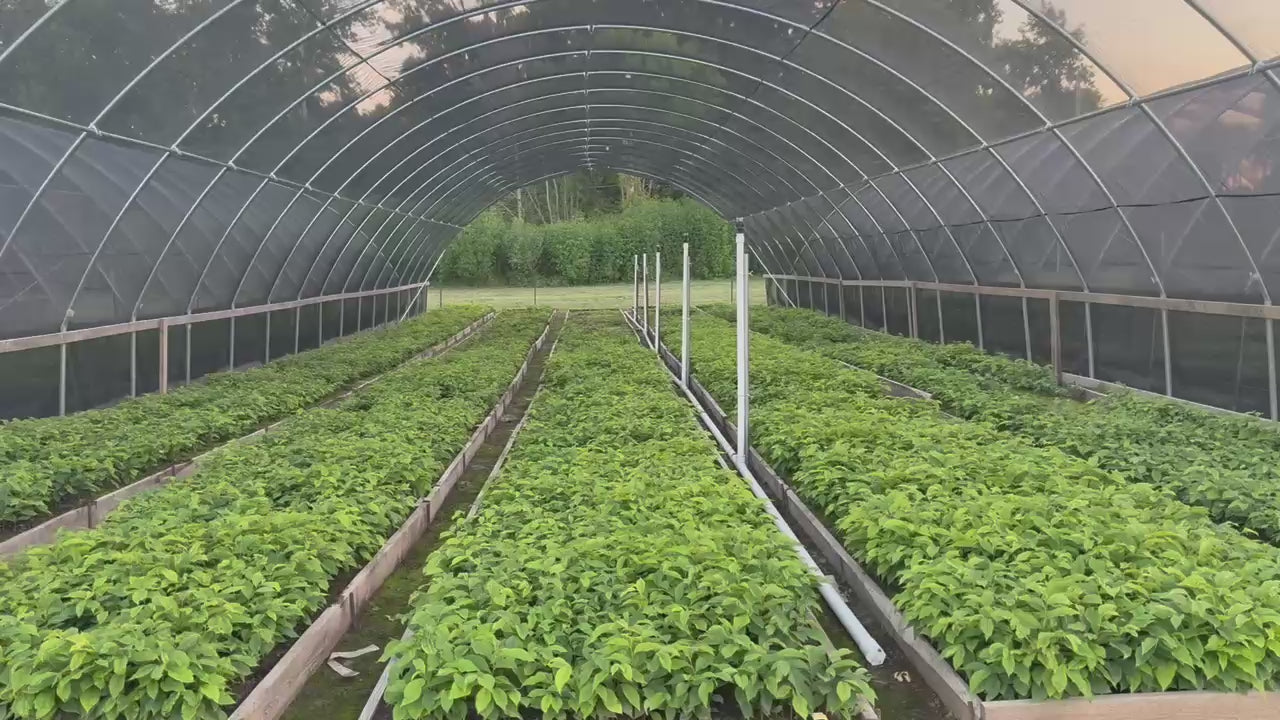


Pawpaw Trees are America's Best Kept Secret
Pawpaw Trees are a native tree with a superfood fruit that tastes like a mixture of tropical mango and papaya, with a custard-like consistency. Being native to the eastern United States is what makes this tree so unique. The foliage also appears tropical, with large leaves that create a perfect shade canopy. "If you want a tree truely unique," states Tammy Sons at TN Nursery, "choose this tree". There's nothing quite like it, to be honest.
TN Nursery is the largest pawpaw tree grower in the United States.
Why Grow Pawpaw Trees?
Not only do these trees support a diverse array of pollinators and wildlife, including birds, squirrels, and deer, but they are also beneficial to humans. In the Spring, the tree is adorned with large, maroon-colored blooms, followed by fruits that appear near midsummer. The fruit grows in clusters and is recognized as a superfood for both humans and animals. It's low-maintenance, while also being disease- and pest-resistant.

Tips on how to grow pawpaw trees
Growing Conditions
They thrive in USDA zones 5–9. They prefer rich, well-drained soil and do best in full sun to partial shade. While they tolerate some shade when young, planting in sunnier locations will encourage greater fruit production. For optimal pollination, plant at least two trees within 15–25 feet of each other to ensure cross-pollination and an abundant harvest.
Benefits and Uses
It is the only host plant for the zebra swallowtail butterfly, making this native tree not only beneficial by providing fruits, but also vital for our pollinators to lay eggs and reproduce. It's a primary food source for caterpillars to lay eggs on.
The fruit can be eaten fresh, baked into desserts, or used in jams, smoothies, and ice cream, offering both gardeners and chefs a versatile, homegrown treat.
Order Your Pawpaw Trees Today
TN Nursery offers the tree that will bring a taste of America's forgotten to your table with the Pawpaw tree. It not only combines an exotic look but it's perfect for homeowners or gardeners that love rare and unique trees that offer delicious rewards.

Exposure
Young plants likes partial shade and can withstand more sun as they mature
Height at Maturity
Under 25 Feet
Usage
Fruit
Shipped As
Bare-root
Ships
UPS
Planting Zones
4-9