




Dutchman's Breeches For Sale
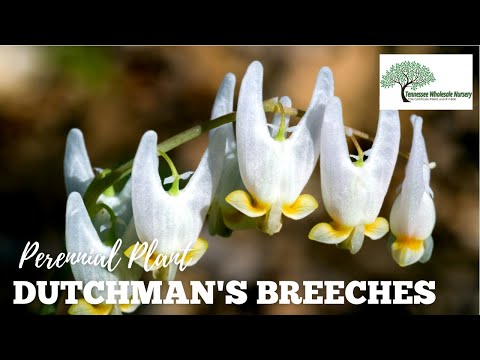
The Dutchman’s Breeches (Dicentra cucullaria) perennial is a charming herbaceous perennial native to eastern North America. Its leaves are featherlike and reminiscent of ferns, and they form compact clusters in the shape of a tiny 6—to 12-inch-tall bush. This Dutchman's breeches plant blooms around mid- to late spring before the deciduous overstory leaves have filled in. The leaves form a delicately arching raceme, and the pendant-like flowers hang upside down in a dense line.

While this plant prefers moist, humus-rich, fertile soils, it can tolerate a range of soil pH levels. It will not do well in dry soil, so make sure to plant it in a consistently moist, well-
Dutchman's Breeches Plant Details
Family: Fumariaceae
Hardiness Zones: 3 to 8
Light Requirement: Partial to full shade
Water Needs: moderate to moist
Height: 6 to 12 in
Spread: 6 to 8 in
Growth Rate: Moderate
Bloom Time: April–May
Flower Color: White with yellow tips
Wildlife Value: Attractive to pollinators
As the Dutchman’s Breeches is an early bloomer, it provides a reliable nectar source for early emergent bees. In fact, bumblebees are the most effective pollinator for this plant as they can sufficiently open the inner and outer parts of the flower for pollination, and these adorable flowers have adapted to be dependent on bumblebees for their reproduction.
Once the seeds have ripened in late spring, the plant dies back and the root system stays dormant throughout the summer. While these plants are relatively ephemeral, their short-lived presence in the garden (or natural environment) is a heart-warming reminder that spring is here and warm weather is coming!
Landscape Uses and Maintenance
While it is tolerant of full shade, the lack of light will impact flower production. Preferably, plant this herbaceous perennial in partial shade with dappled light. Dutchman's breeches are an attractive addition to a woodland garden and make a charming ornament to the base of established trees for an extra pop of fluffy green foliage on the barked trunk.
Dutchman's Breeches will spread and can cover a fair amount of area over a few years. It makes a great ground cover, underplanting for shrubs, and woodland gardens. It can be propagated through plant division. Be wary, as slugs will take advantage of the tender leaves of this plant; however, once established, it is rabbit-resistant and predominantly disease-free.
Noteworthy Characteristics
Dutchman's Breeches are attractive to bumblebees, have adorable pant-shaped flowers, and are low-maintenance. Plant these charmingly delicate flowers in the shady area of a pollinator garden to attract bees and butterflies to your yard. Shop for Dutchman’s Breeches online at TN Nursery.

Customer Reviews
These plants are stunning! They settled in right away and are already showing strong growth. TN Nursery did a fantastic job with packaging and shipping.
I ordered Dutchman’s Breeches and received them within a week. All plants were healthy, and every single one is growing beautifully. Highly recommend!
The flowers are unique and eye-catching. They bloomed just as promised, and I’ve already had neighbors ask where I got them. TN Nursery is my go-to now.
The plants came well-packed and survived shipping. They are doing well so far, just not as fast-growing as I expected. Still, very pleased.
I havent grown Dutchman’s Breeches before, but they look lovely in my shaded garden. Took a little time to settle in, but worth it.
Are Dutchman's breeches the same as bleeding hearts?
Dutchman’s breeches and bleeding hearts are closely related but not the same plant. Both belong to the same family and have similar heart-shaped blooms, but Dutchman’s breeches have smaller, pant-shaped flowers. They’re both easy to grow and add charm to shaded spring gardens.
Where to plant Dutchman's breeches?
Dutchman’s breeches grow best in shaded or partially shaded areas with rich, moist, well-drained soil. They thrive in woodland gardens or along shaded borders. Once planted, they naturalize easily and return each spring with delicate white blooms.
Is squirrel corn the same as Dutchman's breeches?
Squirrel corn and Dutchman’s breeches are related but slightly different plants. Both have similar fern-like foliage and white flowers, but squirrel corn blooms have rounded petals instead of pant-shaped ones. They thrive in the same shaded, moist environments and are equally easy to grow.
Exposure
Dutchman's Breeches (Dicentra cucullaria) thrive in dappled or partial shade. This woodland perennial prefers the filtered light of a forest understory, which mimics its natural habitat, providing excellent, indirect sunlight that supports its delicate foliage and unique blooms.
Height at Maturity
Under 12"
Usage
Shade Plant
Shipped As
Bare-root
Ships
USPS
Planting Zones
3-7
How To Grow
How to Grow and Care for Bare Root Perennials, Tubers, and Bulbs
Bare root perennials, tubers, and bulbs are an easy and economical way to jumpstart your garden with lasting beauty. These dormant plants should be planted in early spring or fall while the soil is cool and workable. Before planting, soak bare roots in water for 1–2 hours to rehydrate them. Choose a location based on the plant’s light needs—most flowering types prefer full sun, while others thrive in partial shade.
For bare root perennials, dig a shallow hole and spread the roots out naturally, ensuring the crown is level with the soil surface. For tubers and bulbs, plant with the pointed side facing up at a depth about two to three times their height. Cover with soil, gently press down, and water thoroughly.
Keep soil consistently moist (not soggy) until new growth appears. Add mulch to retain moisture and suppress weeds, but avoid covering the crown or bulb tops. Once established, these plants require little maintenance—just seasonal watering, occasional dividing, and deadheading or pruning as needed. With proper care, they’ll return and thrive year after year.

