Hall’s Hardy Almond Tree with fuzzy light brown almonds on branch, blue sky

Hall's Hardy Almond Tree

Halls Hardy / 1-2 Feet / Buy 1 Get 1 Free
$33.99
Sale price  $33.99 Regular price 
Skip to product information
Hall’s Hardy Almond Tree with fuzzy light brown almonds on branch, blue sky

Hall's Hardy Almond Tree

Attracts bees and pollinators, Beautiful, fragrant spring blooms, Drought-tolerant once established
$33.99
Sale price  $33.99 Regular price 

Fast Shipping Nationwide

Truck on checkered background
VarietyHalls Hardy
Quantity Buy 1 Get 1 Free

Ship Date: Ships in November 2026

Add 1 plant to your cart, and we'll send you a 2nd one FREE!

Share our plants on social media!

This Item is not eligible for shipment to the following states: LA. NE. CA.
Tennessee Wholesale Nursery

In Stock

Tennessee Wholesale Nursery

Your planting zone -

Tennessee Wholesale Nursery

This plant thrives in zones: 5-9

Tennessee Wholesale Nursery

Delivery to your location

Hall's Hardy Almond Tree

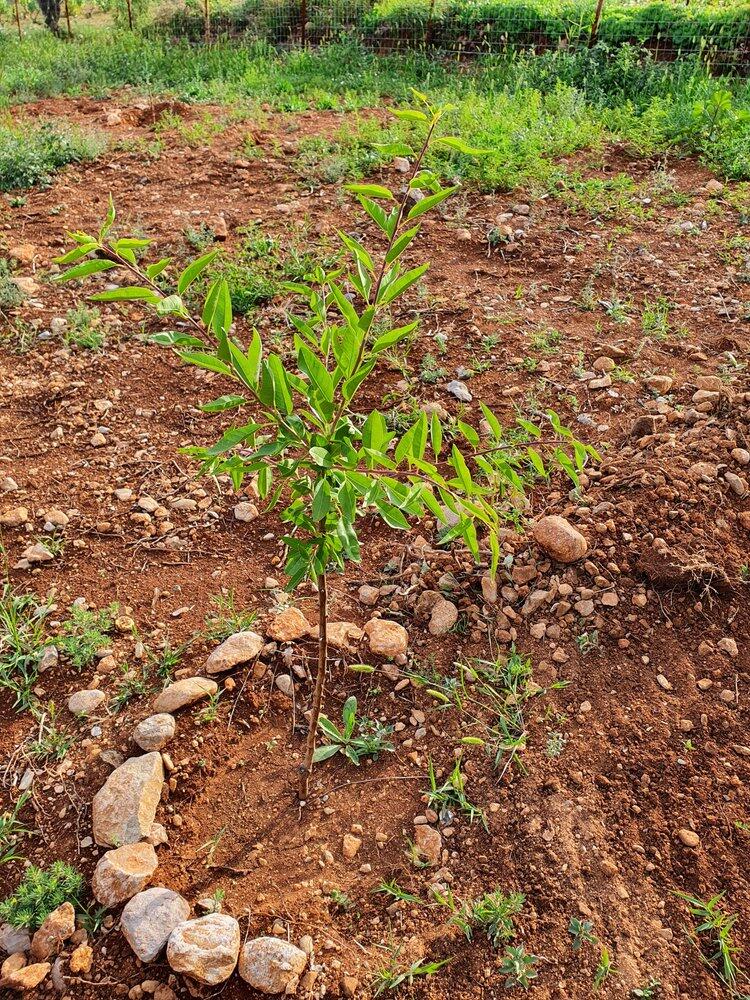
The Hall's Hardy Almond Tree (Prunus dulcis) is ancient. It is one of the earliest domesticated fruit trees, and is rarely found wild in its original setting. There is even archaeological evidence of domesticated almond nut trees found from the early Bronze Age in the Middle East – so this tree truly has been feeding us for centuries. It is in the peach family and has blooms similar to those of the cherry. Its fluffy, light pink flowers grace the branches in spring, filling the air with their sweet fragrance.

Hall's Hardy Almond Tree Details

Family: Rosaceae

Light Requirement: Full sun

Water Needs: Moderate

Height: 10-15 ft

Spread: 10-20 ft

Growth Rate: Moderate, Fast

Soil Preference: Fertile, well-draining

Season of Interest: Spring

Flower Color: Light Pink, White

Fruit: Drupes (Almonds)

Wildlife Value: Birds, Small mammals, Bees, Butterflies

Halls Hardy Almond Tree laden with light green fruits and lush leaves

Notable Characteristics

This Almond Tree is beautiful and unique. It bears fruit that has no flesh but is considered a drupe, as it has a stone “pit”. Where the flesh is on a peach or plum is instead a soft, woody exterior, which dries out as the season continues. As it dries, it breaks open to reveal the almond in its shell, which can then be broken open.

Therefore, almonds are not actually considered a nut; they are actually a drupe. The tree itself has woody, medium-sized branches in a warm brown. The leaves are long and oval-shaped with pointed tips, and are a glossy, bright green. The flowers are white or very light pink, somewhat resembling cherry blossoms, and are beautifully fragrant.

Landscape and Maintenance

This glorious tree is native to the Mediterranean because it thrives in warm, dry summers and mild, wet winters. Currently, California is responsible for growing 80% of the world's almonds, but the trees require a high amount of acreage and water to thrive. Given the increase in drought and temperature due to climate change, almond nut trees are likely to be on the decline.

The Hall's Hardy Almond Tree provides early-season nectar to hungry pollinators like bees and butterflies, and the almonds that drop as its husk dries out provide food for birds and small mammals. This fragrant, showy tree is an absolute gem to grow in your yard.

Halls Hardy Almond Tree bare-root with slender trunk and tangled roots

How big do halls hardy almond trees get?

Hall’s Hardy Almond trees typically grow 15 to 20 feet tall with a similar spread. They have a graceful, rounded shape and stunning pink-white spring blooms. Compact and productive, they fit beautifully into home gardens and orchards.

How many years does it take an almond tree to produce fruit?

Almond trees typically start producing fruit in about 3 to 4 years after planting. Once mature, they yield abundant nuts every season. With good sunlight and care, they become both beautiful and productive landscape trees.

Is Hall's Hardy Almond self-pollinating?

Hall’s Hardy Almond is partially self-pollinating but produces a much larger crop when planted near another almond variety. Cross-pollination helps ensure better nut set and higher yields. Pairing it with a compatible variety leads to the best results.

Need Help?

Phone: 931-692-7325

Call Now

Exposure

Water the Almond Tree regularly, especially during its first few years, to establish a deep root system. Trim in late winter to shape and remove dead wood. Fertilize in spring. Watch for pests and treat them as necessary.

Height at Maturity

Under 25 Feet

Usage

Nut

Shipped As

Bare-root

Ships

UPS

Planting Zones

5-9

How To Grow

How to Grow and Care for Fruit Trees

Fruit trees are a rewarding addition to any landscape, offering fragrant blossoms in spring and fresh, homegrown harvests in summer or fall. Popular varieties like apple, peach, pear, and plum thrive in full sun and well-drained, nutrient-rich soil. Choose trees suited to your USDA zone, and plant in early spring or fall for the best root development.

Dig a hole twice as wide as the root ball and deep enough so the root flare sits just above the soil line. Backfill with native soil, water deeply, and apply mulch around the base—keeping it a few inches from the trunk—to retain moisture and suppress weeds. Water regularly during the first growing season, especially during dry spells.

Prune annually to shape the tree, improve air circulation, and boost fruit production. Fertilize in early spring with a balanced or fruit-specific fertilizer. With proper planting, seasonal care, and a little patience, fruit trees will reward you with beauty, shade, and bountiful harvests year after year.

Care Tips
Almond Tree needs full sun, well-drained soil, and regular pruning.
Light Requirements
Water the Almond Tree regularly, especially during its first few years, to establish a deep root system. Trim in late winter to shape and remove dead wood. Fertilize in spring. Watch for pests and treat them as necessary.
A sun-dappled dirt path winds through a lush, green forest with ferns and wild plants lining its sides.

Grower-Direct Plants Shipped Fast - Satisfaction Guaranteed