Michele Widdowson
My little fern "bulbs" arrived in great shape. I"m following the included instructions and can't wait for my new ferns to pop up!

Christmas Fern
Ships Now
3-9
1–2 Feet
Moderate and Low
Partial shade and Shade
Non-flowering (evergreen fronds year-round)
Christmas Fern grows best in rich, well-drained soil in partial to full shade. Water weekly the first summer and during dry spells, leave autumn leaves as natural mulch and trim last year's fronds in early spring.
Partial to full shade
Shade-loving evergreen fern with year-round interest , Cold-tolerant foliage adds winter woodland beauty, Native fern improves soil and stabilizes slopes
Michele Widdowson
My little fern "bulbs" arrived in great shape. I"m following the included instructions and can't wait for my new ferns to pop up!
Pamela Tanis
Christmas ferns arrived early and looked very healthy.They are now planted and looking forward to see them grow.
Charlotte Sturm
Plants were shipped on Monday, I received on Friday. All looked and felt like they were healthy. I ordered 5 ferns, got 6. I ordered 2 milkweeds, got 3. The extras ****
About this plant
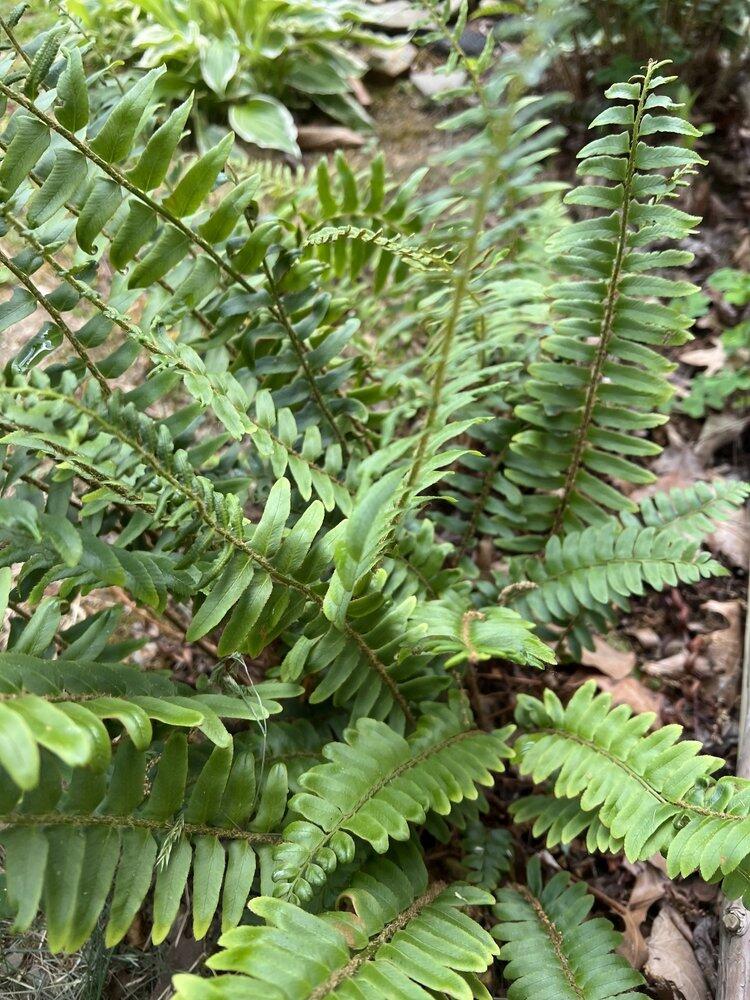
Christmas fern (Polystichum acrostichoides) is a native evergreen fern with glossy, leathery dark green fronds that stay green through winter. Christmas fern grows 1 to 2 feet tall and wide, thrives in partial to full shade, and is hardy in USDA zones 3–9. TN Nursery ships dormant bare-root Christmas fern plants, Buy 1 Get 1 Free.
The Christmas fern plant is native to the forests of eastern North America, from Nova Scotia and southern Ontario west to Wisconsin and south to northern Florida and eastern Texas. The fern belongs to the wood fern family, Dryopteridaceae, and is also called dagger fern and Christmas dagger fern. Each small leaflet has a tiny "toe" at its base shaped like a Christmas stocking.
Yes. Christmas fern is one of the few truly evergreen native ferns in eastern North America, and the fronds stay green from one spring to the next. Christmas fern earned its common name because the fronds are still fresh and green at Christmas, when most garden plants are dormant.
In winter, Christmas fern fronds relax and lie flat on the ground, which protects the crown under snow and fallen leaves. Each April, silvery fiddleheads rise from the center of the clump. In zones 3–4, Christmas fern keeps much of its green color for about 10 months of the year.
Christmas ferns grow 1 to 2 feet tall and 1 to 2 feet wide, and the largest fronds can reach about 2½ feet long in rich, moist soil. Each Christmas fern grows from a single central crown, so the plant forms a tidy, fountain-shaped clump rather than a running mat.
Typical Christmas fern height after planting:
| Time after planting | Typical Christmas fern size | What to expect |
|---|---|---|
| First season | 6–12 inches | Roots settle in; first new fronds unfurl |
| Second season | 12–18 inches | Fuller clump with more fronds |
| Third season and beyond | 18–24 inches tall and wide | Mature, evergreen fountain shape |
To care for a Christmas fern, plant it in partial to full shade, in rich, well-drained soil, and keep the soil evenly moist during the first growing season. Established Christmas ferns handle short dry spells well.
Christmas fern care follows the seasons. Water once or twice a week during the first summer, then only in long dry stretches once the roots are established. Christmas fern grows well in loam and rocky woodland soil with a pH of about 5.5–7.0. No fertilizer is needed in compost-rich soil.
| Month | Christmas fern care |
|---|---|
| March | Trim last year's fronds at the base before new growth begins |
| April–May | Silvery fiddleheads unfurl; keep soil moist |
| June–September | Full green fronds; water deeply in dry weeks |
| October–November | Let fallen leaves stay on the bed as natural mulch |
| December–February | Evergreen fronds lie flat and keep the bed green |
Plant Christmas ferns where shade gardens need year-round green: under hardwood trees, along woodland paths, on shady slopes and banks, and in beds on the north or east side of a home. Christmas fern landscaping works especially well on hillsides, because the fibrous roots hold soil in place on banks and slopes.
For an evergreen ground cover, space Christmas ferns 18 to 24 inches apart, or plant groups of 3 to 5 between spring wildflowers.
Shade-loving woodland natives grow well with Christmas fern. Spring wildflowers such as Virginia bluebells, white trillium, bloodroot and Jack-in-the-pulpit bloom between the evergreen fronds. Low carpets of wild ginger and foamflower fill the ground around each clump. For a layered fern garden, combine Christmas fern with the lacy fronds of maidenhair fern, the upright texture of lady fern and the tall, bold fronds of cinnamon fern. Browse more choices in our ferns for sale and shade perennials collections.
Plant a bare-root Christmas fern with the crown level with the soil surface and the roots spread out below, then water deeply. Christmas ferns plant best while dormant, in fall or early spring, and any time the ground is workable and not frozen.
At our Altamont, Tennessee nursery, we dig Christmas ferns while dormant and ship them bare root, with no soil around the roots. Each plant arrives as a dark crown with wiry black roots, often with no fronds, which is normal for a dormant fern.
Botanical Name: Polystichum acrostichoides
Plant Family: Dryopteridaceae (wood fern family)
Ships: Bare root, dormant
Planting Zone: 3–9
Height at Maturity: 1–2 feet, fronds occasionally to 2½ feet
Spread: 1–2 feet
Sun or Shade: Partial to full shade
Water Needs: Moderate; evenly moist the first season, then tolerant of short dry spells
Soil: Rich, well-drained loam or rocky woodland soil, pH about 5.5–7.0
Foliage Season: Evergreen; new fronds April–May
Flowers: Non-flowering; ferns reproduce by spores
Native Range: Eastern North America, Nova Scotia and Ontario south to Florida and Texas
Care: Water during dry spells, leave autumn leaves as mulch and trim old fronds in early spring.
Plant Attributes: Native evergreen fern, deer resistant, shade tolerant, holds soil on slopes, clump-forming
Christmas ferns grow in tidy clumps from a single crown and widen slowly over the years, so Christmas fern stays neatly where it is planted.
Yes. Christmas fern is a long-lived perennial fern that keeps green fronds through winter and sends up fresh fiddleheads every April.
Christmas fern grows outdoors in USDA hardiness zones 3 through 9.
Yes. Christmas fern grows well in full shade and partial shade, including deep shade under hardwood trees.
Yes. Deer and rabbits rarely browse Christmas fern.
The best time to plant bare-root Christmas fern is while the fern is dormant, in fall or early spring, whenever the ground is not frozen.
TN Nursery has grown hardy native plants since 1959, more than 65 years of experience, and has supplied plants to major U.S. landmarks like the Washington Monument and Arlington National Cemetery. At our Altamont, Tennessee nursery, we grow, dig and ship Christmas ferns and other native shade plants to gardens across the country. Want to learn more first? Read Native Fern Plants for Year-Round Greenery, 5 Favorite Hardy Native Ferns and Why Native Ferns Grow Best in Your Garden on our garden blog, or browse our shade ferns.

Since 1959, TN Nursery has grown and shipped quality bare root plants nationwide. Shipped during dormancy, bare-root plants develop strong root systems and establish quickly. Our experienced team carefully harvests and packages every order, providing growers with trusted plants backed by over 65 years of nursery experience.
Learn More About
Bare root trees
Evergreen All Winter:
Christmas Fern keeps glossy, dark green fronds through winter, bringing year-round color to shade gardens when most plants are dormant.
Native and Cold Hardy:
Christmas Fern (Polystichum acrostichoides) is native to eastern North American woodlands and grows in USDA zones 3–9.
Made for Shade:
Christmas Fern thrives in partial to full shade under trees, along woodland paths and on shady slopes, where its roots help hold soil in place.
Easy to Grow:
Christmas Fern forms a tidy 1–2 foot clump, is rarely browsed by deer and needs only a spring trim of old fronds and water in dry spells.
Fall Digging
Spring Digging
Packing Orders
Customer Unboxing Video
Product Highlight
I absolutely love my Christmas Fern! It established beautifully and stays so lush and green—it’s been the perfect addition to my shady garden.
I bought 50 Christmas ferns about 7-8 yrs ago from TN nursery for my 50 acre woodland. They have done great even in the drier shady areas just shorter than in the damp areas.
I am beyond satisfied with the Christmas Ferns from TN Nursery. They are hardy, adaptable, and look beautiful in my shaded front yard. I was impressed by how well the plants were shipped and how quickly they settled in. A must-have for anyone who wants reliable evergreen ferns.
The Christmas Fern from TN Nursery has become the highlight of my shade garden. It remains green year-round, which is exactly what I needed for winter landscaping. The plants were carefully packaged, easy to plant, and are growing strong. TN Nursery **** disappoints.
I love my Christmas Ferns from TN Nursery. They are perfect for erosion control on a shaded slope and create a dense, green ground cover. The plants arrived fresh, with strong root systems, and adapted quickly to my garden. TN Nursery truly delivers exceptional quality.
The Christmas Fern I ordered is thriving in my woodland garden. It handles shade perfectly and adds a natural, evergreen touch all year. TN Nursery impressed me with their fast shipping, expert packaging, and the overall health of the plants. I will be ordering again soon.
I purchased several Christmas Ferns from TN Nursery, and they transformed my shady backyard into a lush oasis. These ferns stay green even in winter, which adds so much life to my landscape. TN Nursery shipped them quickly, and every plant arrived in excellent condition.
Ordered Ostrich, Christmas and Cinnamon ferns. Followed instructions and in just 5 days the ferns started to grow . 15 ferns planted and 3 have not shown any growth. But so excited to have a beautiful fern garden. Placed another order and it is on its way .
I planted them the day after I got them so now wait and see next spring😸
Now let's hope they grow unlike the ones I bought here last January
Ferns arrived well packed and in good condition. Ferns from previous years are doing well - I look forward to when they appear next spring!
Christmas Fern
My little fern "bulbs" arrived in great shape. I"m following the included instructions and can't wait for my new ferns to pop up!
Christmas ferns arrived early and looked very healthy.They are now planted and looking forward to see them grow.
Plants were shipped on Monday, I received on Friday. All looked and felt like they were healthy. I ordered 5 ferns, got 6. I ordered 2 milkweeds, got 3. The extras **** appear to be sent due to a weakness of any of them. I planted them that day.
My only complaint is that it was 103 degrees when I planted them! (August in Texas)
Because I’ve had them for only a few days, I’m waiting for them to grow. Based on the careful packing, though, I’m optimistic that all 15 plants will thrive beautifully.
Just planted. Hoping it’ll grow strong.
Christmas Fern
Several fronds had broken during shipping, but they're looking better after being potted and placed under lights.
Christmas Fern
There was a glitch in my order, and they corrected it promptly and pleasantly!
Very well packaged! Roots look great! Hopefully will have good results!😊
Plant bare trots appear to be in good shape, will have to wait until they grow in the spring to see how they are!
Christmas Fern
Just waiting for them to sprout up and see what they look like...
Well pleased
Really like this fern because it’s (a) smaller ( h<=2’ & w<=2’ ) than most ferns typically available, (b) evergreen, and (c) native to Texas & its Gulf Coast. Fast service from TN Nursery.
I ordered 130+ plants during 2023 and am pleased with the condition of the plants upon receipt. I am excited to see the transformation of my landscape next year! I also want to thank Serenity for her excellent customer service. She went above and beyond to respond to my questions!
I’m excited to get them going. The will be beautiful for next year. thank You.
Love dealing with this company, shipping is very quick Quality is there.
Thanks
My Christmas fern order of 24 arrived promptly and well packaged. I soaked the roots in shallow water to soften the roots. I planted them 2 days later and fronds were already popping up in all 24!
They are dormant and arrived well wrapped.
I can't review this yet because it is too soon.