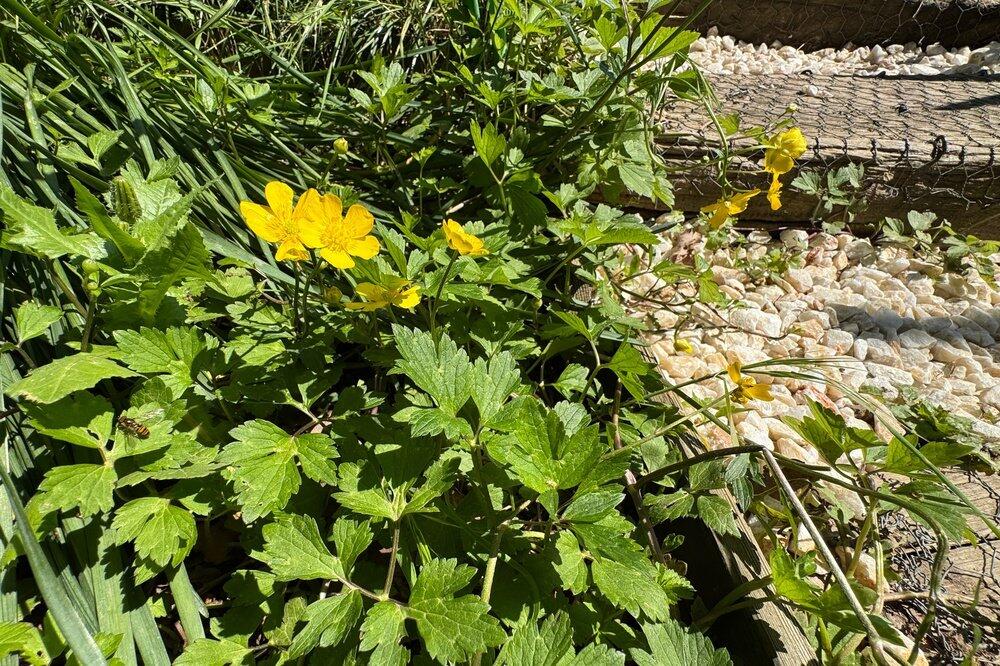
Creeping Buttercup For Sale
The cheerful yellow flowers of the creeping buttercup make an eye-catching ground cover in any garden or lawn. This perennial plant is easy to set and forget–once it is established, it spreads rapidly to cover whole meadows with its golden glow, especially in wet climates where it thrives.
The yellow buds bloom in spring and summer, but as a perennial, this plant is winter hardy and will return in full force with warmer weather. Its many green leaves and clumps of golden flowers make it an exciting, if wild, addition to your garden.

Plant Details - Creeping Buttercup
Family: Ranunculaceae
Light Requirement: Full sun, Partial shade
Water Needs: Moderate
Height: 1-2 ft
Spread: Over 40 sq ft
Growth Rate: Rapid
Soil Preference: Damp, clay, soil
Bloom Time: Spring and Summer
Flower Color: Yellow
Wildlife Value: Attracts pollinators
Notable Characteristics - Creeping Buttercup
This charming plant is commonly classified as a weed in agriculture, but it can also be a wonderful ornamental plant that fills bare spots in your garden with vibrancy. The creeping buttercup's golden yellow petals are distinguished by their glossy finish, which helps attract pollinators.
Its hairy stem and leaves are deep green and resemble a heart shape. This plant thrives in damp, flooded areas, and especially likes wet, compacted soil, or clay soil. It even gets its plant family name from ‘rana’, meaning ‘little frog’, a nod to its somewhat amphibious habitat.
Landscape and Maintenance: Creeping Buttercup
The creeping buttercup flower is native to Europe, Asia, and North Africa, but made its way to North America primarily through the movement of hay. It is toxic to livestock, contributing to its position as an irritant to farmers.
As a Creeping Buttercup, it spreads far and quickly. Its low growth form makes it troublesome to remove in unwanted areas, but it provides much-needed resilience where it is planted intentionally. This cheerful, yellow plant grows swiftly to turn your garden into a lush field of sunshine.

Customer Reviews
I am thrilled with my Creeping Buttercup order. TN Nursery delivered healthy plants that established quickly and continue to brighten my landscape.
My Creeping Buttercup from TN Nursery spread quickly and is now covering my garden beautifully. The yellow blooms are simply stunning.
I was impressed with how fresh and vibrant the Creeping Buttercup was when it arrived. TN Nursery did an excellent job with packaging and shipping.
TN Nursery delivered my Creeping Buttercup in excellent condition. The plants are strong and already flourishing in my flower beds.
I love my Creeping Buttercup from TN Nursery. It’s thriving, spreading steadily, and producing stunning flowers that brighten my garden.
How tall does a creeping buttercup get?
Creeping Buttercup typically grows 8 to 12 inches tall with bright yellow blooms above low, spreading foliage. Its runners help it form a lush green carpet over time. This cheerful plant adds a soft, natural touch to garden edges and meadows.
Is creeping buttercup a good ground cover?
Yes, Creeping Buttercup makes a lovely ground cover with its bright green leaves and golden blooms. It spreads easily to fill in open spaces, creating a soft, natural look. Its cheerful flowers bring color and charm to gardens and landscapes.
Do creeping buttercups come back every year?
Yes, Creeping Buttercups come back every year as hardy perennials. They return each spring with fresh green foliage and sunny yellow blooms. Once established, they spread gently to create lasting ground cover.
What makes the yellow flower buttercup stand out in a garden?
Its bright yellow petals have a shiny finish that catches the light and draws attention. The blooms appear throughout spring and summer, adding a natural pop of color to any green space.
How deep do creeping buttercup roots grow?
Creeping buttercup roots spread close to the soil surface, making it easy for the plant to cover ground quickly. They grow outward through runners, helping the plant form a thick, green carpet over time.
Exposure
Creeping Buttercup (Ranunculus repens) thrives in partial to full shade. It prefers moist, shaded areas, such as under tree canopies or along shaded garden edges. While it can tolerate some sun, it performs best in low-light conditions.
Height at Maturity
Under 12"
Usage
Pollinator Plant
Shipped As
Bare-root
Ships
USPS
Planting Zones
3-9
How To Grow
How to Grow and Care for Bare Root Perennials, Tubers, and Bulbs
Bare root perennials, tubers, and bulbs are an easy and economical way to jumpstart your garden with lasting beauty. These dormant plants should be planted in early spring or fall while the soil is cool and workable. Before planting, soak bare roots in water for 1–2 hours to rehydrate them. Choose a location based on the plant’s light needs—most flowering types prefer full sun, while others thrive in partial shade.
For bare root perennials, dig a shallow hole and spread the roots out naturally, ensuring the crown is level with the soil surface. For tubers and bulbs, plant with the pointed side facing up at a depth about two to three times their height. Cover with soil, gently press down, and water thoroughly.
Keep soil consistently moist (not soggy) until new growth appears. Add mulch to retain moisture and suppress weeds, but avoid covering the crown or bulb tops. Once established, these plants require little maintenance—just seasonal watering, occasional dividing, and deadheading or pruning as needed. With proper care, they’ll return and thrive year after year.