
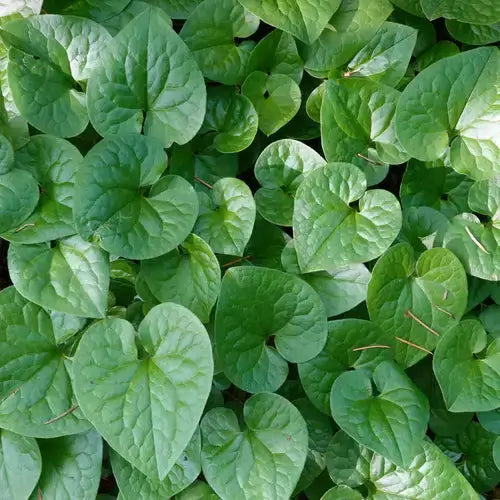
Wild Ginger: The Perfect Low-Growing Shade Perennial
It's hard to fill in shady, neglected corners of a yard. Most plants need plenty of sunlight, but to liven up a shady spot, Wild Ginger is a good option. Unlike other plants that struggle in the shade, Wild Ginger is a very low-growing ground-covering herb that thrives in these conditions.
Wild Ginger is classified as Asarum. Unlike the tropical plant ginger, this plant also has a spicy odor to its roots, but as a whole it is very different. Wild Ginger is a heart-shaped, leafy native perennial that adds a fair amount of texture to the garden in the shade. Wild Ginger can also be seen in the rich, damp forests of North America, parts of Asia, and Europe.
The Properties of Wild Ginger
Gracing the forest floor is the unique Wild GingerWild Ginger. This plant is roughly six to ten inches in height. However, it forms an extensive mat of its own through its underground rhizome stems. This allows it to clone itself and create a dense coverage of ground space that even prevents the growth of weeds. This plant is capable of covering an area of space of up to two feet in radius, dense and beautiful at the same time.
The foliage of the Wild GingerWild Ginger plant is most easily recognized. These are very large leaves that one may describe to look glossy, heart shaped, or kidney shaped,Bailey Sons depending on the view angle. These leaves are even to form a beautiful canopy of green all spring season and just as glossy to keep all summer season. Some plant species even keep these leaves throughout winter, making it a suitable addition throughout the year.
The flowers on Wild Ginger are pretty special and go unnoticed by many. These flowers blossom at the base of the plant, right at the ground, and because of the flowers’ huge leafy covers, they aren’t seen easily. The blossom has the shape of a cup and a brownish hue, colored in various earthly shades from maroon to purple-black. They are pollinated by ground insects, which are nat big. This is a solid fit for the plant’s low-growing nature. Canadian Wild Ginger (Asarom canadense) best exemplifies this joe’s.
How to Grow Wild Ginger in your Own Garden
Wild Ginger is incredibly low-maintenance self-sustaining perennial plant. Once established, they are hardy and show up without fail. They do great in USDA hardiness zone 4 to zone 8.
Find a Good Spot to Let the Wild Ginger Thrive
Wild Ginger grows best when their conditions closely resemble their native homes in woodlands. A good soil for the plants is moist, rich, and full of organic materials. Before you plant it, your garden bed should be amended with some compost or leaf mold in order to perfect the soil. These plants like their soil to be neutral or moderately acidic, as well as a spot that gets enough moisture.\u00a0 They also need moisture to get to their roots, but not too much that it gets them root rot.
Maintenance MatterThe most important thing to consider when planting Wild Ginger is shade. Wild Ginger grows best in full shade to partial shade. Great areas to plant Wild Ginger are under large deciduous trees, the north side of your house, or any areas that are shady and receive little direct sunlight. The dense shade will help to keep the Wild Ginger’s leaves from getting scorched and also helps to keep the soil moist, which is what the plant prefers.
Planting and Maintenance
When planting Wild Ginger space the plants to be tracked 12 to 18 inches apart to give them space to become a solid ground cover. Water the plants right after they are planted and keep the soil consistently damp for the first year as they are settling into their new home. Soil moisture gets conserved and weeds are prevented by putting down a layer of mulch, like shredded leaves or fine bark.
After the first year, Wild Ginger will look its best with regular watering, though they do become drought-tolerant after the first year. In the first year, they will look a little rough after dry spells if they are not watered regularly. Fertilizing is not typically needed at all, even in the beginning, especially if you planted it in good soil. In the early spring, it’s a good practice to separate larger clumps of Wild Ginger to propagate more plants for your garden, which is a good chance to share with friends.
Companion Plants for a Thriving Shade Garden
While Wild Ginger looks good on its own, the "Wild Ginger Shade Garden" is a beautiful multi shade garden. This garden will look amazing with layers of shade garden textures, heights, and colors.
Hostas: Hostas have green, blue, and gold leaves of different thickness and colors and stand out from the light, Wild Ginger leaves.
Sue RisnerFerns: Ferns like the Japanese Painted Fern (Athyrium niponicum) and The Ostrich Fern (Matteuccia struthiopteri) have fine details. They stand above the Wild Ginger.
Bleeding Hearts (Dicentra spectabilis): In the spring, Bleeding Hearts shows off glowing, heart shaped flowers. They make good color and stem height for a season before the Wild Ginger sits completely.
Foamflower (Tiarella cordifolia): This mound, a former perennial and garden companion, creates color and compliments the Ginger well with its mottled green leaves. Wild Ginger Foamflower color. This native plant provides flowers and full foliage of a garden.
Hellebores: Hellebores are more popularly known as Lenten Roses. Hellebores are some of the very first flowers to bloom and they add some bright colors to the shade garden in late winter and very early spring. Hellebores have thick, evergreen leaves, which contrast against the soft leaves of the Wild Ginger that grow beside them.
Traditional Uses of Wild Ginger
Wild Ginger has some traditional uses beyond just being nice to look at. There have been some other uses of Wild Ginger, which date back to the Indigenous herbal history of North America where the root used to be harvested, dried, and ground into powder. Since the root has a mildly spicy flavor, it can be used as a substitute for culinary ginger, which is added for flavor into a lot of meals in the same way.
It is also used in folk medicine, as it is considered to help with stomach issues, a cough, and other sicknesses. However, be cautious with the plant as some types of Asarum have a chemical called aristolochic acid, which is considered dangerous if consumed. For this reason, do not eat Wild Ginger that you have grown in your garden as this can be very dangerous as well as not legal, and definitely do not use plants for medicine without first talking to a doctor or appropriate specialist.
Bring Your Shade Garden Solution Home
Having the right plants will allow you to create beautiful and low-maintenance gardens in the shade, and the Wild Ginger will give you a lovely option because it has beautiful and plush foliage, it is easy to maintain, and it will bring a living carpet effect of a green base. Its shade-loving companions will allow you to create a peaceful and green escape.
Visit TN Nursery to discover the top quality perennials so you can work towards transforming your shady areas. We offer ground covers, like the wild ginger, and numerous other plants that'll bring your vision to life. Come and see what other amazing plants you can add to your space.
FAQs
Is Wild Ginger shade tolerant?
100%. Wild Ginger loves shade more than the sun. They do best in partial to full shade, making them perfect for woodland gardens, spots under large trees or on the north sides of buildings where the sunlight is unavailable.
Can ginger grow in full shade?
Wild Ginger is one of the best perennials for full shade. In contrast to ginger used for cooking, which needs sun, Wild Ginger is made for these conditions. Leaves will scorch when sunlight is too direct, making deep shade the best.
Does Wild Ginger spread quickly?
No. Wild Ginger is spreading moderately. It's not considered an invasive species, but the roots do allow it to grow over the years, so it is great for covering empty spaces in the ground. These spaces can easily be controlled by splitting the dense roots after a couple years.
What not to plant next to ginger?
Wild ginger is excellent in forming partnerships with plants that enjoy shade, especially ones that cause no trouble like miniature, fragile, and delicate alpine plants. It is also wise to keep ginger from planting next to sun-lovers like lavender and other succulents that thrive in hot, dry weather.
Where is the best place to plant Wild Ginger?
Wild ginger should obviously be planted in shady areas, in organic and loamy, moist, and well-drained shady soils. It should remind you of the rich earth and heavy shade one might find on the forest floor. It does serve as a vigorous ground cover on shaded borders, widely under tall trees, or in a dedicated woodland garden.
Will Wild Ginger choke out other plants?
Although Wild Ginger does form a strong mat that is very effective in weed suppression, it does form a strong mat that is very effective in weed suppression; that is it does not "choke out" other well-established perennials and plants. It is also very cooperative with plants such as hostas and ferns that enjoy heavy shade. If Wild Ginger with the appropriately sized plant companions, a more balanced and succulent garden will be achieved.
Zone 4


