
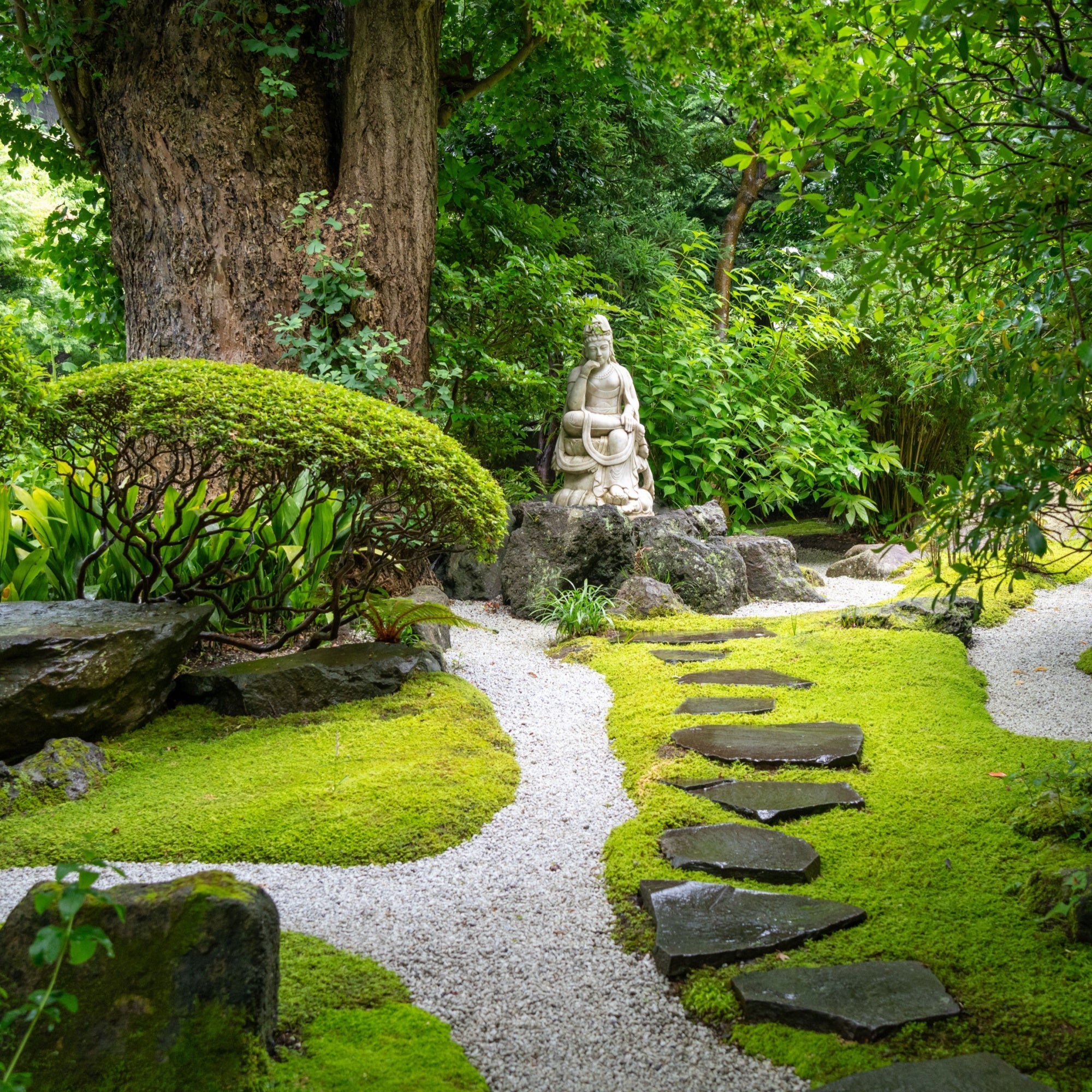
Discovering the useful purpose of moss for landscaping shows that the ancient vegetation offers green cover and soil cover as well as an alternative low-care substitute for ordinary lawns. Knowing the benefits of moss will enable the homeowner to have beautiful and environmentally friendly garden areas that can flourish in the dark and wet areas where grass fails.
Moss for landscaping areas is enhanced in tough spots, converting places of problems to soft-textured carpets that do not mandate any mowing, require less watering, and practically need no fertilizing. The products offered by TN nursery are of top quality and enable householders to make their gardens look natural and beautiful.
Why Is Moss Becoming a Popular Choice in Modern Landscaping?
Moss for landscaping has gained popularity in contemporary gardens, with homeowners opting to use it in place of high-maintenance lawns. Knowing about the characteristics of moss, it is possible to realize that this kind of plant does not need mowing, which saves enormous amounts of time and resources. Growing moss as a lawn substitute helps to save on water and get rid of gasoline machines, as well as chemical fertilizers.
Moss plant facts show that these ancient organisms are more than 400 million years old and are able to adapt to survive in a hostile environment. To have complete knowledge of moss biology and ecology, Britannica has an article that is educational about moss, as it gives detailed information about these primitive but highly successful plants.
Environmental Advantages of Using Moss as Ground Cover
Landscaping with moss has important environmental benefits other than mowing. These trees stop soil erosion on hilly slopes, and their thick cover absorbs air pollutants in the environment. The knowledge on how to grow moss shows them how to stabilize the good soil organisms as they decompose, moss improves organic soil, and increases microbial diversity.
Moss has the following environmental advantages:
-
Water conservation: Minimum irrigation requirement after establishment.
-
Air quality enhancement: Removal of pollutants in the atmosphere.
-
Erosion control: Compact cover, which does not allow soil to be washed away during heavy rains.
- Carbon storage: The process of absorbing and storing carbon in the atmosphere.
Certain characteristics of moss enable it to take water directly through the leaves and not the roots, thus becoming naturally drought-resistant once established. This renders moss for landscaping the perfect choice in the design of sustainable gardens that emphasize the saving of resources.
Unique Moss Varieties That Enhance Garden Design
TN Nursery has superior varieties of moss types in response to various mosses in landscaping.
Lawn Moss
This is specifically chosen because it is traffic-tolerant and grows thick, thus forming walkable moss lawns. The Lawn Moss is one of the best varieties that may be used in growing moss lawn replacements in shade.
Fern Moss
This is a weak moss that has a fern-like body, forming carpets with a soft texture. The moss, as portrayed by the Fern Moss, has been shown to have important features in decorative landscapes.
Broom Forkmoss
This is a low-growing, dense moss that forms a velvety mat that remains green throughout the year. The Broom Forkmoss is very good as moss for landscaping of high-traffic shade areas.
Haircap Moss
A unique type of moss that has an upright structure that gives it special vertical texture. Haircap Moss depicts distinctive properties of dimensional gardens of moss.
Hedwigia Ciliate Moss
It is a robust moss that grows on rocks and in dry, exposed areas. The Hedwigia Ciliate Moss reflects the moss plant's facts in terms of adaptation to adverse conditions.
Creative Ways to Use Moss in Landscape Design
Landscaping designs that use creative moss will make ordinary gardens look magical. Growing moss lawn substitutes in the dark spots gets rid of the grasses that are struggling and forms the soft and textured ground covers. Knowledge of how to grow moss will enable it to be placed between stepping stones and paths, and even beneath trees.
The benefits of moss have emerged in artistic use, such as moss walls to provide vertical emphasis, moss-laden rocks to form focal points, and moss ground cover to bring together the various landscape features. Mosses of varied properties and textures are combined to form depth and visual appeal.
Moss plant facts indicate that these adaptable plants can survive on different surfaces—soil, rocks, wood, and even concrete—and hence, they are essential in softening the hard landscape features. The moss for landscaping is therefore indispensable in the naturalized garden designs.
Simple Tips for Growing Moss Naturally in Your Garden
To successfully grow a moss lawn, one needs to know how to grow moss under the right conditions. These plants like partial shade or shade with a steady supply of water, particularly during planting. Moss for landscaping can grow where grass cannot, so it is easy to locate where it will grow.
These are the steps to learn how to grow moss:
-
Surface preparation: Elevated competing vegetation and roughness of moss contact.
-
Install pieces of moss: Press moss against the prepared moss to landscape it.
- Keep it moist: Spray every day during the first 2-3 weeks of growing in the moss lawn replacements.
The benefits of moss can be felt soon enough: no mowing, very little watering, and green cover throughout the seasons. Conceptualizing the characteristics of moss implies that it can be allowed to flourish under benign neglect, provided it is established, and only the leaf litter needs to be removed on certain occasions.
The facts about moss plants show that most of them do not require fertilizing, and they are very specific to lean soil. TN Nursery has installation specifications with each order to ensure that your landscape moss plantations grow.
Conclusion
Moss for landscaping has latent advantages in landscape gardens, such as natural beauty, soil erosion cover, and minimal maintenance coverage on the grounds. These native plants offer sustainable substitutes to conventional lawns with the growth of moss lawns that need no mowing and are rich in minimal resources. The TN Nursery selects all its varieties of Mosses, whether large, small, fragile, resilient, haired, or smooth, which are either the Lawn Moss, the tender Fern Moss, the robust Broom Forkmoss, the unique Haircap Moss, or the versatile Hedwigia Ciliate Moss. Trust TN Nursery as your good supplier of green garden landscapes that grow under shaded and wet conditions.
FAQs
What are the benefits of moss in the garden?
The advantages of moss are that there is no mowing, little watering, erosion prevention, improvement of air quality, and the resultant growth of lush moss to use as landscaping cover.
Can moss replace grass in shaded areas?
Indeed, moss lawn substitutes thrive well in shaded areas where grass cannot and are also used to provide important advantages of moss in sustainable gardens.
Can moss grow on soil, rocks, and wood?
Admittedly, moss plant facts indicate that these versatile plants inhabit a variety of substrates with unique characteristics of moss adaptability to moss landscaping.
Where can I buy moss plants for landscaping online?
TN Nursery can provide high-quality moss varieties that are used in landscaping by giving excellent tips on how to grow moss, tips on different growing moss lawns.
Is moss good for plants in the garden?
Yes, the benefits of moss are the improvement of the health of both the soil and moisture retention, in addition to supporting positive organisms, which increases the general garden ecosystem.
Where to put moss in a garden?
To grow a moss lawn or garden, according to how-to-grow-moss principles, place moss in shaded places with a consistent amount of moisture when landscaping using moss.
What type of moss is best for landscaping?
The best ones include Lawn Moss, Broom Forkmoss, and Fern Moss, all with different attributes of moss to be used in a landscape to successfully create a mossy one.
