
Should I remove staghorn sumac?
The Staghorn Sumac is one of those striking plants that divides opinions in the garden. Some gardeners might ask if it needs to be removed, but it depends on what you're looking for in your landscape. Its distinctive look, with velvety branches resembling a stag's antlers, makes it a stunning feature, especially during fall when its foliage turns fiery red, orange, and yellow. This plant can be delivered in spades if you want a bold autumn color. However, before deciding to keep or remove it, consider what it offers: aesthetics and its power to flourish in various conditions. Its adaptability makes it suitable for areas where other plants struggle, and it can even help stabilize slopes with its dense root system.
Gardeners who appreciate wildlife will love that staghorn sumac provides food and shelter for various animals. Birds flock to its red, cone-shaped clusters of fruit in the winter when food is scarce, and its flowers attract bees and butterflies in the summer. However, it can spread and form colonies if left unchecked. With a bit of maintenance, such as pruning suckers or placing it in an area where it has room to roam, you can manage its growth and enjoy its natural beauty. Removing it should only be a consideration if its vigorous nature clashes with your garden's design or needs.
Planting Sumac
North American landscapes have featured Staghorn Sumac , or Rhus typhina, for thousands of years due to its ancient origins. Native peoples held this plant in high regard because they used it extensively for healing purposes as well as cooking and everyday necessities. European settlers who first arrived in North America found it's value quickly apparent and adopted its use into their own cultural practices. Throughout many centuries, it expanded into different habitats where it successfully lived in a broad range of natural environments, from open woodlands to rocky hillsides. The historical archives show that Indigenous peoples passed on the plant to the early European settlers which underscores its importance in both ecological and cultural narratives.
Rhus typhina has served as a fundamental element in natural medicine for many centuries. Indigenous healers prepared medicinal decoctions from its bark and roots which helped combat fevers and digestive problems. People steeped berries rich in vitamin C and antioxidants into teas, which helped soothe sore throats and strengthen the immune system. The astringent qualities of this plant's leaves made them effective for wound healing when used as poultices. Today's herbalists investigate its potential advantages for enhancing immune function along with reducing inflammation. Researchers continue to study this plant because of its possible medicinal uses which align with traditional natural healing practices.
The earliest known interactions with Rhus typhina happened in Indigenous settlements during which its applications were extensively recorded through oral traditions. In the 17th century, European botanists started to formally document the plant because of its exceptional adaptability and its striking visual characteristics. The plant's resilience and adaptability across different landscapes had been widely acknowledged before scientific classifications expanded throughout the 19th century. During this time scientists studied its distinctive anatomy and seasonal changes which resulted in its botanical classification.
Staghorn Sumac provides essential habitat support for wildlife along with its decorative features. Birds depend on the plant's nutrient-packed berries as a fundamental food supply when food scarcity occurs in winter. Robins, bluebirds, and waxwings depend on this fruit to sustain their lives. The plant's flowers draw numerous pollinators like bees and butterflies which helps maintain biodiversity. Through its dense growth pattern this plant creates habitats for small mammals and avian nesting sites which makes it indispensable for natural ecosystems. The plant supports a wide range of wildlife, which demonstrates its ecological importance in rural and urban environments.
Landscapers and garden lovers choose Staghorn Sumac as their preferred plant because of its remarkable visual appeal. The tree's expansive feathery leaves transform into brilliant hues of orange, red and gold during autumn months which results in a stunning visual show. In gardens and naturalized landscapes, designers use this plant as a decorative highlight to maintain visual interest throughout the year. Its tree-like structure with gracefully curving branches makes it perfect for stabilizing slopes and disturbed ground against erosion. With its ability to survive drought and thrive in poor soils, this plant has become essential for sustainable landscaping projects that demand both aesthetic appeal and resilience.
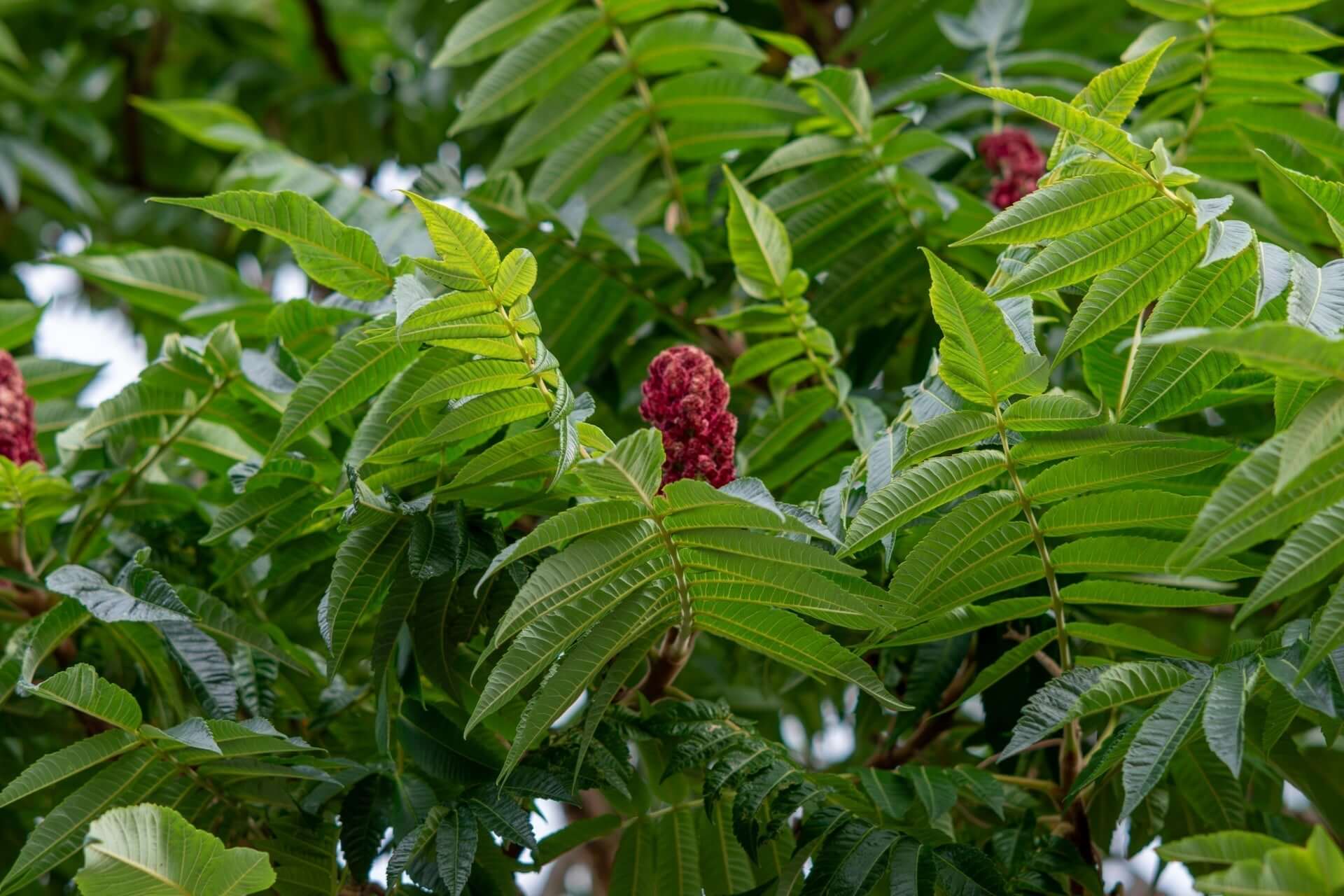
The Staghorn Sumac is one of the few plants capable of such dramatic seasonal changes. During the spring and summer months the plant displays lush green foliage with finely divided leaflets that create a soft feathery appearance. When the weather gets colder the plant's leaves transform into stunning fiery colors which create a beautiful autumn scene. The branches support clusters of velvety red fruit that take a cone shape and stand out against the backdrop of changing leaves. The plant maintains visual interest during winter with its complex branching pattern and rust-toned fruit clusters against barren landscapes. The plant's unique character is amplified by its fuzzy-textured stems which add to its visual charm.
Does staghorn sumac grow fast?
Yes, staghorn sumac is known for its relatively quick growth. If you're seeking a fast-growing plant to establish a privacy screen or fill in a large area, this species can be your answer. Once established, it can spread and fill space rapidly, especially in sunny, open areas where it thrives. This quick growth is one of the reasons some gardeners love it, mainly when used for naturalizing or reforesting areas. It also responds well to trimming, which can be helpful if you're trying to shape it or maintain it as a smaller shrub rather than allowing it to grow into a multi-trunked tree.
Its fast growth means it fills space quickly, allowing gardeners to enjoy its dramatic foliage and striking flowers and fruit relatively quickly. For gardeners looking for a plant that takes less time to establish its full beauty, staghorn sumac is an excellent choice. However, its fast growth requires regular monitoring to ensure it doesn't take over areas it's not wanted. With proper care, its quick development becomes a benefit rather than a burden.
How big does Staghorn Sumac get?
The size of a staghorn sumac can vary depending on how it's maintained and where it's planted. It can grow to around 15 to 25 feet tall in ideal conditions, with a spread just as wide. Its natural form is that of a small tree or large shrub, often growing with multiple trunks. The branches spread out horizontally, creating an open, almost umbrella-like canopy. This makes it a fantastic option for gardeners looking to create a shaded area or add a focal point to the landscape.
In addition to its height and spread, the staghorn sumac's physical presence is enhanced by its unique texture. The fuzzy, velvety branches and bold, pinnate leaves give it an almost tropical look despite being native to cooler climates. It's not just its size but its overall structure and form that can add a dramatic flair to your garden. If you want to control its size, regular pruning can help keep it smaller and more manageable. By cutting back suckers or trimming the main branches, you can maintain a more compact shape.
Does Staghorn sumac like sun or shade?
Staghorn sumac prefers full sun but is highly adaptable and can tolerate partial shade. Plant it in an area with lots of sun for the most vibrant fall colors and robust growth. The more sun it receives, the more dramatic the colors will be when the cooler weather arrives. If grown in too much shade, the fall foliage may be less intense, and the plant might become leggier as it reaches for more light.
Mistletoe Holiday Sprig Staghorn sumac
Its adaptability to partial shade makes it suitable for various planting locations. The staghorn sumac will likely thrive if placed on a sunny slope or tucked into a mixed shrub border that gets dappled sunlight. This resilience and tolerance for different light conditions make it a favorite for challenging areas in the garden. This plant might be the solution if you have a sunny spot that's tough to fill, especially on poor soil or dry ground. While it's happiest in full sun, a little shade won't hold it back from flourishing.
Staghorn sumac offers beauty, wildlife benefits, and adaptability, making it a versatile addition to many garden landscapes. This species has much to offer, whether aiming to create a naturalistic space with vibrant seasonal colors or looking for a hardy plant that can care for itself in less-than-ideal conditions. With a bit of care, its rapid growth and potential size can be managed, leaving you with a striking garden feature that shines year after year.
Ready to add one to your landscape? Shop staghorn sumac seedlings here


