
The Engaging Nature of Rare and Exotic Flowers
For a long while, flowers have been known and appreciated for their beauty, and emotions, and for what they symbolize. People love planting flowers like roses and tulips, but there's a fascinating and breathtaking world of rare flowers beyond our surface-level understanding. These rare flowers, treasures of the world, are scattered around with their own stories of resilience and rarity. The exploration of these flowers exemplifies the diversity and originality of our world.
They are not the basic flowers which you can find in a generic bouquet. They are living legends and shrouded in mystery, often found in very remote places in the world. Some of the reasons we may not find these flowers often are their complex needs of habitats, and their intricate needs of pollination, or they are just being overharvested by people. Let's discover some of the world’s most fascinating and rare flowers.
Challenging Nature’s Hidden Jewels
These flowers challenge our very basic understanding of what a plant can and should be. Each one of them are masterpieces of evolution, being innovative and one of a kind in their own way for the flower's survival and for the reproduction needs.
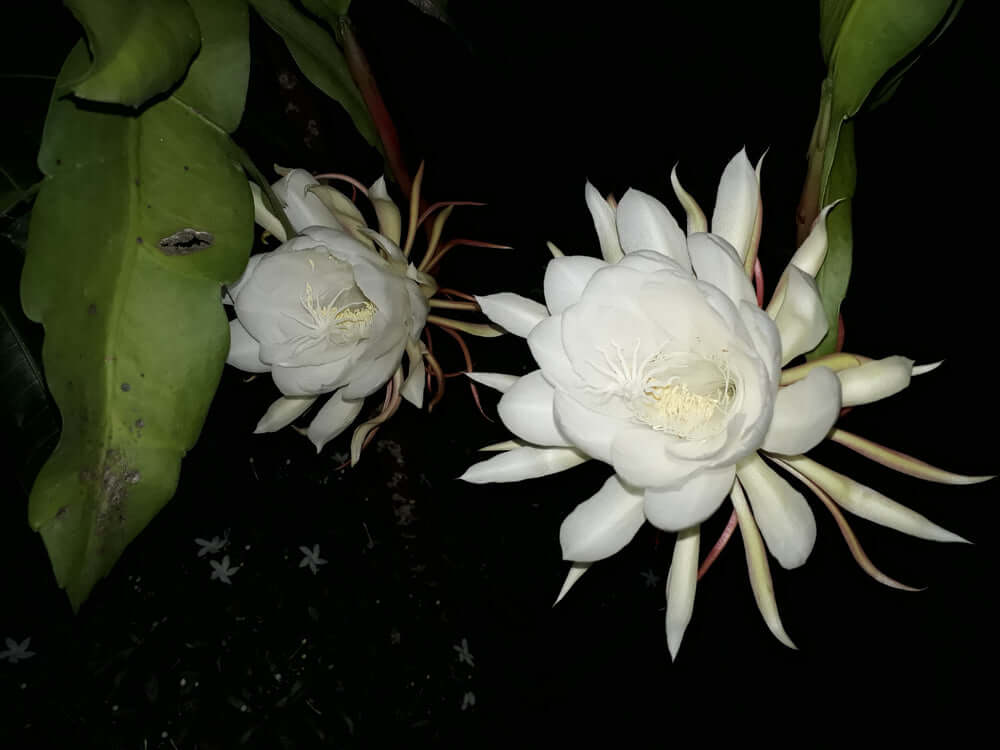
Kadupul Flower (Epiphyllum oxypetalum)

Often called the "Queen of the Night," the flowering cactus Kadupul is one of the legends of the forests of Sri Lanka, though it is cultivated worldwide today. What makes it unique is the brief beauty of its flower, which blooms for the whole night and wilts before dawn. The bloom opens slowly, and the white petals fully unfurl after two hours, filling the night air with an exquisite fragrance. The flower's life is so short it is considered a masterpiece of nature. This fleeting beauty makes it invaluable, as it is a live bloom for a short time and is not being sold.
Jade Vine (Strongylodon macrobotrys)
The Jade Vine grows in the tropical forests of the Philippines and has blue-green flowers with claw-shaped petals. A rare color in the plant kingdom. The flowers grow in cascading 3 meter clusters. The plant has a special type of color due to copigmentation in the flowers. The plant is tied to the survival of the bats who pollinate the flowers. Because of habitat destruction the Jade Vine is increasingly rare.
Ghost Orchid (Dendrophylax lindenii)
The Ghost Orchid is a mysterious plant found floating in the air within the wet, swampy woodlands of Florida, Cuba, and other Caribbean islands. This orchid has no leaves and is almost entirely translucent, giving it an otherworldly look. It attaches itself to the bark of trees like cypress and pop ash and has flat green roots that perform syntheses to make energy. It has a spooky, frog-like shape that adds to the beauty of the flower. The Ghost Orchid is one of the most difficult plants to grow in captivity and is very particular, relying on one specific pollinator: the giant sphinx moth. It has an elusive nature that has made it a sign of hope for conservation against habitat destruction.
Corpse Flower (Amorphophallus titanum)
Vacated since 2019, the corpse flower corpse flower, already recognized as the largest Spider flower flowering structure (and the largest structure to flower in the world) is a popular botanical exhibit. Central to the basements of the botanical exhibit is a flower that towers 10 feet tall, a blooming corpse flower that is. It, along with the carrion beetle and the flesh fly, releases a flesh rot scent as it blooms. When the corpse flower blooms, it does so once in every 10 years, and it does attract a large number of people with a gifted nose. Although the flower does harm to the olfactory scarring of the audience, it does bring a crowd every time it is available to show and to scent.
Middlemist's Red (Middlemist camellia)
Middlemist's Red is considered the rarest flower in the world, with only two existing specimens, one located in a conservatory in England, and the other in a garden in New Zealand. This rare, unique, and deep pink flower is a kind of camellia, introduced from China to the UK in 1804 by a nurseryman, John Middlemist. This flower was extinguished in the country from which it originally came. The two remnants are directly related to the first, making them a living part of history. This flower represents the importance of fragile nature and the need to preserve it.
HawaiianChocolate Cosmos (Cosmos atrosanguineus)
Can you imagine what it would be like to come across a flower that smells like dessert? Chocolate Cosmos are a flower native to Mexico that have dark reddish brown petals with a light vanilla scent. Unfortunately, they've been extinct in the wild for around a hundred years. All of the chocolate cosmos you see are clones that come from one of the only surviving specimens that was found in the 20th century. They are often grown in gardens, but, since they are not able to produce fertile seeds, they cannot reproduce naturally. Their velvety look and sweet smell makes people love them, but it serves as a reminder of what's gone.
Rothschild's Slipper Orchid (Paphiopedilum rothschildianum)
Also known as "Gold of Kinabalu" this orchid can only be found in a small, originally protected region of Kinabalu Mount, in Northern Borneo. Due to the extreme rarity and beauty of this orchid, it has become extremely popular and even overexploited. Ornate and deliciously colored, the orchid produces rich hues in a fifteen year cycle. A flower of the orchid is a primary target of a prominent, specific species of fly. With a small range of growth and vast demand, the stops & shops of the orchid are effectively endangered, leading to a serious scarcity of the orchid in the wild.
Start Your Own Botanical Collection
Although this flower is excessively rare, the nature and the joy of gardening is not. TN Nursery offers the ability to grow your own beauty and life in a space of your own. We'll help you beautify your space, and we'll provide you the opportunity to grow nature and the joy that comes with it. With life in a space of your own, the beauty of gardening with nature is possible for anyone, instantly. We'll help you start that journey with your own fern, perennial, shrub, or tree. We'll help you start a lovely journey of your own, rich with the beauty of gardening.
FAQs
Which is the rarest flower in the world?
The rarest flower in the world is the Middlemist’s Red Camellia. There are only 2 Middlemist Red Camellia in the world. One is in New Zealand and the other is in the United Kingdom. Because of its great scarcity, it is an important emblem in the world of plant conservation.
What's the most exotic flower?
The most exotic flower is the Jade vine. The jade vine is an exotic flower because of its bright and glowing blue color. The jade vine has leaves that are claw-shaped and it is otherworldly because of its long, hanging clusters.
What is this 🌸 flower called?
This flower emoji is a sakura. Sakura is the name for cherry blossoms in Japan. The cherry blossom is a pink flower and it is best known for its short blooming seasons in the spring. The short blooming season symbolizes death and beauty.
What is a flower with 5 letters?
A flower that has five letters is the “rose”. It is a beautiful flower with a great smell and a large assortment of colors. The rose is a flower that is a symbol of love and friendship.
What is the top 1 flower?
The most popular flower in the world is the Rose. People appreciate its smell and beauty, and the Rose is loved all over the world and is a symbol of different meaningful things. The Rose is used in many instances, including in gardens, in bouquets, and during different celebrations throughout all cultures.
Which flower blooms every 3,000 years?
Youtan Poluo is a mythical flower said to bloom once every 3,000 years. It is associated with a Buddhist legend that says the flower blooms when a king of great majesty is to arrive. It is probably lacewing insect eggs, but that is not the main point of the story, as it's a great story.

