
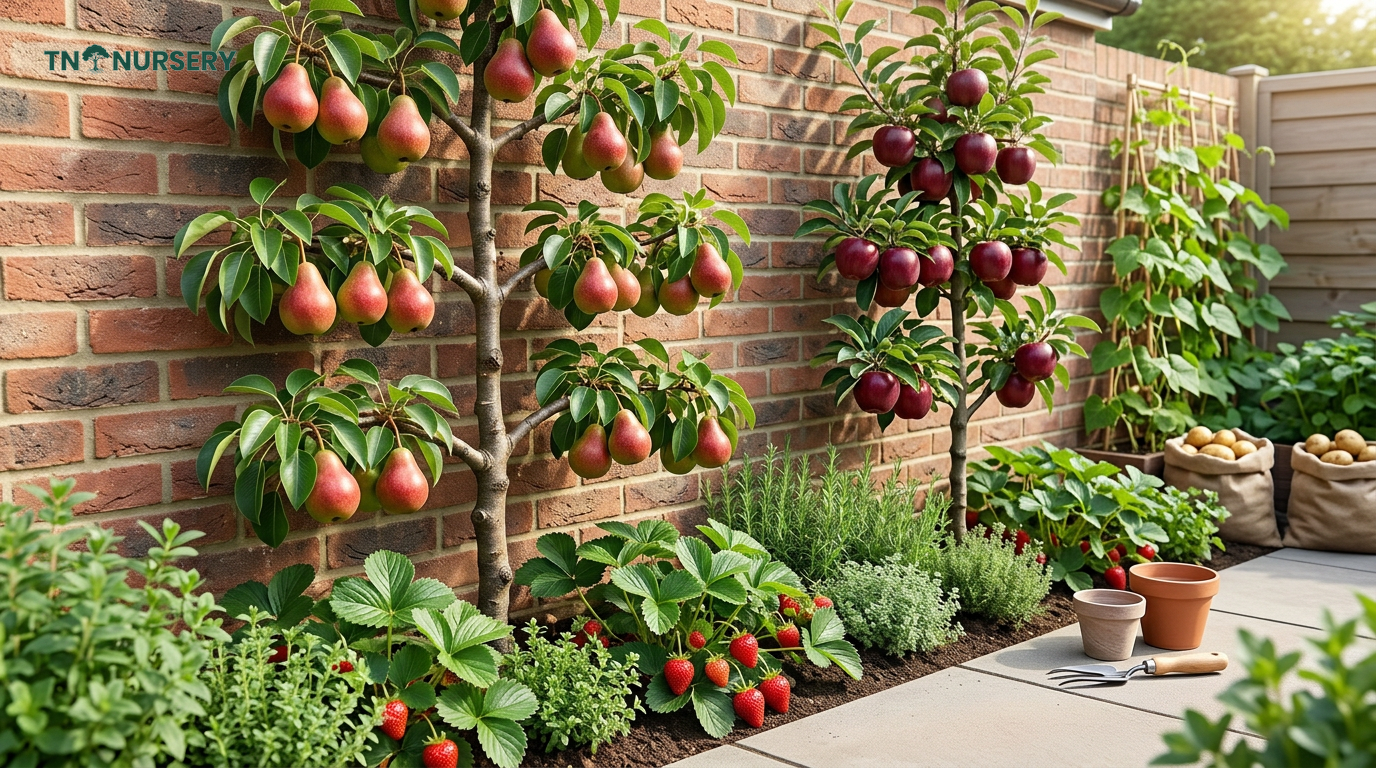
Asian Pear Tree Ideas for Small Yards
We’ll show you seven practical ways to fit fresh pears into tight spaces. You need sun, a clear layout, and a plan that works for spring and summer planting.
Pear Trees That Fit Real Yards
- Pick a site with full sun, good drainage, and enough room for mature branching
- Use espalier methods on fences or walls to save width and keep fruit within reach
- Prune for airflow and size control so the canopy stays productive and easier to manage
- Pair pear trees with low groundcovers to reduce bare soil and tidy up the planting area
- Choose support products and planting methods that match your zone and long-term growing success
Our Top Pick for Small-Space Pear Growing

Pear Tree for Espaliered Yards and Backyard Harvests
If you want an asian pear tree for small yards, this Pear Tree gives you both spring beauty and real harvest potential. We like it for small garden ideas because it grows fast, flowers white in spring, and can be trained with espalier pear tree tips into a flatter shape along a fence or wall. Keep in mind that it still needs yearly pruning, full sun, moist soil, and quick fruit protection once wildlife finds the crop.
- Fast-growing fruit tree with fragrant white spring blooms that attract bees
- Thrives in full sun with moist, well-drained soil for stronger fruit set
- Matures around 20 to 30 feet tall and 15 to 20 feet wide, yet adapts well to trained compact forms
7 Pear Tree Tips for Small Yards
If you want a asian pear tree in a tight yard, start with the site. We always tell customers to watch the sun first. Pears need a bright, open spot for steady growth, clean foliage, and better fruit set. A warm south or west side near a fence often works well. But skip partial shade if you can. A tree that gets only half a day of light will stretch, thin out, and produce less.
How to choose the right asian pear tree?
Choose for space, then train for shape. In a small yard, the training method matters just as much as variety. We see the best results when you match the tree to a narrow side yard, patio edge, or raised bed border that already gets strong sun.
Espalier pear tree tips
- Use the sunniest micro-location. Aim for 6 to 8 hours of direct sun.
- Train against a wall or fence. This keeps branches flat and easier to manage.
- Prune once a year. Cut crowded shoots to improve airflow and hold shape.
- Claim the edges. Lawn borders and side yards often have enough room for fruit production.
- Plant low growers below. Keep companions shallow-rooted and low so they do not crowd the trunk.
- Follow a simple fruit tree planting guide. Keep soil moist, not soggy, and use measured fertilizer for fruit trees in the growing season.
- Plan harvest access early. Leave enough room to reach both sides without stepping through beds.
For compact fruit trees for home gardens, we prefer multi-use spots that do double duty. A pear can frame a patio, soften a fence line, and still give you spring bloom and summer structure. Keep in mind, though, tight planting means you must stay on top of pruning and watering.
"Small yards reward careful placement. A pear tree can be both useful and beautiful when you give it sun, air, and room to pick."
If you are ready to buy, you can browse our fruit trees for sale and explore more small space fruit trees for compact yards.
Layer Your Harvest With Small Garden Ideas That Earn Their Space
Build a compact edible layout from the top down: our asian pear tree creates the canopy, Everbearing Strawberry Plants fill the bed edge with repeat harvests, and Miracle Grow Single Packs keep feeding simple through spring and summer.


Frequently Asked Questions
Can a pear tree grow in a small yard?
Yes. A asian pear tree can fit a modest yard if you control size with pruning and spacing from the start. We usually tell homeowners to think upward, not outward. That is why trained forms and careful yearly cuts work so well for compact fruit trees for home gardens.
How much sun does a pear tree need?
Give your pear tree full sun for the strongest flowering and fruit set. Six or more hours is the practical minimum, and a brighter spot usually means better ripening. But keep in mind, a tight corner between fences often stays too shaded even if it looks open at noon.
What is espalier, and is it worth trying?
Espalier means training branches flat against a fence or support, usually in a simple horizontal pattern. It saves real space, and it makes pruning easier because you can see the branch structure at a glance. We think it is worth trying if your yard is narrow. Still, you will need regular tying and shaping during the growing season.
How often should I prune a pear tree in a small space?
Plan on one main pruning session each year while the tree is dormant. Then do a light summer touch-up if new shoots start crowding paths, walls, or other garden plants. Short, regular cuts are easier on you and the tree than skipping a few years and removing thick wood later.
What can I plant under or near a pear tree?
Stick with low-growing perennials or groundcover that will not smother the root zone or block airflow around the trunk. We like simple planting under small space fruit trees because it keeps mowing easier and the area cleaner. Avoid packing the base too tightly. Pear trees need room for water, light, and air to move.
What is a simple fertilizer for fruit trees?
Use a basic fertilizer for fruit trees once the tree is established and actively growing, and follow the label rate closely. More is not better here. Too much feeding can push soft leafy growth instead of steady branch structure and fruit production, especially in smaller yards.
How long does shipping take?
We ship all items by 3-4 day ground shipping. If you are planning around planting weather, that short transit window helps you time delivery better. When you buy pear tree online from us, we keep the shipping details straightforward.
What if there is an issue with my order?
We do not offer refunds, and we do not accept returns. If stock is available, we may offer a reshipment. If it is not available, an extended warranty or in-store credit may apply when relevant. For help, contact us at customerservice@tennesseewholesalenursery.com. If you are comparing fruit trees for sale, that policy is good to know before ordering.
Conclusion
Key Takeaways
- Full sun and correct spacing matter more in compact landscapes because every square foot has to work harder.
- Pruning early keeps pear trees productive and easier to harvest in small spaces.
- Training a tree flat against a fence or wall helps you save room and improve airflow.
- Layered planting adds color and pollinator support, but keep the root area open around the trunk.
- Starting with one pear tree is the easiest way to build a manageable small-space edible yard.
