
If you want to get a tree nursery in Tennessee‚
You may have a tree nursery in your area․ However‚ to people in the business of trees‚ it doesn't do a whole lot of good to have a tree nursery down the street if their trees are grown in the wrong climate zone for your area․ TN Nursery is a 100-acre (40 ha) tree nursery in Middle Tennessee․ We have been able to grow trees that would be suitable for zone 6b and 7a throughout the state for over 30 years now․ It's more about the region than it is the actual number of miles we go․
A lot of big box stores will truck in live trees from nurseries down in Ohio or Georgia‚ which have entirely different soil chemistry and dormancy triggers․ It is those trees in particular that have a really difficult time the first two years․ They're going through transplant shock and they have a climate issue․ They weren't bred to be grown here․ A tree that's grown 40 minutes from your house in soil similar to your soil is already used to those humidity swings here‚ our clay soil and the freeze-thaw cycle we have here every winter in Middle Tennessee․
What to Look for When Choosing a Nursery
Yelp reviews and Google listings are nice to have but they're probably not going to tell you what you need to know before you buy a tree‚ so ask these questions instead․
Somewhere this tree was grown․ Most retailers do not grow․ If the nursery can't even tell you where the tree was grown in the first place‚ you have to question how well it will do in your yard․
Depending on the price and when the tree will be planted‚ either a balled and burlapped tree‚ a container tree or a bare-root tree may be used․ A container tree is grown in a pot and can be planted at any time of year‚ provided the ground is not frozen․ In Tennessee‚ it is possible to plant a bare root tree during the dormant season from December - February․
Does the staff know your specific soil? The clay soil in Middle Tennessee is from limestone․ It does not have good drainage‚ but has slight alkalinity․ This makes the soil of mountain valleys in East Tennessee considerably more acidic‚ so if a nursery asks your soil pH‚ then they are doing something right․
Our Tree Selection
One of the things we love is that we grow a truly wide range rather than the handful of 'safe' varieties․
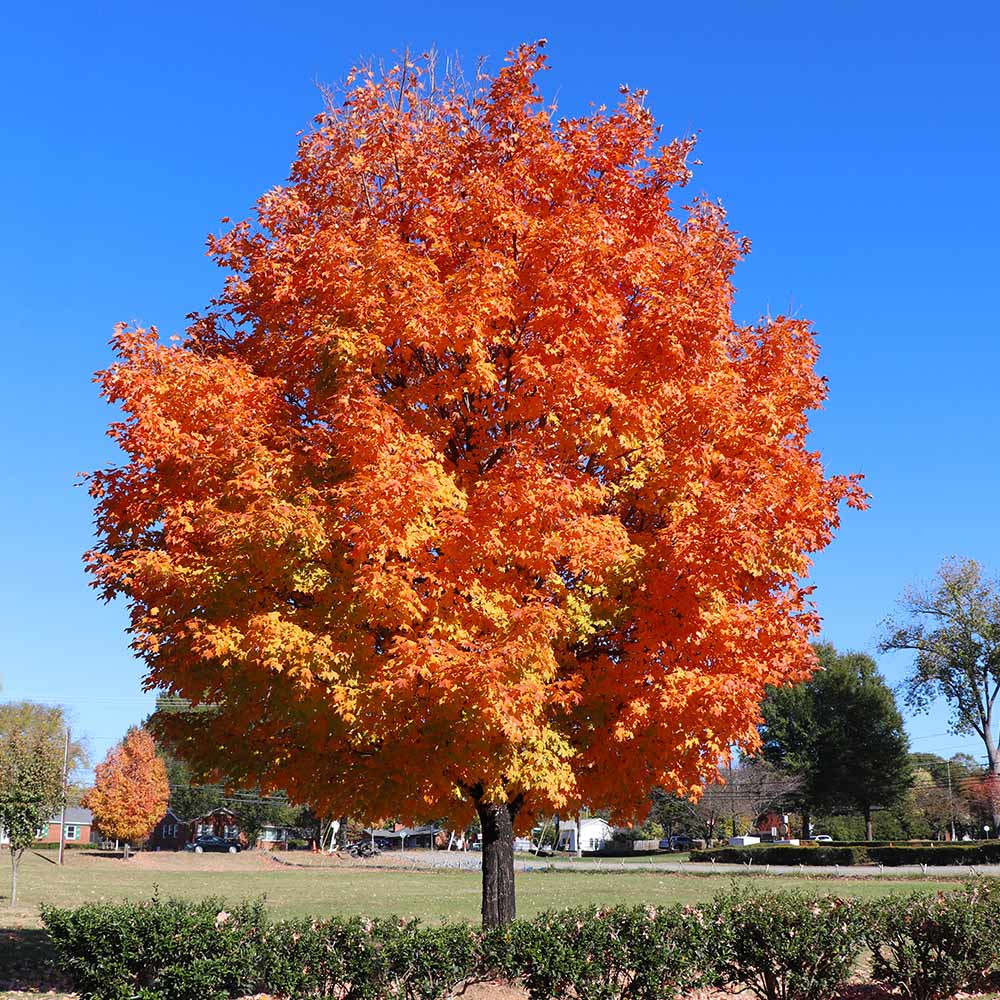
Shade trees/deciduous trees include Red Maple‚ October Glory Maple‚ Southern Sugar Maple‚ several oaks‚ river birch trees‚ and other workhorses of the yard that put up with the summer heat without it baking their leaves․
The flowering trees you would expect in a Southern garden in spring‚ the Eastern Redbud‚ the Yoshino Cherry and the flowering dogwood‚ have been bred to disassociate their bloom from our late frosts․
Most of these evergreens (Leyland Cypress‚ Eastern White Pine‚ Norway Spruce and cedars) will hold their foliage throughout the winter when most everything else is bare‚ making excellent privacy screens․
This even includes fruit trees (like apple‚ several varieties of peach‚ and even pear) which have been bred for those chill hours so that you can actually harvest something․
But we have sapling-size trees for the farther suburbs and larger trees for the instant gratification approach if you need shade for your kids before they are old enough to need it or want to stop a neighbor's ugly construction from ruining your view․
Best planting times in Tennessee․
This is an area where so much nursery and garden center advice is wrong: In Tennessee‚ the best time to plant is mid-October to end of November․ Fall planting is recommended․ In three to four months of optimal conditions‚ prior to the summer heat and the tree's additional stress of producing new leaves during the growing season‚ the roots can grow a sufficient mass․ A spring planting in March and early into April can be attempted if the roots can establish before heat․
Unless you are prepared to water every day‚ don't even try to plant in July and August: our summer heat and a newly broken root ball spell death․
Getting the Planting Right
This trench‚ or hole‚ should be wide and shallow‚ as it is important to avoid storing the plant too deep․ If too deep‚ the soil settles to form a 'bathtub' shape‚ allowing water to pool around the roots and causing rotting in the root system․ If the soil has been compacted when the hole was dug‚ the sides of the hole should be scored with the shovel to prevent the roots from circling․
Backfill with native soil amended with a little compost (to prevent roots growing back into native soil) and water deeply when planting and two times a week for the first month․
Watering and Establishment
Water newly planted trees with 10-15 US gallons (38-57 L) weekly for the first 2 years․ If July or August are low in rainfall‚ more water is needed․ If there is no rain‚ the use of a slow soaker hose watering the base of the tree for 20 to 30 minutes is preferable to sprinklers․ A ring of 2 to 3 inches (5․1 to 7․6 cm) of mulch around the base of the tree may also be used but should not touch the trunk․
On most trees it takes two or three years for them to root well in the ground‚ so the old proverb "sleep‚ creep‚ then leap" is valid‚ and trees should not be assessed in their first year․
But it's not just a tree․
A properly run nursery can be trusted to look after their trees‚ to pack and dispatch them properly‚ and to advise you how to stake․


