
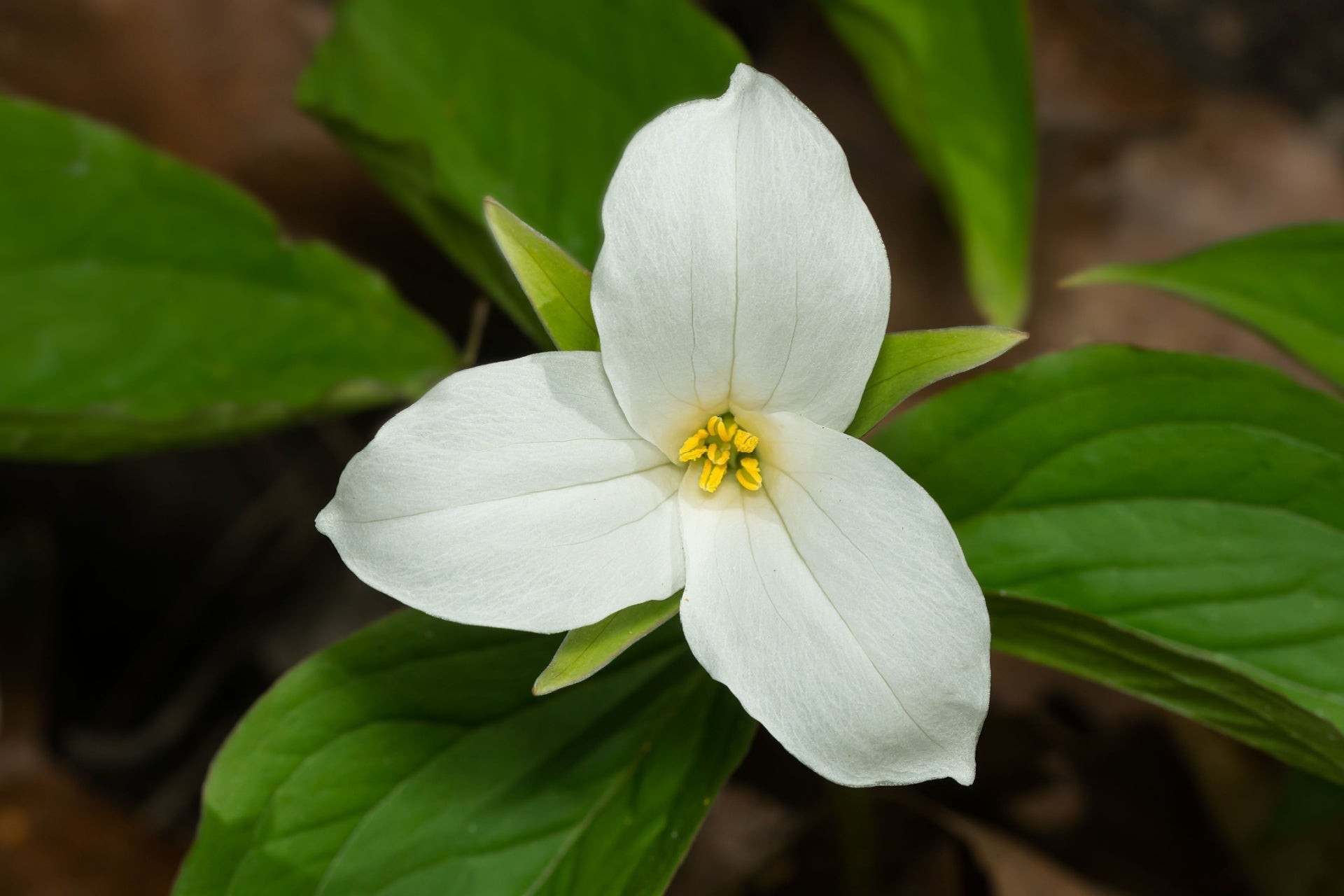
Great White Trillium, which also goes by Trillium grandiflorum, is a perennial wildflower found throughout North America. It grows in a wide range of environmental conditions, making white Trillium one of the best plants for your home or office garden. White Trillium gives a splash of color that brings your landscape to life, and our plant experts can help you. Learn more about Trillium grandiflorum below!
Great White Trillium Has a Wide Range
It blooms beautifully in the southeastern United States. For example, white Trillium is a common sight in Quebec and Ontario. It also grows well in Maine. Then, you will find spectacular drifts of white Trillium throughout the Appalachian Mountains, ranging from the Northeastern United States south to Tennessee. White Trillium can also be found in North Carolina, Mississippi, Georgia, and Alabama.
What Does Trillium Grandiflorum Look Like?
White Trillium rows from a stem that reaches approximately 15 to 20 inches in height. Then, three large green leaves emerge from the stem in the spring. A bud grows from the tops of these leaves before blooming in April or May. From there, three white leaves emerge, spreading out from the bud. There are small yellow shoots that grow in the center.
White Trillium tends to grow in sheets
It means that you will find it blanketing certain areas. It is like moist soil with a mixture of sunshine and shade. In the Blue Ridge Mountains and the Appalachian Trail, white Trillium grows together, with sheets of hundreds of flowers growing in the same place simultaneously.
What Makes White Trillium So Popular?
There are several reasons why people love white Trillium so much. First, it has a great mixture of colors that allow it to blend well with numerous other flowers in your Garden. Even though many of the blooms are white, some have a pink or rose color. Second, these flowers are also easy to care for. Regardless of whether it grows in the sun or the shade, it should grow and bloom appropriately. There are lots of animals that love to live around Trillium grandiflorum as well.
Yellow Trillium
Rely on TN Nursery for White Trillium!
White Trillium could make a great addition to the Garden you have at your house or office. At TN Nursery, it is our honor to offer Great White Trillium and numerous other flowers. Many of our clients love white Trillium, which is why we always have it in stock. Our flower experts can show you how to take care of it. Our plant experts will work with you to find the best shrubs and flowers to create a beautiful landscape. Contact us today for Trillium grandiflorum!
Planting White Trillium
White Trillium may appear delicate, but it has a few natural predators in the wild. One of its most notable threats is the white-tailed deer, which find the plant particularly appetizing. Deer tend to graze on trillium foliage, particularly in the early spring when other food sources might be scarce. This can be problematic in areas with high deer populations, as overgrazing can severely damage or even eliminate White Trillium colonies over time. If you are growing White Trillium in your garden, and deer are prevalent in your area, it may be wise to take preventative measures, such as installing deer fencing or using deer repellents to protect your plants.
White Trillium supports woodland ecosystems while also serving as an ornamental attraction. During spring's cooler months when most flowers remain dormant, this plant provides essential nectar for both bumblebees and early-season butterflies. The initial visitors to the plant help with pollination which enables seed production while promoting its gradual spread through the forest floor.
The plant forms an intriguing link with ants who operate as seed carriers through the process named myrmecochory. Ants find the elaiosome covering the seeds appealing which leads them to transport the seeds below ground. The plant uses this special adaptation to expand naturally while gaining protection through underground storage.
White-tailed deer and other woodland creatures eat this plant's leaves while excessive consumption can prevent its natural spread. Conservationists recommend safeguarding the plant's natural environments to maintain its ability to support wildlife through its continued growth and provision of shelter and food.
This plant delights gardeners who want to beautify their shaded borders with minimal upkeep. When planted with other early flowering plants it creates a magical woodland display that draws both human admiration and beneficial pollinators. The plant demands patience to establish itself, but its unique combination of delicacy and boldness turns it into a highly prized asset for native gardeners.
Historical documentation indicates Native American tribes applied this plant's roots and rhizomes in multiple healing practices. People used this plant to create poultices that healed wounds and brewed teas which helped during childbirth and reduced cramps. Some communities started calling it "birthroot" due to its traditional uses. Settlers eventually applied the same medical practices and incorporated this plant into their traditional remedies for treating women's health problems along with respiratory conditions. Historical herbalists valued it as a natural remedy even though its medicinal use has declined in modern times.
Exposing White Trillium to too much direct sun can cause its delicate foliage and blooms to wilt or burn, disrupting the plant's growth cycle. It's essential to choose a spot that mimics its native habitat, ensuring the plant remains healthy. If you're growing White Trillium in a garden, planting it near deciduous trees or along shaded borders is ideal. The leaves of these trees will provide a natural shield during the hottest parts of the day, allowing your trillium to bask in filtered sunlight. While the plant can survive in slightly sunnier spots, rich, excellent soil with plenty of organic matter is essential to balance these conditions.
White Trillium has origins that stretch back centuries while maintaining strong connections to the native forests of North America. European botanists first observed its three-petaled flower with awe yet Indigenous peoples had valued its importance well before their arrival. This plant thrived in shaded woodlands with abundant nutrients and gained admiration because of its beauty alongside its multiple healing uses.
If you're starting with bare-root plants, it's essential to plant them in the fall, as this will give them the best chance of survival. Dig an in-depth hole to house the roots, fully covering them with soil. Once planted, trillium only requires a little special care beyond keeping the soil moist and ensuring it's in a shady spot. Adding a layer of leaf mulch can help maintain soil moisture and mimic the plant's natural woodland habitat.
White Trillium thrives in dappled shade, replicating the conditions it would find in its natural woodland environment. This plant is an understory species, which means it prefers the indirect sunlight that filters through the canopy of tall trees. In these shaded areas, White Trillium receives just enough light to support its growth without the harshness of direct sun exposure. It can tolerate early morning sunlight, but as a rule, it does best in environments that provide partial to full shade throughout the day.
This plant becomes a treasured feature in shaded garden areas where it grows best in fertile soil that allows proper drainage under large trees. During early spring the plant spreads across the forest floor creating striking blooms that contrast beautifully with the surrounding deep green foliage. Native plant gardens and woodland-themed landscapes frequently feature this species which blends well with ferns and violets among other plants that thrive in shaded environments.
In addition to deer, smaller mammals like rabbits and rodents might occasionally nibble on the plant's stems or leaves, though they do less damage than deer. Another potential threat to White Trillium is invasive species of earthworms, which can alter the soil structure and nutrient composition in a way that makes it less suitable for native wildflowers like trillium. Earthworms consume the leaf litter that trillium relies on, depleting the organic matter in the soil and making it harder for the plant to thrive.
White Trillium is native to the temperate forests of eastern North America, mainly thriving in regions with relaxed, moist environments. Its natural habitat stretches from the eastern United States into parts of Canada, where it is often found carpeting the forest floor in springtime. Trillium prefers undisturbed woodlands where the soil remains rich in organic matter, usually provided by decomposing leaves and other plant material.
Soil and Sunlight for White Trillium
The White Trillium (Trillium grandiflorum) is a beautiful native wildflower that graces North America's forest floors, casting an ethereal glow in shaded woodlands. Known for its three-petaled white blooms, it exudes a refined elegance, making it a prized addition to any shade garden or naturalized woodland setting.
About White Trillium
This wildflower plays a vital role in the ecosystem and adds a delicate touch to the aesthetic of the spaces it inhabits. As gardeners become increasingly focused on native plants and their benefits, White Trillium continues to gain attention for its resilience, ecological value, and unmatched beauty.


