
10 Eco-Friendly Approaches for Weed Control
To own a beautifully manicured yard and a gorgeous garden is a dream every homeowner aspires for. However, the ongoing nightmare of weeds weeds takes the fun out of it. Moreover, the approach towards chemical options for a quick solution is omnipresent and growing every day. Thought out and emphasis has been placed on devising mechanisms that allow and promote the reduction of chemical and leftover herbicide usage. The need for course weed controlling that protects the ecosystem is ever increasing. This article outlines the ten best and effective ways that allow for weed controlling and keeping the ecosystem safe.
Mulching
Among the various techniques that exist to suppress weeds, mulching is one of the best and the most effective. Weed seeds that are germinating are unable to penetrate mulch as it creates a barrier that blocks the weed seeds from receiving sunlight. Decomposing organic mulches such as straw, grass clippings, and shredded bark, help to construct the ecosystem by providing almost every element of soil. In addition to this, particles such as white chips aid forage and breathe as well as they help retain the moisture. Unlike organic mulches, particles such as landscape fabric and plastic are inorganic and to some degree block the light and moisture circulation.
Hand Pulling and Hoeing
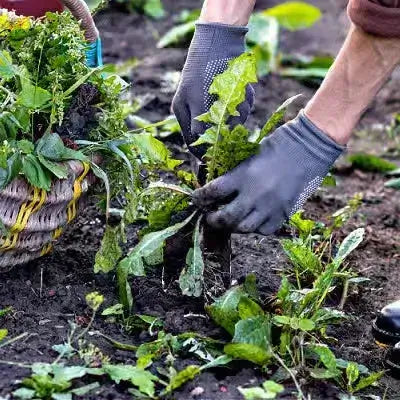
Manual tactics such as hand pulling and hoeing are well-known for their hard work. They may easily take one's breath away, but their precision methods are very right, and they have no impact on the environment. Hand pulling is great if done on small beds, or if one needs to get weeds close to fragile plants. The goal is to get as much root as possible, especially any deep roots such as in dandelions dandelions. Hoeing is much faster for larger surfaces, and is capable of slicing weeds underneath the ground, as well as disturbing new seedlings at the soil surface. These are best performed after heavy rain on soft soil, as roots come up easily.
Cultural Practices
A dense canopy that minimizes light germination can stifle weeds. This, along with fostering healthy, fertile soil, ensures vigorous growth capable of outcompeting weeds. Clover and vetch cover crops, along with nitrogen and organic matter, assist with soil covering, weed suppression, and can even be tilled back into the soil.
Flame Weeding
Flame weeding emits thermal energy that targets the leaves and stems of undesirable plants. Within seconds, the extreme heat destroys the weed by causing the plant cell walls to break, causing cell dehydration and death of the plant. Such weeding is very possible along sidewalks and driveways, potential plant burning is minimal. Weeding alone is a negative approach of gaining plants and losing rocks.
Bioherbicides
Bioherbicides are another method for managing weed growth, although this form is more scientifically developed. These microorganisms, such as specific bacteria, are naturally found in nature. When applied, these pathogenic microorganisms work at killing the selected weed, leaving the rest flora and the ecosystem unharmed. Even though bioherbicides are still in the developmental stage, their specific use against a targeted weed is a better option for hwabicides than chemical crop for broad-spectrum herbicides.
Advanced Cultivation to Control Weeds
Certain plants, apart from the cover crop, can help manage the landscape. The Swamp Willow, for example, is a decently quick growing tree that can be found in wet and moist soils. Apart from its fast growing, the tree can stabilize the soil and erosive areas due to its shallow, dense root system. In ugly places, the tree can also outcompete weed species that thrive in wet places. The strategic planting of fast growing native plants such as the Swamp Willow, along with the other adaptation, encourages the developed ecosystem that supports the native weed and other invasive species. Weeds are controlled and the property also supports the National Wildlife Federation.
Solarization
Soil solarization is an agricultural method which uses the energy from the sunlight to warm the upper layer of the soil to the point of sterilization. This is done by moist, prepared soil which is then covered with a transparent plastic sheet. This is left for 4 to 6 weeks during the hottest part of the summer, with the sheet trapping sunlight for the soil. With the help of the sheet, the solar energy is converted to thermal energy, increasing the soil temperature to kill the weed seeds, seedlings, and various soil pathogens. This method is excellent for preparing new plots to be added to a garden during the summer.
Vinegar-Based Herbicides
Household vinegar has a type of acid known as acetic acid which can instantly kill plants. This process works by absorbing moisture from the leaves which then leads to the complete desiccation of the plant. Vinegar from horticulture, which has a higher concentration of acetic acid, is even more potent. It is however crucial to understand that vinegar is non-selective which means that it will kill any plant that it comes in contact with, which is why it is essential to use vinegar with a more controlled sprayer. It works best with young, non-perennial weeds and works well with the cracks of pavements and patios.
Mechanical Weed Control
In bigger gardens or smaller farm systems, mechanical weed control tends to save a lot of time and labor. It is common in organic farming where large areas of land need to be cleared off weeds without the use of any chemicals. It involves the use of rotary tillers, cultivators, and harrows to break soil and uproot germinating weeds while burying the seeds too deep to reach the top soil and germinate. Weeds like crabgrass and bindweed have life cycles that can be disrupted and even eliminated if the right procedures are taken at the right time.
Boiling Water
Adding boiling water to the list of weed killers is very much the simplest of all options. Pouring boiling hot water onto a weed directly can kill a plant instantly within a few seconds. Weeds that are in the cracks of sidewalks, within the driveway, or in between the slabs of patios can be utilized. It provides a 100% natural solution and does not have any negative impacts. Unlike vinegar, it is not selective, so one must be careful to use it where it is needed.
Visit TN Nursery for Your Planting Needs
The first step in creating a landscape that naturally resists weeds is to have hardy plants. TN Nursery offers vigorous trees such as the Swamp Willow, in addition to vibrantly colored shrubs and other perennials. Each is specifically crafted to meet the needs of your garden. Each of these plants is designed to set the base of your garden, contributing to the overall balance of your flowering. To assist with establishing a high-quality site, TN Nursery offers a diverse assortment of nurtured trees, perennials, and shrubs. Visit our online store to acquire the right plants for your effortless, flourishing landscape.
FAQs
Is there a weed killer that is environmentally friendly?
The answer is yes. There are natural herbicides composed of acetic acid (vinegar), citrus oil, and essential oils that are capable of burning weed foliage and stems. For a simpler approach, boiling water is another method used to kill weeds, and is safe for the environment. For those with a broader approach, the use of organic mulches and ground covers are a step in the right direction, as they are beneficial to the soil and assist in weed suppression.
What is the best natural weed suppressant?
Many experts consider mulch the best natural weed suppressor. Spreading a thick layer (2-4 inches) of organic material (such as wood chips, straw, or shredded leaves) forms a physical barrier that blocks sunlight from germinating weed seeds. Furthermore, as organic mulch breaks down, it improves the soil, retains moisture, and regulates soil temperature, adding to its many benefits.
What is the best environmentally friendly weed barrier?
The best environmentally friendly weed barrier is a thick layer of organic mulch. For a sturdier solution beneath paths or new beds, layers of cardboard or newspaper placed directly onto the soil work very well. These materials block light to smother actively growing weeds and stop new seeds from germinating while gradually decaying to enrich the soil with organic matter—unlike plastic barriers, which impede soil and impede its health.
What is a natural alternative to weed killer?
Hand pulling or hoeing the weeds is the most effective solution. Other options are to weed with boiling water or a strong vinegar solution. To make long-term strategies, concentrate on prevention. Thick mulch, planting densely to create shade, and nourishing the soil to favor certain plants are all wonderful natural methods.
Is there an eco weed killer?
Eco-friendly weed killers do exist, and can even be made at home. They consist mainly of horticultural vinegar (acetic acid), salt, and soap. Salt and vinegar work to dehydrate the plant, and soap allows the mixture to adhere to the plant. These are known as contact killers and do only affect the plant part that is made contact with, and therefore do not kill the root, which is why reapplication is required on stubborn perennial weeds.
Are there organic weed control methods?
Yes. Organic weed control seeks to understand the mechanism of the weeds. It involves manual control such as hand-pulling, cultural methods such as crop rotation, protective cover, as well as the use of physical barriers, like mulch. Methods such as flame weeding and soil solarization (as described in Chapter 8) are also approved organic techniques for bed preparation. The central idea is to nurture the ecosystem so that plants flourish and weeds are outcompeted.


