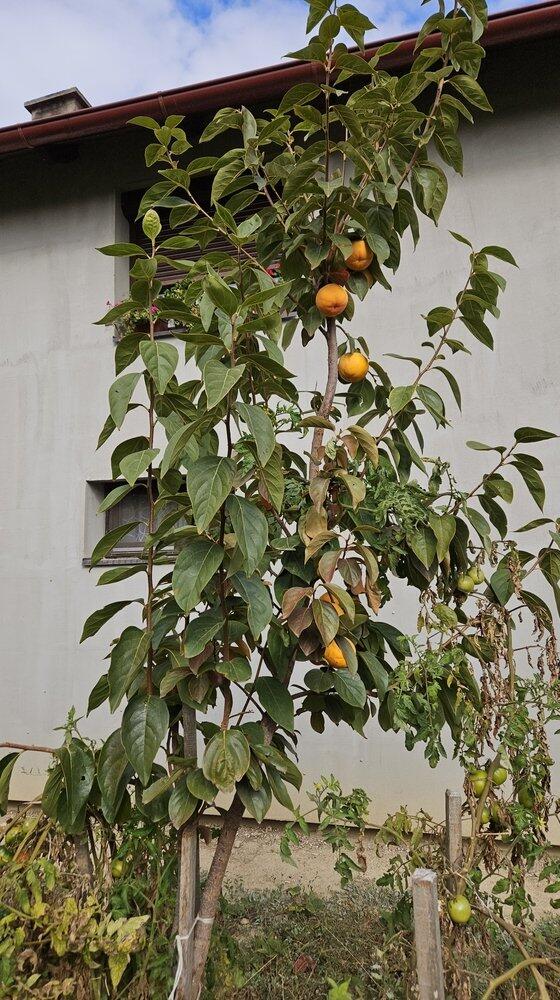
Ripe orange persimmons clustered on Persimmon Tree among green leaves

Persimmon Tree

1-2 Feet / Buy 1 Get 1 Free / Native Persimmon
$27.99
Skip to product information

Persimmon Tree

$27.99
Height Shipped
Quantity: (Buy More, Save More)
Variety

Buy 1, Get 1 FREE - Add 1 to your cart, and we'll automatically send the second one FREE!

Have a question about this plant?
Fast Shipping Nationwide
Healthy Bare Rooted
Safe Ship Moisture Packed
Guaranteed Grower Direct

Hassle-Free Guarantee

WE GUARANTEE ALL PLANTS TO ARRIVE IN EXCELLENT CONDITION

Trusted by Leading Organizations

Discovery Channel NASA The Washington Monument Arlington National Cemetery The Battery Conservancy
Ripe orange persimmons clustered on Persimmon Tree among green leaves
1/5

Planting & Growing Information

Ships

Ships Between November 15-29

Planting Zone

4-9

Height at Maturity

Over 25 Feet

Water Needs

Low and Moderate

Sun or Shade

Full sun and Partial shade

Bloom Season

Spring/Early Summer

Care

Persimmon trees prefer well-drained soil and regular watering, especially during dry periods. They should be trimmed in late winter to keep shape and remove dead or diseased wood. Annually, they should be fertilized with a balanced fertilizer to sustain healthy growth and fruit production.

Exposure

Persimmon trees thrive in full sun, requiring at least six to eight hours of direct sunlight daily for optimal growth and fruit production. While they can handle part shade, complete sun ensures the best development of their sweet, flavorful fruits.

Plant Attributes

Fruit flavor is like a peach or nectarine , The tree appearance is very exotic, Disease and pest resistant

How to tell if your bare root plants are alive or dead QR code
How to tell if your bare root plants are alive or dead

Scan to watch the quick scratch test we use to check trees, ferns, and perennials the moment they arrive.

Watch the video

Planting & Growing Information

Ships

Ships Between November 15-29

Planting Zone

4-9

Height at Maturity

Over 25 Feet

Water Needs

Low and Moderate

Sun or Shade

Full sun and Partial shade

Bloom Season

Spring/Early Summer

Care

Persimmon trees prefer well-drained soil and regular watering, especially during dry periods. They should be trimmed in late winter to keep shape and remove dead or diseased wood. Annually, they should be fertilized with a balanced fertilizer to sustain healthy growth and fruit production.

Exposure

Persimmon trees thrive in full sun, requiring at least six to eight hours of direct sunlight daily for optimal growth and fruit production. While they can handle part shade, complete sun ensures the best development of their sweet, flavorful fruits.

Plant Attributes

Fruit flavor is like a peach or nectarine , The tree appearance is very exotic, Disease and pest resistant

Customer Favorites That Go Will With Persimmon Tree

Persimmon Tree Details

Persimmon Trees are Durable and Hardy Native Fruit Trees

The American persimmon Tree, or Diospyros virginiana, proves you can be both tough as nails and sweet as honey. This remarkable native tree thrives in a wide variety of conditions and climates, including heat and humidity, drought and heavy rain, cold winters, and can even withstand short periods of flooding once established. 

Persimmon trees have some of the hardest wood in North America, which makes them incredibly easy to maintain, as they naturally resist disease and insect infestations. These hardy trees also make a striking addition to the landscape and are known as true four-season interest trees.  

Height at Maturity and Aesthetic Characteristics

The American persimmon reaches a size of around 40-60’ tall and 30’ wide, develops an attractive rounded canopy with glossy, dark green leaves that transform into a brilliant array of golden yellow, warm orange, or sunset red shades in the fall, and have an extremely unique bark pattern that resembles chunky alligator hide. In the spring, their small yet fragrant, whitish-green to yellow-green flowers attract loads of pollinators to your landscape, and their prized fruit starts to develop in late summer and becomes fully ripe in late fall or winter. Seeing a mature persimmon tree’s bare winter branches dripping with loads of honey-orange fruit is a sight to behold!  

Fruit Taste of Native Persimmon Fruits

Persimmon fruit is tart at first, but patience is rewarded: once fully ripe, it is often described as tasting like a mix of apricot, honey, dates, pumpkin, and brown sugar. The fruit is so delicious that native wildlife often harvests it before humans have the opportunity! 

The American persimmon is a remarkably hardy native tree that thrives in a wide variety of conditions. Once established, it is drought- and heat-tolerant, requires minimal maintenance, and is naturally resistant to most insects and diseases. It has four-season interest and is beloved by humans and wildlife, making it an excellent choice for homeowners,  edible landscapes, wildlife enthusiasts, food forests, backyard orchards, and restoration projects alike.

American persimmon seedlings offer the opportunity to grow one of North America's most resilient and rewarding native fruit trees. Whether planning a reforestation project, wildlife habitat, food forest, backyard orchard, or edible native landscape, these hardy native seedlings develop into resilient trees that provide decades of beauty while producing one of nature's favorite foods for wildlife. 

Known In Latin as The Native Fruit of Gods

The American persimmon’s scientific name is Diospyros virginiana, which translates to  “native fruit of the Gods.” Since persimmon trees are dioecious, meaning seedlings are distinctly male or female, planting several persimmon seedlings will guarantee cross-pollination and loads of ripe fruit in late fall/early winter. The leaves are dark green, glossy, and oval-shaped, while young bark remains smooth before developing the characteristic chunky alligator-hide texture seen on mature trees. With fragrant spring flowers and sweet,  prized fruits that ripen to lantern-like jewels on bare branches, the American persimmon is considered a four-season interest tree. 

Not only will persimmon seedlings provide all-year value to your landscape projects, but one of these seedlings' greatest strengths is the vigorous taproot that makes it perfect for restoration sites. Beginning life as a seedling allows the American persimmon to develop an even stronger root system, empowering its remarkable survival instinct to overcome poor soils and endure for generations to come. 

Mature trees provide shade for humans and shelter for wildlife

The delicious, honey-orange fruits are beloved by various mammals and songbirds alike, and the complex, sweet flavor is often described as a mix of apricot, dates, honey, and brown sugar. The seedlings will grow into trees with one of the toughest hardwoods in North America, making persimmons highly resistant to insect and disease infestations. And as a bonus, the American persimmon is the key host plant for more than 45 native insect species, including luna and royal walnut moths, making this cherished tree an excellent choice for both restoration and ecological landscape projects. 

Though small today, these seedlings will one day become resilient native trees that nourish wildlife and enrich the landscape for decades. Perhaps that's why persimmons have been celebrated for centuries as symbols of transformation, good fortune, and longevity. Closely tied to the autumn harvest, they represent abundance, wisdom, and the sweetness that comes with patience.

Persimmon Tree FAQ

How fast do persimmon trees grow?

The trees grow at a moderate rate, typically adding 1-2 feet of height each year once established. Their steady growth produces a strong trunk and dependable fruiting.

Do you need two persimmon trees to produce fruit?

Most trees benefit from having two for heavier production, though some varieties can self-fruit. Planting more than one improves pollination and increases yield.

What type of soil is best for persimmon trees?

They thrive in well-draining, slightly acidic soil. They tolerate clay and sandy soils as long as excess water does not stay around the roots.

How much sunlight do persimmon trees need?

Full sun is ideal. More light leads to more abundant blooms and fruit throughout the growing season.

How long does it take for a persimmon tree to produce fruit?

Most begin producing fruit 3-5 years after planting, depending on conditions and variety. Consistent watering and sunlight help speed fruiting.

Are persimmon trees drought-tolerant?

Once established, they are tolerant of dry conditions. Young trees need regular watering to develop a deep, healthy root system.

Do persimmon trees attract wildlife?

Yes. The fruit attracts deer, foxes, raccoons, birds, and other wildlife. Their sweet fall fruit makes them a favorite in naturalized areas.

Are persimmon trees cold-hardy?

They are cold-hardy and handle winter temperatures with ease. Mulching the base in late fall helps protect roots in extremely cold regions.

Why are my persimmons dropping early?

Early fruit drop is usually caused by inconsistent watering, nutrient imbalance, or high heat. Keeping the soil evenly moist often helps reduce drop. Mature American persimmons typically grow to 30-60 feet tall, depending on the variety. Their upright form and fall fruit make them a beautiful feature tree.

TN Nursery satisfaction guarantee badge - TN Nursery

Delicious Fruit

Persimmon trees produce sweet, flavorful fruit that is a delight to eat fresh or use in recipes.

TN Nursery satisfaction guarantee badge - TN Nursery

Ornamental Appeal

Beyond fruit, persimmon trees have an attractive, symmetrical shape and striking bark that adds beauty to your landscape.

TN Nursery satisfaction guarantee badge - TN Nursery

Nutritional Benefits

Persimmons are rich in vitamins and antioxidants, providing a healthy and tasty addition to your diet.

TN Nursery satisfaction guarantee badge - TN Nursery

Beautiful Fall Foliage

In autumn, persimmon trees offer stunning, vibrant orange and red leaves that enhance any garden's appearance.

Frequently Asked Questions

Where do persimmon trees grow best?

Persimmon trees grow best in full sun with well-drained, fertile soil. They thrive in warm climates and open spaces where they get plenty of light and air circulation. With the right spot, they produce sweet, flavorful fruit and beautiful fall color.

How fast does a persimmon tree grow?

Persimmon trees grow at a moderate rate, adding about 1 to 2 feet of height each year. As they mature, they develop strong trunks and glossy green leaves. With good care and sunlight, they become productive and attractive landscape trees.

Do you need two persimmon trees to get fruit?

Most persimmon varieties are self-pollinating, so you only need one tree to produce fruit. However, planting two different varieties can increase yield and improve pollination. Either way, they’re easy to grow and reward you with delicious, sweet fruit each season.

Root system of a plant on soil with a trowel nearby

Why Buy Bare Root Plants From TN Nursery?

Since 1959, TN Nursery has grown and shipped quality bare root plants nationwide. Shipped during dormancy, bare-root plants develop strong root systems and establish quickly. Our experienced team carefully harvests and packages every order, providing growers with trusted plants backed by over 65 years of nursery experience.

Learn More About

Bare root trees

How We Dig, Pack & Ship

Fall Digging

Spring Digging

Packing Orders

Customer Unboxing Video

Product Highlight

  • 5 stars: 12 (92%)
  • 4 stars: 1 (8%)
  • 3 stars: 0 (0%)
  • 2 stars: 0 (0%)
  • 1 star: 0 (0%)
A
Anna

My Persimmon tree has really started to grow. I am so happy with it.

E
Emma Foster
A Great Addition to the Yard

The Persimmon tree arrived healthy. It’s growing steadily and looks strong, with beautiful foliage already. I’m looking forward to enjoying fresh persimmons in the future.

R
Raji Savarala
Excellent service

The plants were shipped very well packaged and with excellent instructions in the email. Will definitely shop with them next time!

A
Angela Copeland
So Pleased!

I was very happy to see the my very healthy, well packaged, trees arrive. Arrived on date expected. Can’t wait to start getting the big fruit pictured here. I’ve only seen quarter size persimmons growing wild in my area, East central AL. Thank you for such great service. I will be buying any future trees from TN Nursery!

J
James Moore
friendly people

we went to TN nursery in Tennessee, very nice and friendly people they have beautiful plant we bought for persimmons tree and they have we meet a young man. He is very friendly and nice and explain everything to us how to plant our trees. I would recommend them to anybody.

s
sven fort worth
yall are awesome

great service! i told all my gardening friends and will definitely be back

J
Justin

Trees arrived quickly and in perfect condition,

L
Louis Carnevale
Persimmons trees

I promptly received and planted my trees today. So far so good I'll provide an update when they are expected to grow.

W
Wendy Leonard

I ordered 5 plants and you sent 6—nice touch

L
Lee Streitenberger

Great price, great product, and fast delivery.

P
Paul Atkins
Fast fast fast

I order some trees and it was no time order was filled , and shipped out the next day , couldn’t ask for any better service

M
Michael Ziegenbein
Six little trees

Can’t wait to get em in the ground! In a few years all the possums and deer will be very happy!

B
Bert Johnson
Persimmon

They are great trees I only wish they shipped in the spring.