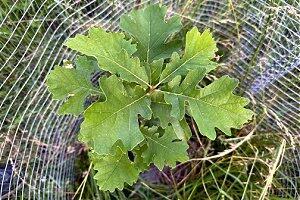
Bur Oak Tree for Sale (Quercus Macrocarpa)
Burr Oak (Quercus macrocarpa) is a beautiful deciduous tree that will have an enormous impact on your landscape. As it grows, it will create a wide canopy, as it often grows out horizontally more than it grows vertically. It is a highly sought-after tree used in landscaping and known for its hardiness and resiliency.
Plant Details - Bur Oak (Mossycup Oak)
Family: Fagaceae
Light Requirement: Full Sun
Water Needs: Moist
Height: 60 - 80 ft.
Spread: 60 - 80 ft.
Growth Rate: Fast
Bloom Time: Spring
Flower Color: Yellow
Wildlife Value: Attracts birds

Landscape Uses & Maintenance Tips for Bur Oak Trees
The Bur Oak is a native deciduous tree that grows in open woodlands and near water, such as on the banks of rivers. It is an excellent tree for planting in the landscape, creating a shade garden, or as a city street tree. Its branches are large and horizontal.Its leaves are green, rounded, and deeply lobed. Catkins are not showy and are yellow in color. This low-maintenance tree will not need much direct care as it ages.
Unique Characteristics of Bur Oak Shade Trees
Bur Oak Trees have unique, large caps that top the acorns. Another common name, "mossycup," describes how the caps seem to be fuzzy or covered in moss-like tendrils.

Customer Reviews
I wanted a tree that would provide shade and habitat for future generations, and the Bur Oak Tree from TN Nursery was the perfect choice. It arrived in healthy condition and is already taking off. TN Nursery’s commitment to providing hardy native trees is exactly what every homeowner needs.
TN Nursery delivered an exceptional Bur Oak Tree that’s now growing strong in my yard. These trees are known for their longevity and ecological value, and I’m proud to have one thriving on my property. TN Nursery packaged it well, labeled it clearly, and provided great care instructions.
This Bur Oak Tree from TN Nursery is already becoming the centerpiece of my yard. It arrived dormant, as expected, but quickly began budding. The roots were well-developed and clearly handled with care. I appreciate TN Nursery’s expertise in native hardwoods like the Bur Oak—it shows in the quality.
The Bur Oak from TN Nursery is thriving just a few weeks after planting. It's a perfect native species for this region, and I’m impressed by its early signs of vigorous growth. TN Nursery shipped it quickly, and the tree was clearly well-cared-for during the process. Great choice for anyone planting for the future.
I ordered a Bur Oak Tree from TN Nursery to add shade and value to my property. The tree arrived in great shape, with strong roots and no damage. TN Nursery’s attention to detail and commitment to quality really shows. This is a slow but steady grower that will become a majestic part of my landscape.
Is a burr oak a good tree?
Yes, a Burr Oak is an excellent tree known for its strength and longevity. It grows into a stately shade tree with a wide canopy and attractive, lobed leaves. Its large acorns and sturdy form make it both beautiful and beneficial for wildlife.
How big does a bur oak tree get?
A Bur Oak tree can grow 70 to 80 feet tall with a broad, majestic canopy. Its strong branches and thick trunk give it a grand, timeless appearance. It’s a long-lived tree that adds beauty and shade for generations.
Where is the best place to plant a burr oak tree?
The best place to plant a Burr Oak tree is in full sun with plenty of open space to grow. It thrives in well-drained soil and adapts easily to different conditions. Its wide canopy makes it perfect for large yards, parks, or open landscapes.
Exposure
The Bur Oak Tree thrives best in full sun to partial shade. It prefers at least 6 hours of direct sunlight daily but can tolerate some shade, particularly in hot climates. Ensure it gets adequate light for robust growth and optimal health.
Height at Maturity
Over 25 Feet
Usage
Shade
Shipped As
Bare-root
Ships
UPS
Planting Zones
3-8
How To Grow
How to Grow and Care for Bare Root Trees
Bare root trees are shipped dormant without soil, making them lightweight, cost-effective, and easy to plant during the cool months of early spring or fall. To begin, soak the roots in a bucket of water for 4–6 hours before planting to rehydrate them. Choose a sunny location with well-draining soil and ample space for the tree’s mature size.
Dig a hole twice as wide as the spread of the roots and deep enough to keep the root flare (where the roots begin to spread from the trunk) at or slightly above ground level. Create a small mound of soil in the center of the hole, spread the roots evenly over it, backfill with native soil, and gently tamp down to remove air pockets. Water thoroughly after planting.
Keep the soil consistently moist (not soggy) during the first growing season, and apply mulch around the base—avoiding direct contact with the trunk—to conserve moisture and suppress weeds. Stake the tree if necessary, and prune only to remove dead or damaged branches. With proper care, your bare root tree will establish quickly and grow strong for years to come.