Louis Carnevale
I promptly received and planted my trees today. So far so good I'll provide an update when they are expected to grow.

Persimmon Tree
Ships Between November 15-29
4-9
15–60 Feet
Low and Moderate
Full sun and Partial shade
Late spring (May-June)
Plant in well-drained, slightly acidic to neutral soil. Water weekly through the first summer. Persimmons leaf out late in spring, so give new trees time.
Full sun, at least 6 hours daily, for the most fruit; also grows in light shade.
Sweet fall fruit similar to an apricot , Hosts dozens of native moths and butterflies, Golden to scarlet fall color
Louis Carnevale
I promptly received and planted my trees today. So far so good I'll provide an update when they are expected to grow.
Wendy Leonard
I ordered 5 plants and you sent 6—nice touch
Lee S
Great price, great product, and fast delivery.
About this plant
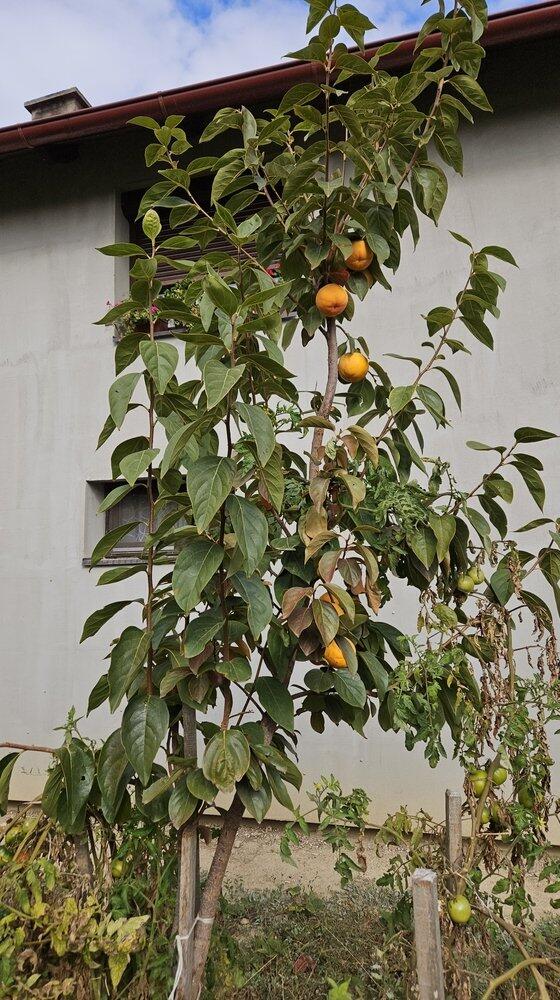
A persimmon tree gives you two harvests from one planting: sweet orange fruit in fall and a canopy of glossy leaves that turn gold, orange and red before they drop. TN Nursery offers two varieties on this page: the American persimmon (Diospyros virginiana), the native wild persimmon of the eastern United States, and the Fuyu persimmon (Diospyros kaki 'Fuyu'), the crisp Asian persimmon you find in grocery stores. Both ship bare root while dormant, in 1–2, 2–3 and 3–4 foot sizes, and every single-tree order is Buy 1 Get 1 Free.
The American persimmon is the tree Southern families have gathered fruit from for generations. Its fruit is about the size of a plum, turns orange blushed with purple, and becomes soft, rich and honey-sweet once fully ripe. That ripening often lines up with the first frosts, which is why old-timers say to wait for a cold snap. Wild persimmon pudding, bread and jam all start here.
American persimmon trees are either male or female, and only the females bear fruit. Since young trees don't reveal which they are until they flower, plant at least two or three. The Buy 1 Get 1 Free offer makes that easy and gives you the best chance of a fruiting pair.
Fuyu is a non-astringent Asian persimmon, so you can eat it firm and crunchy like an apple, straight off the tree. The fruit is larger than the native type, flattened and bright orange. Fuyu sets fruit without a pollinator, so one tree can produce a crop on its own. It grows smaller and rounder than the American persimmon, which makes it a good fit for backyards, home orchards and the edge of a vegetable garden in zones 7–9.
Plant your persimmon tree in a sunny spot with soil that drains after a rain. The American persimmon grows naturally from Connecticut to Florida and west to Kansas and Texas, in old fields, fencerows and woodland edges, so it handles clay, sandy ground and average yard soil well. Fuyu prefers the milder winters of zones 7–9 and a sheltered, sunny location.
Good landscape uses include a home orchard, a wildlife planting along a field edge, a native shade tree for the back of a property, or a specimen tree where its fall color and fruit can be seen from the house.
Persimmons are among the last trees to leaf out in spring. A newly planted tree may stay bare until late spring before pushing new growth, so be patient. Space American persimmons 20–30 feet apart and Fuyu trees 15–20 feet apart.
Fuyu persimmons often begin fruiting within 3–5 years. American persimmons grown from young trees usually start bearing in 4–8 years, with heavier crops as the tree matures.
For the American persimmon, yes. Plant at least two so you have a male and a female tree. Fuyu is self-fruitful and produces fruit on its own.
American persimmons are ripe when they turn soft and wrinkly and fall easily from the branch, usually from late September through November. Fuyu persimmons can be picked once they are fully orange and still firm.
Yes. Once established, persimmon trees need little care beyond occasional water during drought. They rarely need pruning, spraying or fertilizer.
Yes. Tennessee falls in zones 6–7, ideal for the American persimmon. Fuyu grows well in zone 7 areas of the state with a sunny, protected location.
TN Nursery has grown trees on the Cumberland Plateau of Tennessee since 1959, and the nursery is still family-owned, with 170 acres in production. We grow native fruit trees because we plant them ourselves and know how well they do in real yards and farms. If you'd like to cover more ground for wildlife, our American persimmon seedlings come in bulk packs, and you can explore more fruit and berry plants or read our persimmon tree growing guide.

Since 1959, TN Nursery has grown and shipped quality bare root plants nationwide. Shipped during dormancy, bare-root plants develop strong root systems and establish quickly. Our experienced team carefully harvests and packages every order, providing growers with trusted plants backed by over 65 years of nursery experience.
Learn More About
Bare root trees
Delicious Fruit:
Persimmon trees produce sweet, flavorful fruit that is a delight to eat fresh or use in recipes.
Ornamental Appeal:
Beyond fruit, persimmon trees have an attractive, symmetrical shape and striking bark that adds beauty to your landscape.
Nutritional Benefits:
Persimmons are rich in vitamins and antioxidants, providing a healthy and tasty addition to your diet.
Beautiful Fall Foliage:
In autumn, persimmon trees offer stunning, vibrant orange and red leaves that enhance any garden's appearance.
Fall Digging
Spring Digging
Packing Orders
Customer Unboxing Video
Product Highlight
My Persimmon tree has really started to grow. I am so happy with it.
The Persimmon tree arrived healthy. It’s growing steadily and looks strong, with beautiful foliage already. I’m looking forward to enjoying fresh persimmons in the future.
The plants were shipped very well packaged and with excellent instructions in the email. Will definitely shop with them next time!
I was very happy to see the my very healthy, well packaged, trees arrive. Arrived on date expected. Can’t wait to start getting the big fruit pictured here. I’ve only seen quarter size persimmons growing wild in my area, East central AL. Thank you for such great service. I will be buying any future trees from TN Nursery!
we went to TN nursery in Tennessee, very nice and friendly people they have beautiful plant we bought for persimmons tree and they have we meet a young man. He is very friendly and nice and explain everything to us how to plant our trees. I would recommend them to anybody.
great service! i told all my gardening friends and will definitely be back
I promptly received and planted my trees today. So far so good I'll provide an update when they are expected to grow.
I ordered 5 plants and you sent 6—nice touch
Great price, great product, and fast delivery.
I order some trees and it was no time order was filled , and shipped out the next day , couldn’t ask for any better service
Can’t wait to get em in the ground! In a few years all the possums and deer will be very happy!
They are great trees I only wish they shipped in the spring.